Pakistan’s education system, while capable of enrolling girls, continues to struggle to keep them there, writes Dr Sakariya Kareem
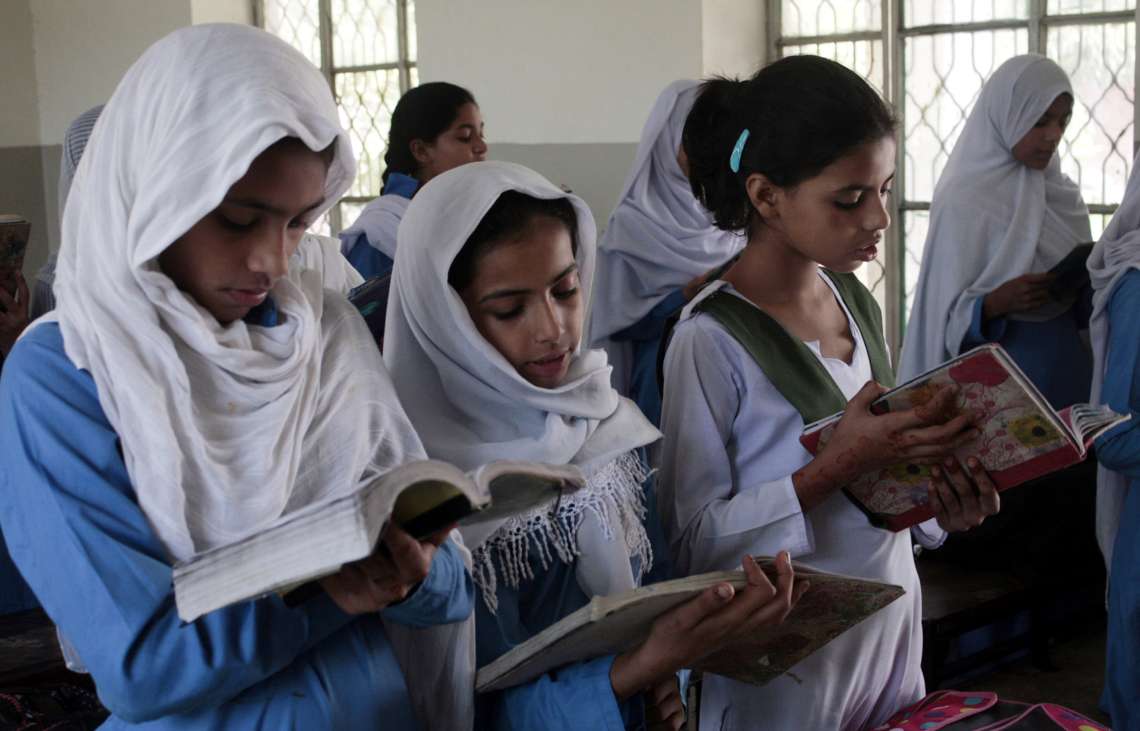
In classrooms across Pakistan, the story often begins with promise. Young girls in neatly pressed uniforms clutch textbooks, recite lessons and pose for photographs that symbolise progress.
These early years, frequently highlighted in official narratives and development reports, present an image of expanding access and opportunity. Yet beyond this carefully framed beginning lies a quieter, less visible reality.
As these girls approach adolescence, many disappear from the education system altogether—not by choice, but through a gradual process shaped by structural gaps, policy failures and social constraints.
Pakistan’s education system, while capable of enrolling girls, continues to struggle to keep them there.
Progress at entry, collapse at transition
Recent findings from the “Status of Girls’ Education in Pakistan” report, supported by organisations such as the Malala Fund, indicate that enrolment at the primary level has improved in several parts of the country.
However, this progress masks a deeper structural weakness: retention. The transition from primary to secondary education remains the most fragile point in the system.
Girls who complete Grade 5 often encounter barriers that effectively end their educational journey. Middle and secondary schools are fewer in number and frequently located at distances that are difficult to navigate, particularly in rural areas.
Safety concerns, lack of transport and social expectations intersect to create an environment where continuing education becomes increasingly difficult. This pattern is not an isolated occurrence but a recurring feature across provinces, reflecting systemic shortcomings rather than individual circumstances.
The scale of exclusion
The broader education landscape reinforces the depth of the problem. According to recent data, approximately 28 percent of children in Pakistan remain out of school, with girls disproportionately represented in this group.

The scale of exclusion translates into millions of children, many of whom never enter a classroom or leave prematurely.
The gender disparity is further underscored by literacy rates. Female literacy in Pakistan remains significantly lower than that of males, hovering at around 49 percent.
Comparisons with other countries highlight the extent of the gap. Nations such as Malaysia and Turkey report female literacy rates exceeding 90 percent, while neighbouring Bangladesh has crossed 70 percent. These contrasts reflect not only differences in policy outcomes but also in sustained institutional commitment.
The issue has been repeatedly acknowledged at high-level forums, including the International Conference on Girls’ Education in Muslim Communities held in Islamabad. Yet the persistence of these figures indicates that recognition has not translated into measurable change.
An ‘invisible wall’ after primary school
Observers and education advocates frequently describe the transition from primary to secondary education in Pakistan as an “invisible wall”. This barrier is shaped by multiple factors that converge at a critical stage in a girl’s life.
Distance to schools remains one of the most cited challenges. Secondary institutions are often located far from villages and small towns, making daily travel impractical or unsafe. In the absence of reliable transport, families are reluctant to allow adolescent girls to commute long distances.
The composition of the teaching staff also plays a role.
Reports such as “The Missing Ustani” by Tabadlab highlight a severe shortage of female teachers, particularly in rural areas. While younger children may be taught by male teachers without resistance, families often view the absence of female educators as a barrier to continuing education for older girls.
Concerns around safety, cultural norms and trust contribute to decisions that ultimately remove girls from classrooms.
These factors, combined with economic pressures and domestic responsibilities, create a system where withdrawal from education becomes the default outcome.
Structural inequalities deepen the divide
The challenges facing girls’ education in Pakistan are closely linked to broader structural inequalities. The divide between urban and rural areas remains one of the most significant indicators of disparity.
Urban literacy rates stand at approximately 77 percent, compared to 56 percent in rural areas—a gap of over 20 percentage points. This disparity reflects uneven access to educational infrastructure, qualified teachers and learning resources.
For girls in rural communities, these disadvantages are compounded by social expectations and limited mobility.
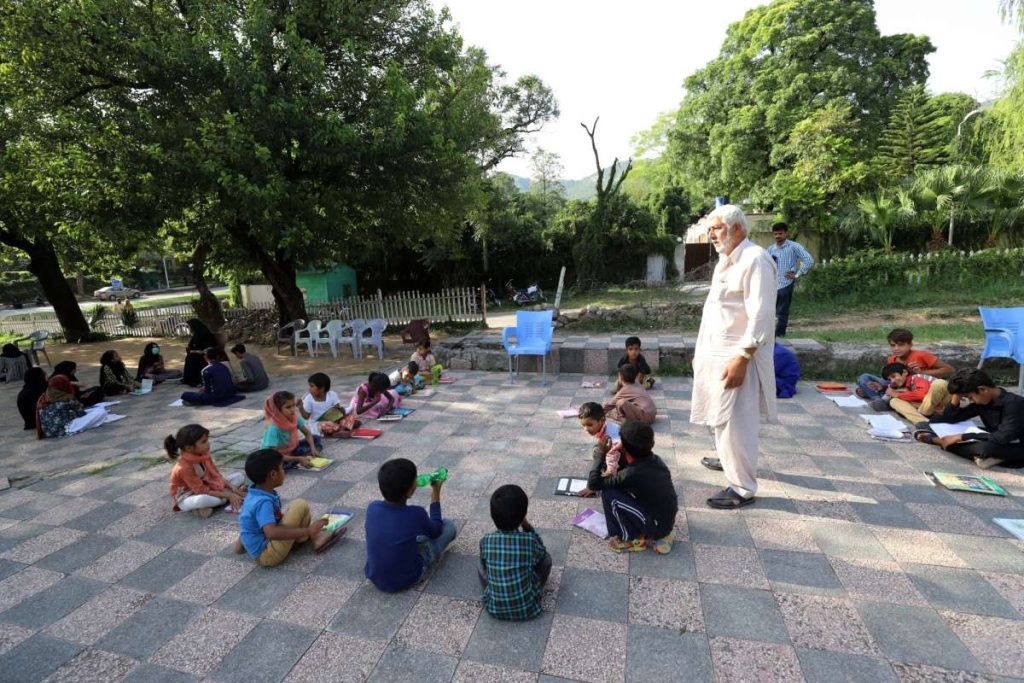
The economic dimension further complicates access. Families facing financial constraints often prioritise boys’ education, viewing it as a more viable investment.
Girls, in contrast, are more likely to be withdrawn from school to contribute to household responsibilities or due to concerns about safety and social norms.
These patterns are not incidental but embedded within a system that has struggled to deliver equitable access across regions and genders.
Spending gaps and policy inertia
Pakistan’s education sector has long been constrained by limited public investment. Government expenditure on education remains around 2.5 percent of GDP, significantly below the benchmark of 4 percent recommended by UNESCO.
This funding gap has implications for infrastructure, teacher recruitment and overall system capacity.
Successive governments have announced initiatives and declared “education emergencies”, including recent statements by Shehbaz Sharif.
However, the continuity of these announcements without sustained implementation has contributed to a perception of policy inertia.
The imbalance between commitments and outcomes is evident in the persistent number of out-of-school children and the continued dropout of girls at secondary levels.
While isolated initiatives, such as the Danish schools programme in Punjab, demonstrate potential, they remain limited in scale and unable to address systemic shortcomings.
Global comparisons and economic implications
The consequences of Pakistan’s education gaps extend beyond social indicators into the economic domain. In a global environment increasingly driven by knowledge and technology, educational attainment plays a critical role in determining competitiveness.
According to assessments by the World Economic Forum, Pakistan ranks near the lower end in indicators related to educational attainment and economic participation.
The combination of low literacy rates and gender disparities creates a dual constraint on workforce development.
The exclusion of girls from sustained education reduces the pool of skilled labour and limits economic participation. This dynamic reinforces existing inequalities and affects long-term growth prospects.
Symbolism without continuity
Pakistan’s association with Malala Yousafzai, the youngest Nobel Prize winner and a global advocate for girls’ education, underscores the contrast between symbolic achievements and ground realities.
While her advocacy has brought international attention to the issue, domestic indicators reveal persistent challenges.
Reports estimate that approximately 12.5 million girls in Pakistan remain out of school, a figure that reflects both access and retention issues. The emphasis on primary enrolment, often highlighted in official narratives, does not address the systemic gaps that emerge in later stages of education.
The result is a pattern where early progress is not sustained, and the potential gains of primary education are lost as girls exit the system before reaching secondary or higher levels.
A system that stops halfway
The central challenge facing girls’ education in Pakistan is not the absence of aspiration but the absence of continuity. Girls across the country have demonstrated a willingness to pursue education, often overcoming significant obstacles in the process.
However, the system they encounter is marked by discontinuity, where support structures weaken precisely when they are needed most.
The emphasis on enrolment without corresponding investment in retention has created a scenario where education effectively ends at the primary level for many girls.
This truncated pathway limits opportunities for skill development, critical thinking and economic participation.
The data and reports collectively point to a system that begins with promise but fails to carry it through. The consequences are reflected in literacy rates, workforce participation and broader social indicators.
An enduring gap between policy and reality
Pakistan’s education framework continues to exhibit a gap between stated commitments and actual outcomes.
The persistence of high dropout rates among girls, combined with structural inequalities and limited investment, has resulted in an enduring crisis that remains unresolved.
The narrative of progress at the entry level contrasts sharply with the reality of attrition in later stages. As millions of girls leave school before completing their education, the system’s limitations become increasingly evident.
The evidence suggests that Pakistan does not lack awareness of the challenges. Reports, conferences and policy statements have repeatedly highlighted the same issues. Yet the continuity of these patterns indicates that the underlying problems remain unaddressed.