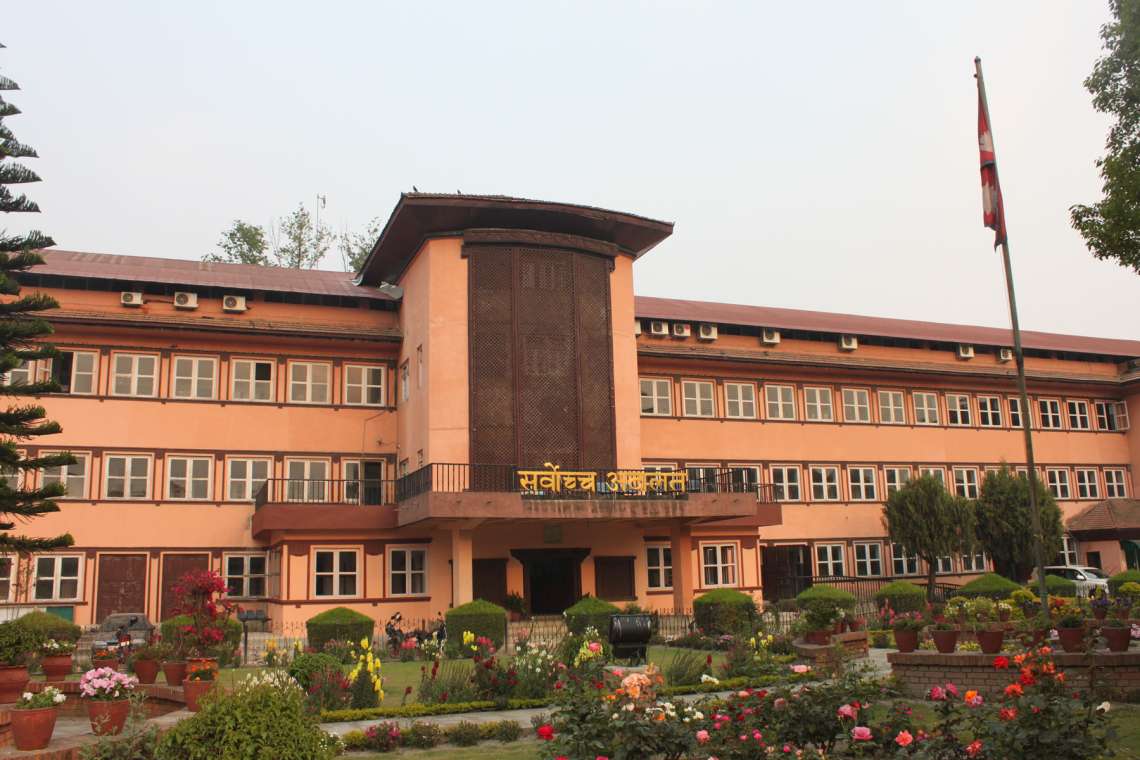
A major constitutional dispute has erupted in Nepal after the government recommended a Supreme Court judge ranked fourth in seniority for the post of Chief Justice, breaking decades of judicial tradition….reports Asian Lite News
A fresh confrontation has broken out between Nepal’s government and judiciary following the controversial nomination of a junior Supreme Court judge for the country’s top judicial post.
The Constitutional Council, headed by Prime Minister Balendra Shah, recommended Supreme Court Justice Manoj Sharma to President Ram Chandra Poudel for appointment as Chief Justice on May 7.
The decision has triggered criticism because Sharma is fourth in seniority among Supreme Court judges, breaking a long established convention under which the senior most justice is elevated to the role.
National Assembly Chairperson Narayan Dahal and opposition leader Bhisma Raj Angdembe formally objected to the recommendation, arguing that the tradition of seniority should be preserved to protect judicial independence.
Acting Chief Justice Sapana Pradhan Malla sharply criticised the government’s decision on Saturday, accusing authorities of attempting to bring the judiciary under executive control.
Speaking after an event marking Nepal’s 74th National Law Day, Malla said the move represented “an attempt to turn the judiciary into an institution that surrenders and compromises with the executive body”.
She argued the issue was not about personal disappointment but about safeguarding the independence of the courts from political influence.
The government has defended Sharma’s nomination by claiming he demonstrated stronger performance and capability than more senior judges, citing statistics showing he delivered more verdicts during the review period.
Malla rejected that argument, questioning how judicial capability had been measured and insisting that numbers alone could not determine merit.
During the Law Day ceremony, she also warned judges not to allow pressure from a powerful government or threats of impeachment to undermine justice.
Former prime minister and Nepal’s first female Chief Justice Sushila Karki emerged as one of the strongest critics of the decision.
Karki argued that Malla, whom she described as exceptionally qualified, had been unfairly denied the opportunity to become Chief Justice.
She warned that political interference in judicial appointments could damage the credibility and independence of Nepal’s legal system.
Constitutional lawyer Bipin Adhikari said the Constitution does not prevent the appointment of a junior judge as Chief Justice, but cautioned that abandoning the seniority convention could allow governments to select judges seen as politically favourable.
He also dismissed the government’s reliance on verdict numbers as a performance indicator, saying the quality and long term legal impact of judgments were more important than quantity.
Under Nepal’s Constitution, any Supreme Court justice with at least three years of service is eligible to become Chief Justice, although the practice of appointing the senior most judge has traditionally been followed.