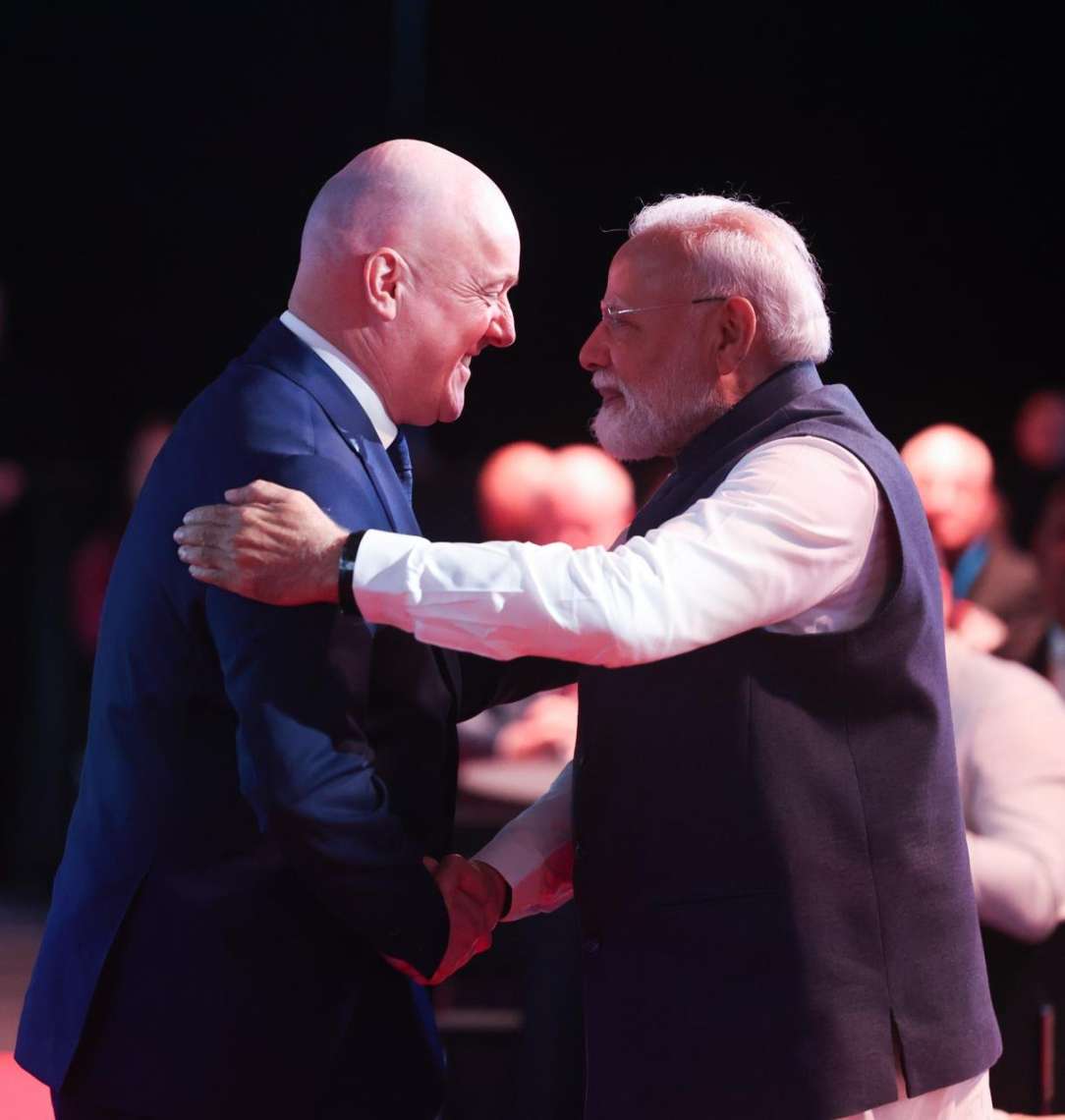
New Zealand is strengthening its economic and strategic engagement with India through a landmark free trade agreement and an upgraded strategic partnership. …reports Asian Lite News Desk
New Zealand is strengthening its relationship with India through a landmark free trade agreement (FTA) and a newly elevated strategic partnership, signalling a broader effort to diversify its economic and security ties beyond its longstanding dependence on China, according to an analysis published by The Diplomat.
The development follows Prime Minister Narendra Modi’s visit to New Zealand on July 11, during which both countries announced the elevation of bilateral ties to a “strategic partnership”. The agreement comes as Wellington reassesses its foreign and trade policy amid increasing geopolitical competition and growing concerns over security in the Indo-Pacific region.
According to the article, China has been New Zealand’s dominant economic partner for several decades. However, the FTA with India marks an important shift in Wellington’s strategy to expand trade relationships while reducing reliance on a single market.
The Indian government has described the agreement as a forward-looking partnership that is expected to create fresh opportunities for labour-intensive sectors such as textiles and leather. New Zealand has said the deal will unlock new and expanded business opportunities for companies in both countries.
New Zealand Trade Minister Todd McClay said the agreement would eliminate or reduce tariffs on 95 per cent of exports, including kiwifruit, apples, meat, wool, coal and forestry products. He said the deal would also provide greater access to India’s rapidly expanding middle-class consumer market.
The Diplomat noted that the agreement reflects growing recognition in New Zealand that India represents a significant long-term economic opportunity. India has overtaken Japan as the world’s fourth-largest economy and is expected to maintain economic growth of more than 6 per cent over the coming years.
The article observed that New Zealand businesses have historically had limited engagement with the Indian market, with the FTA intended to encourage greater trade and investment between the two countries.
It also argued that the agreement forms part of a broader strategy to diversify import and export supply chains away from heavy dependence on China. According to the analysis, policymakers in Wellington are increasingly aware of the risks associated with overreliance on a single trading partner, including the possibility that economic ties could be used to pursue broader political objectives.
Beyond trade, the upgraded strategic partnership significantly expands cooperation in security and defence.
The two countries announced the creation of a joint working group on counterterrorism aimed at strengthening cooperation against violent extremism. They also agreed to enhance collaboration on cybersecurity, institutionalise intelligence exchanges and deepen maritime defence cooperation.
The partnership is further supported by the ‘Roadmap to 2030’, which builds on the Defence Cooperation Arrangement signed in March 2025 that established regular bilateral defence engagement and dialogue.
The Diplomat noted that New Zealand’s traditional emphasis on free trade and economic engagement has evolved in response to intensifying strategic competition across the Indo-Pacific and China’s growing regional influence.
The publication cited New Zealand Prime Minister Christopher Luxon as highlighting the country’s changing priorities.
“We live in the Indo-Pacific region, it is a big focus for us where our national interests actually sit… our national interests are both security and economic and those two issues are increasingly interdependent.”
The article concluded that New Zealand’s expanding engagement with India reflects both growing economic opportunities and a broader strategic recalibration as countries across the Indo-Pacific seek to balance commercial interests with emerging security challenges.