The US plans to strengthen critical mineral supply chains, upgrade Central Asian trade routes and train technology professionals through expanded regional cooperation…reports Asian Lite News Desk
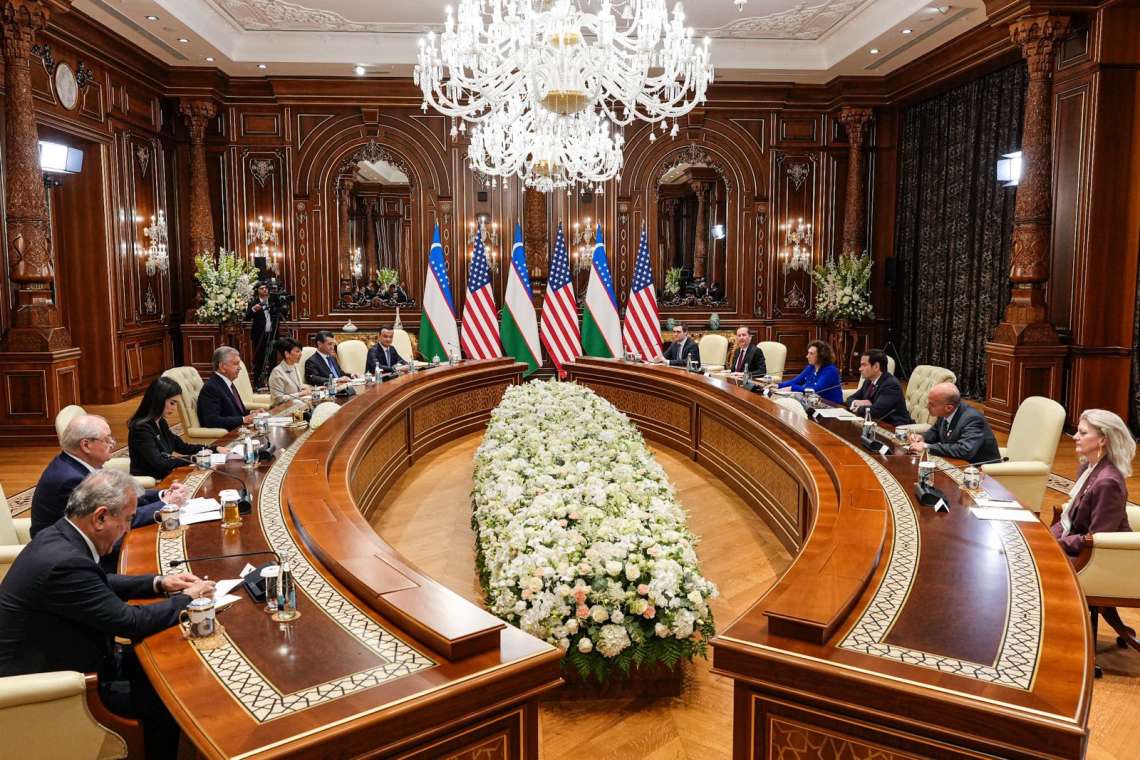
The United States has announced plans to strengthen critical mineral supply chains, expand transport links across Central Asia and train thousands of technology professionals as Washington seeks to reduce dependence on potentially unreliable foreign suppliers. The proposals were outlined by Secretary of State Marco Rubio at the C5+1 ministerial meeting in Samarkand, Uzbekistan, as the US looks to deepen economic ties with the region.
Rubio said Central Asia was an important link between Asian and European markets and an increasingly significant destination for American investment. He identified critical minerals, transport infrastructure and emerging technologies as key areas for cooperation between Washington and the five Central Asian republics.
The C5+1 framework brings together the US, Kazakhstan, Kyrgyzstan, Tajikistan, Turkmenistan and Uzbekistan to strengthen economic, energy and security cooperation. Established in 2015, the initiative also covers regional security, environmental issues and economic development.
“We in the United States, we seek to secure our critical industries and the supply chains that support them so that we may be a sovereign, independent country and economy, and not ever have to rely on risky foreign partners or even adversaries,” Rubio said.
Also Read: France Protest Network Exposed? Report Identifies 54 Organisations
The initiative comes as governments seek to diversify supplies of minerals essential for advanced manufacturing, energy systems and emerging technologies.
Rubio said Washington would work with regional governments to improve infrastructure along the trans-Caspian trade route, which connects Central Asia with international markets through the Caspian Sea and onward transport networks.
“We’re going to enhance the infrastructure of the trans-Caspian trade route and give our partners more ways to reach American and Central Asian markets,” he said.
The route offers an alternative commercial connection between Asia and Europe, attracting growing interest as governments and businesses look to diversify transport networks and reduce dependence on established trade routes.
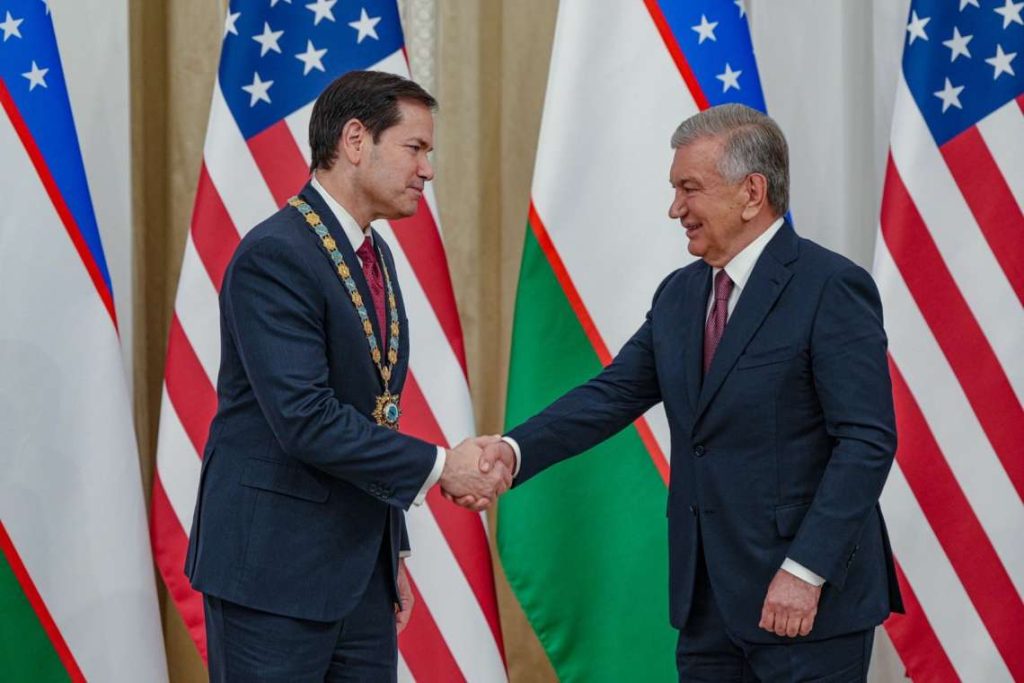
Rubio also outlined plans to develop integrated supply chains for critical minerals, including activities beyond raw material extraction.
“We’re going to work to secure our energy future by driving integrated, high-value supply chains in our critical minerals dialogue,” he said.
Uzbekistan called for a broader partnership covering mineral exploration, processing and local industrial development. Foreign Minister Bakhtiyor Saidov said the region wanted to retain more economic value from its natural resources by attracting investment and developing domestic industrial capabilities.
“As one of our key priorities, we propose advancing a strategic partnership in critical minerals from geological exploration and mineral processing to the establishment of local industrial clusters,” Saidov said.
The proposal highlights Central Asian governments’ interest in securing foreign investment and technology while expanding local processing capacity and industrial production.
Rubio also announced plans to train thousands of young professionals to work with American technology, as the region seeks to expand its technology industries. The B5+1 business forum is expected to support dialogue between governments and private companies to encourage trade and investment.
Rubio recalled that the previous C5+1 summit in Washington had generated agreements valued at $25 billion across transportation, energy, finance and other sectors. The figure referred to announced commercial deals, rather than confirming that the entire amount had already been invested.
Saidov said Uzbekistan, which is assuming the C5+1 Secretariat co-chairmanship, would focus on translating diplomatic commitments into practical economic outcomes. He identified regional integration, access to international markets and stronger industrial capabilities as priorities for the next phase of cooperation.
Central Asia’s position between Russia, China, South Asia and Europe gives its mineral resources and transport infrastructure wider strategic significance. India has also sought closer economic and connectivity ties with the region, making developments in Central Asian trade corridors and critical mineral supply chains relevant to its longer-term commercial interests.