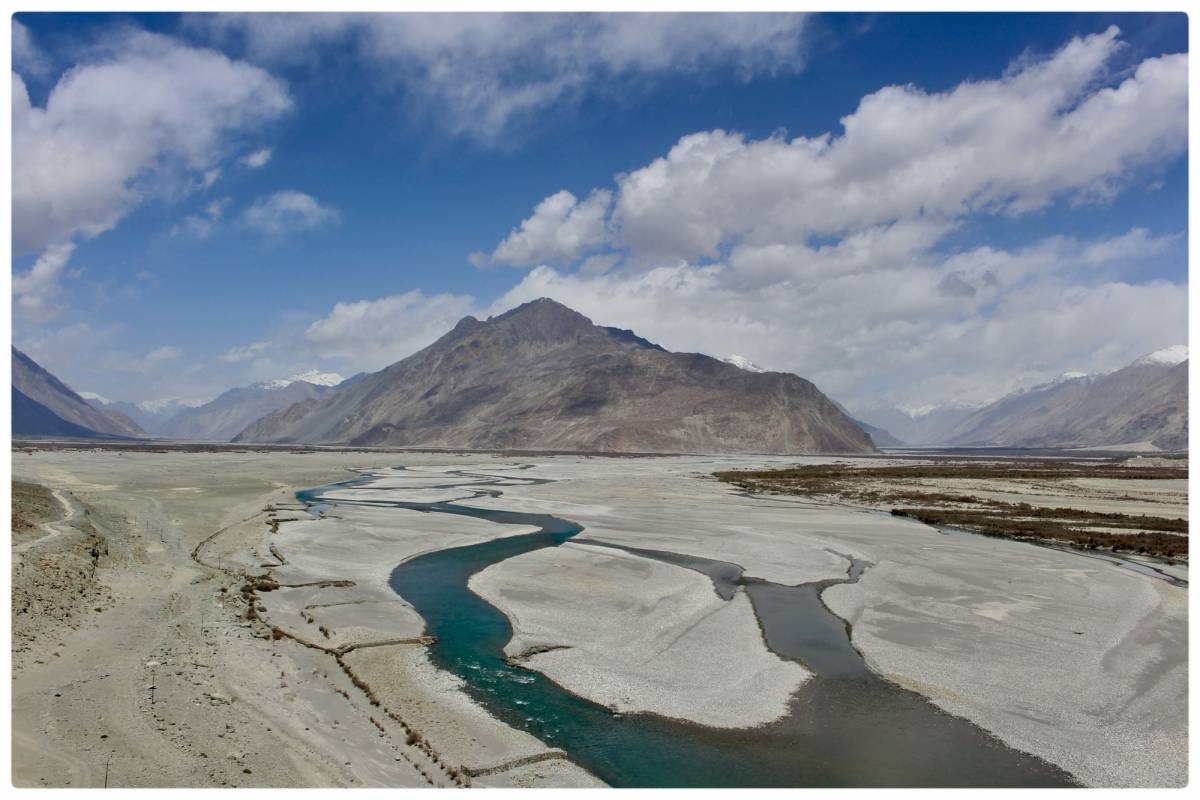
The online exhibition foregrounds the Indus’ significant impact in Ladakh, which crosses serene riverscapes, from the high Himalayas, through a melange of cultures and traditions, down to its delta in the Sindh and out in the Arabian Sea during its course…Siddhi Jain.
Ladakh is a dream place for most travelers. A series of photographs on the Indus River in the Ladakh region, taken by artist-photographer Isaac Tsetan Gergan, follow the length and breadth of Ladakh, from Nubra to Zanskar and Leh to Kargil telling the story of the river and of the state. On view till July 11 online, the exhibition titled ‘Two Banks of a River — The Indus in Ladakh’ brings to light the traditional practices followed by the locals and how the region’s waterways are imperiled by pollution and commercialisation.
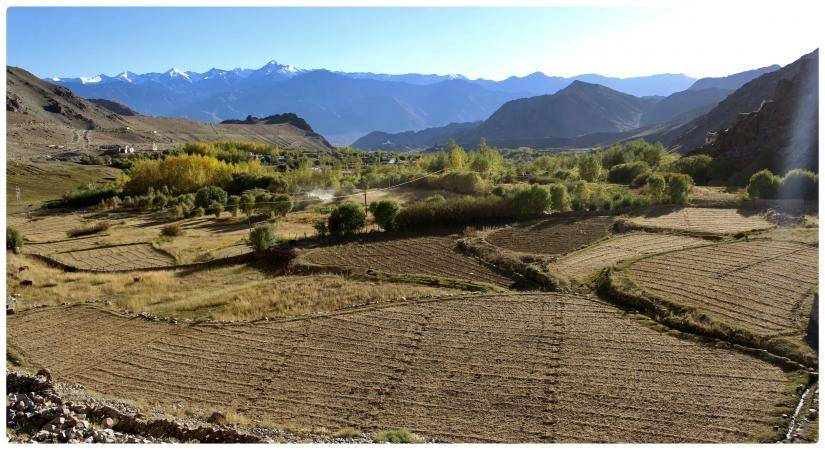
The online exhibition foregrounds the Indus’ significant impact in Ladakh, which crosses serene riverscapes, from the high Himalayas, through a melange of cultures and traditions, down to its delta in the Sindh and out in the Arabian Sea during its course. Like it has nourished our ancestors, the river continues to bring life to the thousands of villages and communities along its course, says the exhibition about the life-giving river.
Building on how the Indus supports life, livestock and agrarian practices have built Ladakh, it shows how the Ladakhi way of life and everyday systems are sustainable and use resources wisely and in harmony with the environment. “One cannot say the same of today’s booming industries and infrastructure development.”
“Prayers have been offered to the great river, ashes dissolved into its currents. The Indus, like all water bodies, is sacred in these regions. The sacredness ascribed to water made communities use it wisely and deliberately, certainly not wastefully or thoughtlessly.”
The Vancouver-educated artist-photographer shares that the containers of water were prayed over, as they held a significant place in the home and were designed beautifully. “The plastic bucket, while cheaper and perhaps more practical, still pales. Do we carry forward our values related to water, even as we know of its decreasing availability? How can we still build our systems around traditional values connected with water?” says a note on the exhibition.
It adds: “Waterways are being polluted. We have a number of hydro-power projects that have come up too. Rising temperatures and erratic weather patterns, episodes of sudden downpours have increased risks to livelihoods and settlements. There is only so much water; can everybody have an equal share? The changes in the mountains are evident, many times before it is in the plains, owing to its fragility.
“Similarly the changes in climate are seemingly slow but certainly steady and constant. The impacts of Indus being dammed has altered life downstream, even if in small ways, or the flash floods that caused massive loss of life, land, and history. Sewage water seeping into the waterways, to the rise in tourism leaving an unmistakable trail of non-biodegradable waste, we come to make as our way of life. What is in our control and can we be better stewards of the resources we have been given?”
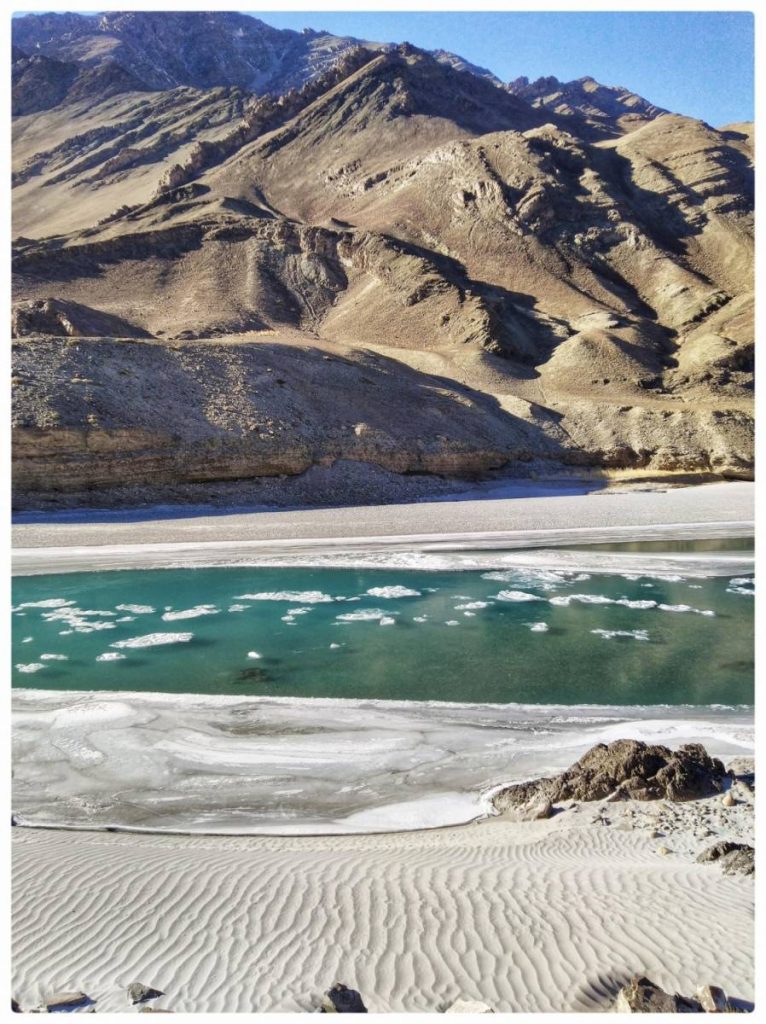
Reminiscing about a simpler past and reflecting on the present, the artist observes: “Photographing and writing about the Indus, hearing old folk tell their stories or experts giving presentations, I have been moved across emotions and thoughts about water and its central place in Ladakh. Sitting by still brooks to the banks of the raging Suru, I have seen water flow through Ladakh. Laying on the soft grass in a willow’s shade along a rushing stream, hearing the soft water following on the flattened pebbles is not only romantic but is still possible. From my position, while writing, on the other side of the bank are sounds of heavy machinery, earth movers, concrete and iron pillars rising higher, sweat under yellow helmets — a new age coming to the ancient mountains.”
The online exhibition is on view on the website of the India International Centre.
ALSO READ-Future Bright For Ladakh As A Union Territory
READ MORE-Sanskruti Centre and The Nehru Centre highlight Ladakhi culture