October 10, 2021
3 mins read

Rajasthan girl becomes British High Commissioner for a day

As per the release, the applicants for this year’s competition were invited to submit a one-minute video answering the question: ‘How can young people best support tackle the global challenge of climate change?’…reports Asian Lite News.

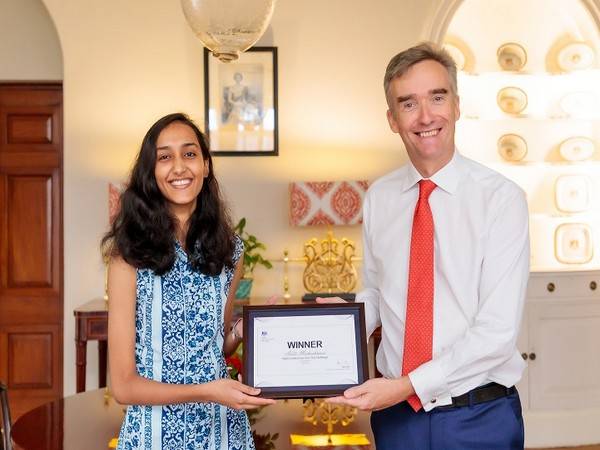
Twenty-year-old Aditi Maheshwari from Rajasthan recently became the British High Commissioner to India for a day.

Maheshwari, who is pursuing her Bachelor’s in Physical Science from the University of Delhi’s Miranda House College won the ‘High Commissioner for the Day’ contest organised annually since 2017 to celebrate the International Day of the Girl Child on October 11, British High Commission said in a press release.

Aditi, who aspires to join the Indian Administrative Service, is the fifth winner of the India edition of the competition.

As the UK’s top diplomat in India, Aditi experienced a broad variety of diplomatic activities on Friday. She observed the India-UK Energy for Growth Dialogue alongside Ministers Raj Kumar Singh and Kwasi Kwarteng, the release said.

“She met with beneficiaries of a leadership programme for aspiring female politicians funded by the Chevening Alumni Programme Fund, climate experts from the Council on Energy, Environment and Water (CEEW), who signed the UK in India Pledge for Progress, to show their leadership in gender equality and young leaders from the not-for-profit Global Youth,” the British High Commission informed.

Aditi’s packed day also included a hands-on demonstration of the I-PACE – Jaguar’s zero-emissions, all-electric performance SUV to be used by world leaders at the COP26 climate conference in Glasgow next month.

Talking about her experience, Aditi said, “I had applied for the competition last year as well and I’m really pleased that I got the opportunity. The interaction with senior diplomats and with women from ‘She Leads’ leadership programme were the two personal highlights of the day for me.”

“I also enjoyed being driven around in an electric vehicle by the High Commissioner. The amount of work that both the UK and India are doing to tackle issues like climate change and gender inequality made me really hopeful as a young woman. I will cherish this day for a long time to come,” she added.

The UK and India are working together to help ensure women and girls can reach their full potential.

As per the release, the applicants for this year’s competition were invited to submit a one-minute video answering the question: ‘How can young people best support tackle the global challenge of climate change?’

Alex Ellis, Deputy High Commissioner for the Day (on other days, High Commissioner to India), said, “It was a pleasure for me to work with Aditi throughout the day. Her confidence and thoughtfulness on important issues like climate change and women’s rights shone through. The UK is working with India to provide a platform for young women like Aditi to help them reach their potential.”

“I am pleased that so many young girls sent in their entries for this year’s competition which focussed on climate change. Women are disproportionately affected by climate change and are often left out of decision making on it. The UK is committed to hosting an inclusive COP26 that advances gender equality by calling on all countries to implement the Gender Action Plan agreed at COP25,” he added.

In India, the British High Commission is working with state governments, law enforcement agencies, education authorities and British businesses to promote gender equality. (ANI)

ALSO READ-Rajasthan takes pride in success stories of RAS qualifiers

READ MORE-Ambassador Ellis holds talks on vax certification with India

Previous Story

Aim for $450-$500 bn exports next year: Goyal

Next Story

India, US discuss increasing cooperation in Indo-Pacific

Previous Story

Aim for $450-$500 bn exports next year: Goyal

Next Story

India, US discuss increasing cooperation in Indo-Pacific

Latest from -Top News

Pakistan Risks Overstretching Itself in Yemen War

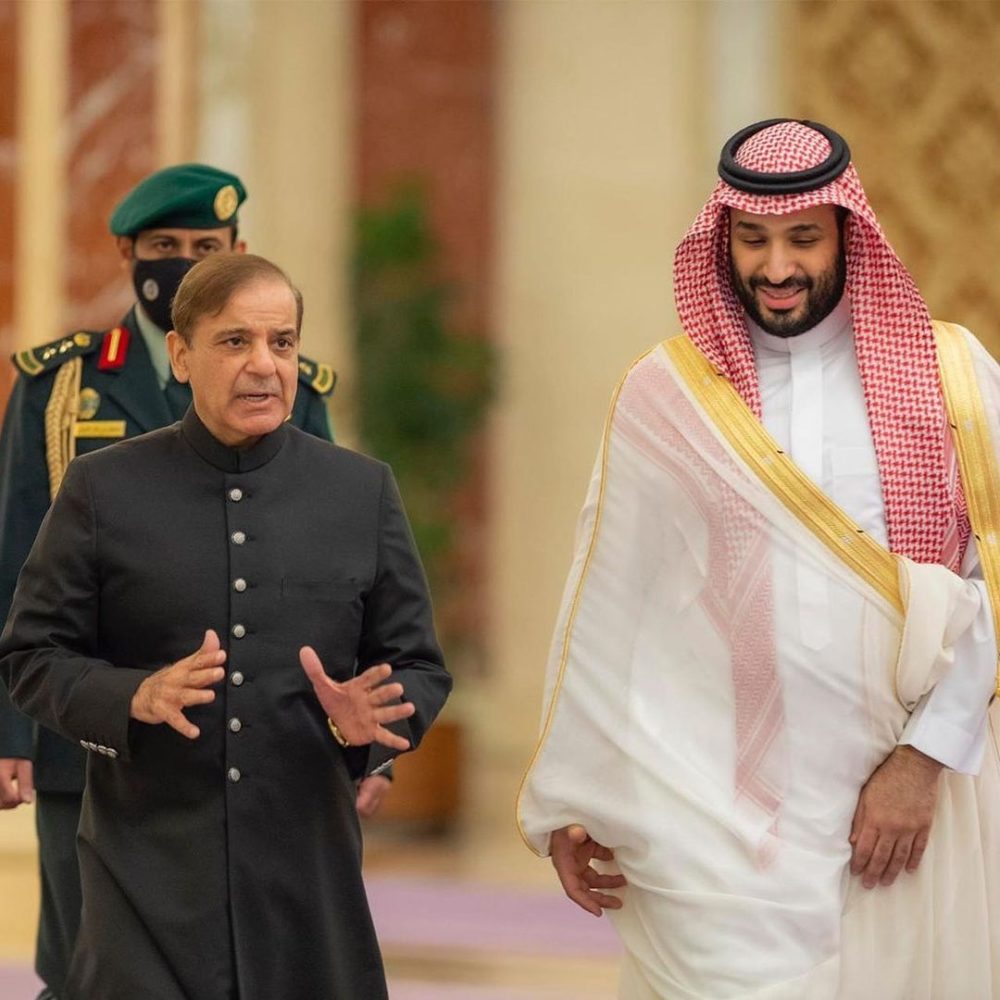
Pakistan’s expanding military role in Saudi Arabia amid the Yemen conflict could strain its defence resources and fragile finances…reports Asian Lite News Desk Pakistan’s military involvement in the war in Yemen may prove unsustainable because of mounting financial pressures and competing security demands, according to a new report. Islamabad’s growing military presence in Saudi Arabia risks stretching its defence resources while exposing the country to greater strategic and economic challenges. An article by Andrew Wilson in One World Outlook describes Pakistan’s involvement as a case of “fiscal and strategic overreach”, arguing that the country lacks the financial flexibility to sustain an expanded military commitment. Pakistan’s external finances depend heavily on an International Monetary Fund (IMF) programme, financial support from Gulf countries and remittances from Pakistani workers in the region. The report argues that deeper military involvement in the conflict could place additional pressure on these sources of financial stability. It also warns that deploying troops and military equipment abroad could weaken Pakistan’s capacity to address security challenges along its eastern border and deal with two domestic insurgencies. The move could also draw Islamabad into a conflict it has sought to approach cautiously. A Reuters report in May, citing Pakistani security and government sources, said Islamabad had deployed around 8,000 troops, a squadron of approximately 16 aircraft, mostly JF-17 fighter jets, two drone squadrons and a Chinese HQ-9 air-defence battery to Saudi Arabia. According to those sources, Riyadh was financing the deployment, with Pakistani personnel operating the equipment. The sources also said a confidential agreement contemplated the possibility of deploying up to 80,000 troops. Islamabad has not confirmed those figures, although it has acknowledged its military presence in Saudi Arabia, including the deployment of fighter jets at King Abdulaziz Air Base from April. The One World Outlook article argues that Saudi financial support can cover allowances and operating expenses but cannot easily replace military equipment needed elsewhere or resolve the political and strategic challenges of participating in the Yemen conflict. Pakistan’s defence budget is another concern. For the 2026-27 financial year, the federal government allocated PKR 3 trillion, or approximately $10.8 billion, to defence services. The allocation represents an 18 per cent increase from the original PKR 2.55 trillion provision and amounts to around 2.1 per cent of projected gross domestic product (GDP). Defence spending accounts for approximately 16 per cent of the federal government’s PKR 18.8 trillion expenditure. Military pensions are budgeted separately at PKR 822 billion, while debt servicing costs stand at approximately PKR 8 trillion, more than two-and-a-half times the defence allocation. The report argues that these competing financial obligations leave little room for additional military expenditure without placing further pressure on public finances. Pakistan’s reliance on IMF assistance also limits its fiscal flexibility. The country must meet the conditions attached to the programme, including a primary budget surplus target of 2 per cent of GDP and continued restraint on development spending. According to the article, these requirements make it difficult for Islamabad to finance an additional military commitment without compromising other budgetary priorities. Pakistan’s economic indicators offer limited reassurance. Economic growth for the 2025-26 financial year is estimated at between 3.6 and 3.7 per cent, while inflation reached approximately 10.3 per cent in September following an energy price shock. Foreign exchange reserves stood at around $21.5 billion at the end of September. Although this marks an improvement from the low levels recorded in 2023, the report notes that the reserves cover only a few months of imports. Financial assistance from Gulf partners remains central to Pakistan’s external stability. The article says Islamabad holds approximately $8 billion in Saudi deposits at its central bank. In July, the State Bank of Pakistan said Riyadh had extended the maturity of $5 billion in deposits to December 2028, easing the country’s immediate external financing requirements. A further $3 billion deposit was also extended in the spring. However, the article argues that these arrangements provide temporary relief rather than long-term financial independence, particularly as regional conflict threatens the stability of the Gulf economies on which Pakistan relies. The report concludes that Pakistan faces a difficult balance between supporting Saudi Arabia militarily and preserving the financial and military resources needed to address its domestic and regional challenges.
Go toTop

Don't Miss

Aditi feels like debutant always

Aditi started out in the 2006 Malayalam film “Prajapathi” and

Ties with India grew stronger in 2022, says UK envoy

In the video message, posted on his Twitter account, Alex