June 23, 2021
2 mins read

New Zealand crush India, clinch WTC title

This is an apt redemption for New Zealand, who had lost the final of the last two 50-over World Cups, in 2015 and 2019….reports Asian Lite News

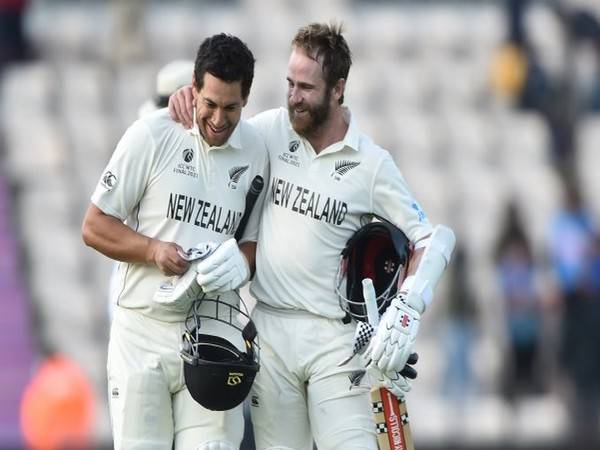
New Zealand coasted to an unlikely eight-wicket win on the sixth — and reserve — day of the World Test Championship final against India at the Hampshire Bowl on Wednesday.

This is an apt redemption for New Zealand, who had lost the final of the last two 50-over World Cups, in 2015 and 2019.

The match, in which two days were lost to rain, saw a strong performance from Kiwis on the reserve day as their bowlers ran through the Indian batting line-up and dismissed them for just 170 runs. And then they scaled the 139-run target through a 96-run third-wicket partnership between Kane Williamson (52 not out) and Ross Taylor (47 not out).
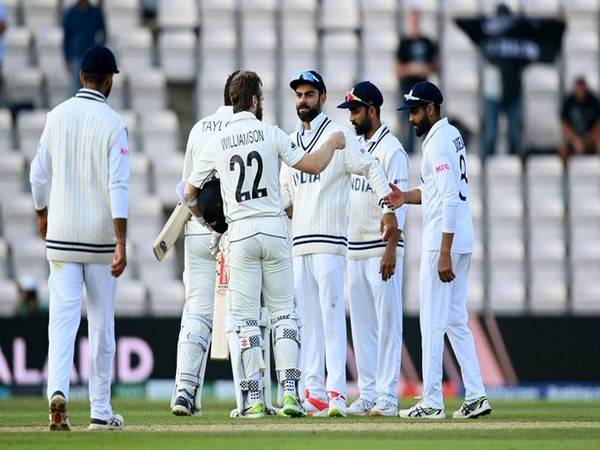
India got a sniff of victory when off-spinner R Ashwin removed the two openers early and bowled a tight line to Taylor. However, Taylor smashed Ashwin for two boundaries in one over to break the shackles and then coasted along.

Earlier, India, who started the day at 64/2, lost three wickets — skipper Virat Kohli (13), Cheteshwar Pujara (15), and Ajinkya Rahane (15) — in the first session to go to lunch at 130/5.

Kyle Jamieson (2/30) removed Kohli and Pujara while Rahane fell to Boult (3/39).
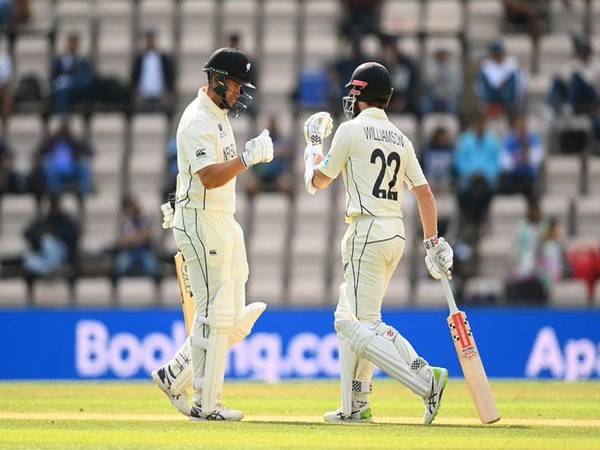
Post lunch, India kept losing wickets as the tail failed to wag once again. Rishabh Pant, who was the innings top scorer with 41 runs, was the last hope for India but he fell to a rash shot as the seventh wicket with the score on 156.

Pace bowler Tim Southee picked four wickets for 48 runs to end as the most successful New Zealand bowler.

Indian seamers, in response, failed to make an impact on a pitch where New Zealand bowlers looked unplayable. Barring a brief spell during which Ashwin unsettled the Kiwis by removing Devon Conway (19) and Tom Latham (9), the entire bowling unit looked innocuous.

This is New Zealand’s sixth successive win over India in ICC tournaments, dating back to World T20 in 2007.

Brief scores: India 217 all out in 92.1 overs and 170 all out in 73 overs (R Sharma 30, R Pant 41, T Southee 4/48, T Boult 3/39, K Jamieson 2/30); New Zealand 249 all out in 99.2 overs and 140/2 wkts in 45.5 overs (K Williamson 52 not out, R Taylor 47 not out)

ALSO READ: WTC final: India bowled out for 170, NZ need 139 to win
Previous Story

UK economy sees strong growth despite inflation

Next Story

India bite the dust in WTC final

Previous Story

UK economy sees strong growth despite inflation

Next Story

India bite the dust in WTC final

Latest from -Top News

Pakistan Risks Overstretching Itself in Yemen War

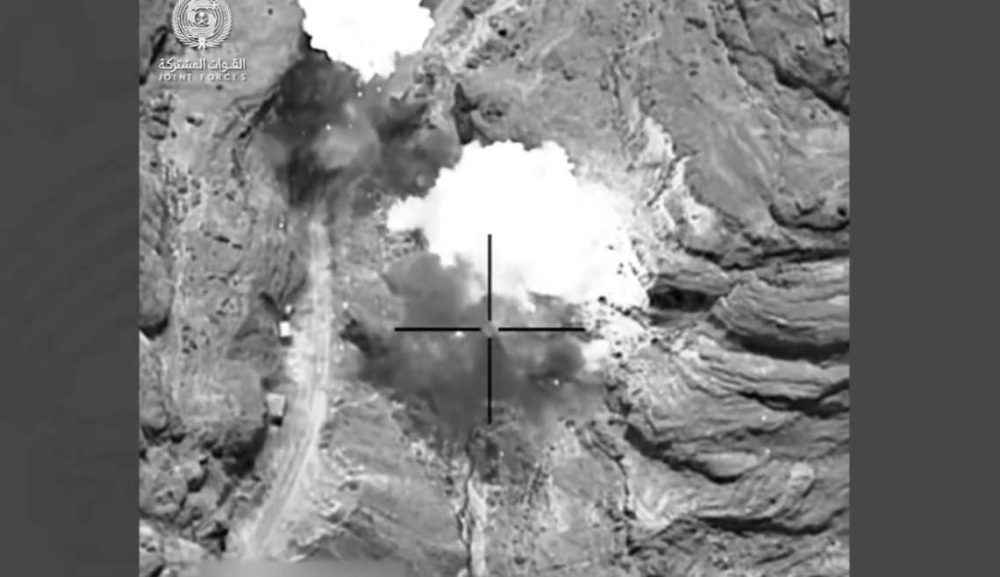
Pakistan’s expanding military role in Saudi Arabia amid the Yemen conflict could strain its defence resources and fragile finances…reports Asian Lite News Desk Pakistan’s military involvement in the war in Yemen may prove unsustainable because of mounting financial pressures and competing security demands, according to a new report. Islamabad’s growing military presence in Saudi Arabia risks stretching its defence resources while exposing the country to greater strategic and economic challenges. An article by Andrew Wilson in One World Outlook describes Pakistan’s involvement as a case of “fiscal and strategic overreach”, arguing that the country lacks the financial flexibility to sustain an expanded military commitment. Pakistan’s external finances depend heavily on an International Monetary Fund (IMF) programme, financial support from Gulf countries and remittances from Pakistani workers in the region. The report argues that deeper military involvement in the conflict could place additional pressure on these sources of financial stability. It also warns that deploying troops and military equipment abroad could weaken Pakistan’s capacity to address security challenges along its eastern border and deal with two domestic insurgencies. The move could also draw Islamabad into a conflict it has sought to approach cautiously. A Reuters report in May, citing Pakistani security and government sources, said Islamabad had deployed around 8,000 troops, a squadron of approximately 16 aircraft, mostly JF-17 fighter jets, two drone squadrons and a Chinese HQ-9 air-defence battery to Saudi Arabia. According to those sources, Riyadh was financing the deployment, with Pakistani personnel operating the equipment. The sources also said a confidential agreement contemplated the possibility of deploying up to 80,000 troops. Islamabad has not confirmed those figures, although it has acknowledged its military presence in Saudi Arabia, including the deployment of fighter jets at King Abdulaziz Air Base from April. The One World Outlook article argues that Saudi financial support can cover allowances and operating expenses but cannot easily replace military equipment needed elsewhere or resolve the political and strategic challenges of participating in the Yemen conflict. Pakistan’s defence budget is another concern. For the 2026-27 financial year, the federal government allocated PKR 3 trillion, or approximately $10.8 billion, to defence services. The allocation represents an 18 per cent increase from the original PKR 2.55 trillion provision and amounts to around 2.1 per cent of projected gross domestic product (GDP). Defence spending accounts for approximately 16 per cent of the federal government’s PKR 18.8 trillion expenditure. Military pensions are budgeted separately at PKR 822 billion, while debt servicing costs stand at approximately PKR 8 trillion, more than two-and-a-half times the defence allocation. The report argues that these competing financial obligations leave little room for additional military expenditure without placing further pressure on public finances. Pakistan’s reliance on IMF assistance also limits its fiscal flexibility. The country must meet the conditions attached to the programme, including a primary budget surplus target of 2 per cent of GDP and continued restraint on development spending. According to the article, these requirements make it difficult for Islamabad to finance an additional military commitment without compromising other budgetary priorities. Pakistan’s economic indicators offer limited reassurance. Economic growth for the 2025-26 financial year is estimated at between 3.6 and 3.7 per cent, while inflation reached approximately 10.3 per cent in September following an energy price shock. Foreign exchange reserves stood at around $21.5 billion at the end of September. Although this marks an improvement from the low levels recorded in 2023, the report notes that the reserves cover only a few months of imports. Financial assistance from Gulf partners remains central to Pakistan’s external stability. The article says Islamabad holds approximately $8 billion in Saudi deposits at its central bank. In July, the State Bank of Pakistan said Riyadh had extended the maturity of $5 billion in deposits to December 2028, easing the country’s immediate external financing requirements. A further $3 billion deposit was also extended in the spring. However, the article argues that these arrangements provide temporary relief rather than long-term financial independence, particularly as regional conflict threatens the stability of the Gulf economies on which Pakistan relies. The report concludes that Pakistan faces a difficult balance between supporting Saudi Arabia militarily and preserving the financial and military resources needed to address its domestic and regional challenges.
Go toTop

Don't Miss

WTC Final: All eyes on Rohit as India take on Australia

Once again, eyes will be on India skipper Rohit Sharma,

The ultimate Test in the ‘cradle of cricket’

Although a recognised first-class side since 1864 and winners of