June 23, 2021
2 mins read

UK economy sees strong growth despite inflation

Along with economic rebound in the month, the pressure of inflation was also intensified…reports Asian Lite News.

Britain’s economy has seen further strong growth in June despite rising inflation as Covid-19 lockdown restrictions continued to be eased, a joint survey showed on Wednesday.

The flash composite output index across the country registered at 61.7 in June, down slightly from May’s record reading of 62.9, but still pointing to one of the strongest monthly improvements in business activity across the private sector since 1998, said the survey compiled by IHS Markit, a London-based global information provider, and the Chartered Institute of Procurement & Supply (CIPS), a Britain-based global procurement and supply organisation.
“Businesses are reporting an ongoing surge in demand in June as the economy reopens, led by the hospitality sector, meaning the second quarter looks to have seen economic growth rebound very sharply from the first quarter’s decline,” said Chris Williamson, chief business economist at IHS Markit.

Figures revealed that marked increases in output were seen across both the manufacturing and service sectors, with the two’s flash purchasing managers’ index (PMI) hitting 64.2 and 61.7 respectively, signalling robust expansions in activities.

Along with economic rebound in the month, the pressure of inflation was also intensified.

The rate of input cost inflation accelerated for the fifth month running and was the joint-fastest on record, equal with that seen in June 2008, data showed. In addition, the rate of output price inflation hit a fresh record high for the second month running.

“Record cost inflation last seen in 2008 filtered through to increasing output costs as manufacturers were unable to absorb these rapid rises any longer,” said Duncan Brock, group director at the CIPS.

“In service businesses, consumers were hit with considerably higher prices for food and hospitality, increasing the threat of soaring inflation in the UK economy this summer,” Brock added.

Looking ahead, companies remained confident that output will rise over the next 12 months as the recovery from the COVID-19 pandemic continues, said the report, adding that optimism was signalled at manufacturers and service providers alike.

https://www.youtube.com/watch?v=D2_XLAQEU7g

British Prime Minister Boris Johnson has announced a four-week delay to the final step of England’s roadmap out of Covid-19 restrictions until July 19, amid a surge in cases of the Delta variant.

Experts have warned that coronavirus may continue to evolve for years to come, and eventually it is likely current vaccines will fail to protect against transmission, infection, or even against disease caused by newer variants, Xinhua reported.

To bring life back to normal, countries such as Britain, China, Russia, the United States as well as the European Union have been racing against time to roll out coronavirus vaccines.

ALSO READ-Indian companies’ contribution to UK economy grows

READ MORE-UK economy shrank less than feared

Previous Story

Abu Dhabi announces resumption of cruise liners

Next Story

New Zealand crush India, clinch WTC title

Previous Story

Abu Dhabi announces resumption of cruise liners

Next Story

New Zealand crush India, clinch WTC title

Latest from -Top News

Pakistan Risks Overstretching Itself in Yemen War

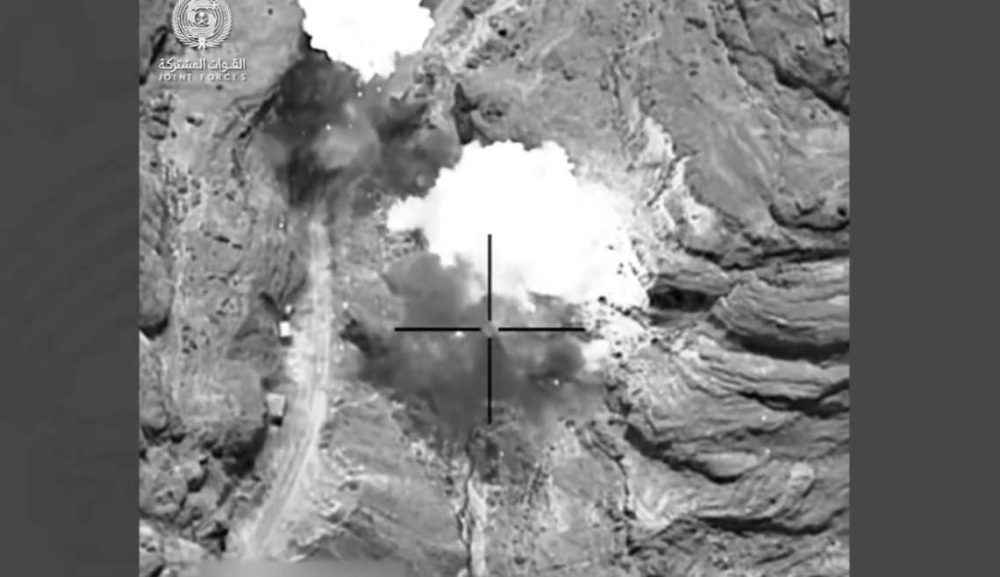
Pakistan’s expanding military role in Saudi Arabia amid the Yemen conflict could strain its defence resources and fragile finances…reports Asian Lite News Desk Pakistan’s military involvement in the war in Yemen may prove unsustainable because of mounting financial pressures and competing security demands, according to a new report. Islamabad’s growing military presence in Saudi Arabia risks stretching its defence resources while exposing the country to greater strategic and economic challenges. An article by Andrew Wilson in One World Outlook describes Pakistan’s involvement as a case of “fiscal and strategic overreach”, arguing that the country lacks the financial flexibility to sustain an expanded military commitment. Pakistan’s external finances depend heavily on an International Monetary Fund (IMF) programme, financial support from Gulf countries and remittances from Pakistani workers in the region. The report argues that deeper military involvement in the conflict could place additional pressure on these sources of financial stability. It also warns that deploying troops and military equipment abroad could weaken Pakistan’s capacity to address security challenges along its eastern border and deal with two domestic insurgencies. The move could also draw Islamabad into a conflict it has sought to approach cautiously. A Reuters report in May, citing Pakistani security and government sources, said Islamabad had deployed around 8,000 troops, a squadron of approximately 16 aircraft, mostly JF-17 fighter jets, two drone squadrons and a Chinese HQ-9 air-defence battery to Saudi Arabia. According to those sources, Riyadh was financing the deployment, with Pakistani personnel operating the equipment. The sources also said a confidential agreement contemplated the possibility of deploying up to 80,000 troops. Islamabad has not confirmed those figures, although it has acknowledged its military presence in Saudi Arabia, including the deployment of fighter jets at King Abdulaziz Air Base from April. The One World Outlook article argues that Saudi financial support can cover allowances and operating expenses but cannot easily replace military equipment needed elsewhere or resolve the political and strategic challenges of participating in the Yemen conflict. Pakistan’s defence budget is another concern. For the 2026-27 financial year, the federal government allocated PKR 3 trillion, or approximately $10.8 billion, to defence services. The allocation represents an 18 per cent increase from the original PKR 2.55 trillion provision and amounts to around 2.1 per cent of projected gross domestic product (GDP). Defence spending accounts for approximately 16 per cent of the federal government’s PKR 18.8 trillion expenditure. Military pensions are budgeted separately at PKR 822 billion, while debt servicing costs stand at approximately PKR 8 trillion, more than two-and-a-half times the defence allocation. The report argues that these competing financial obligations leave little room for additional military expenditure without placing further pressure on public finances. Pakistan’s reliance on IMF assistance also limits its fiscal flexibility. The country must meet the conditions attached to the programme, including a primary budget surplus target of 2 per cent of GDP and continued restraint on development spending. According to the article, these requirements make it difficult for Islamabad to finance an additional military commitment without compromising other budgetary priorities. Pakistan’s economic indicators offer limited reassurance. Economic growth for the 2025-26 financial year is estimated at between 3.6 and 3.7 per cent, while inflation reached approximately 10.3 per cent in September following an energy price shock. Foreign exchange reserves stood at around $21.5 billion at the end of September. Although this marks an improvement from the low levels recorded in 2023, the report notes that the reserves cover only a few months of imports. Financial assistance from Gulf partners remains central to Pakistan’s external stability. The article says Islamabad holds approximately $8 billion in Saudi deposits at its central bank. In July, the State Bank of Pakistan said Riyadh had extended the maturity of $5 billion in deposits to December 2028, easing the country’s immediate external financing requirements. A further $3 billion deposit was also extended in the spring. However, the article argues that these arrangements provide temporary relief rather than long-term financial independence, particularly as regional conflict threatens the stability of the Gulf economies on which Pakistan relies. The report concludes that Pakistan faces a difficult balance between supporting Saudi Arabia militarily and preserving the financial and military resources needed to address its domestic and regional challenges.
Go toTop

Don't Miss

Boris Warns World Ahead of COP26

With the climate change conference due to start on Sunday,

UK and Nigeria strengthen security, defence partnership

This week’s dialogue, the first following the agreement of our