November 15, 2021
3 mins read

Pak releases 20 Indian fishermen from Karachi prison

Most were imprisoned after crossing over to Pakistani waters four years ago with some also leaving after five years….reports Asian Lite News

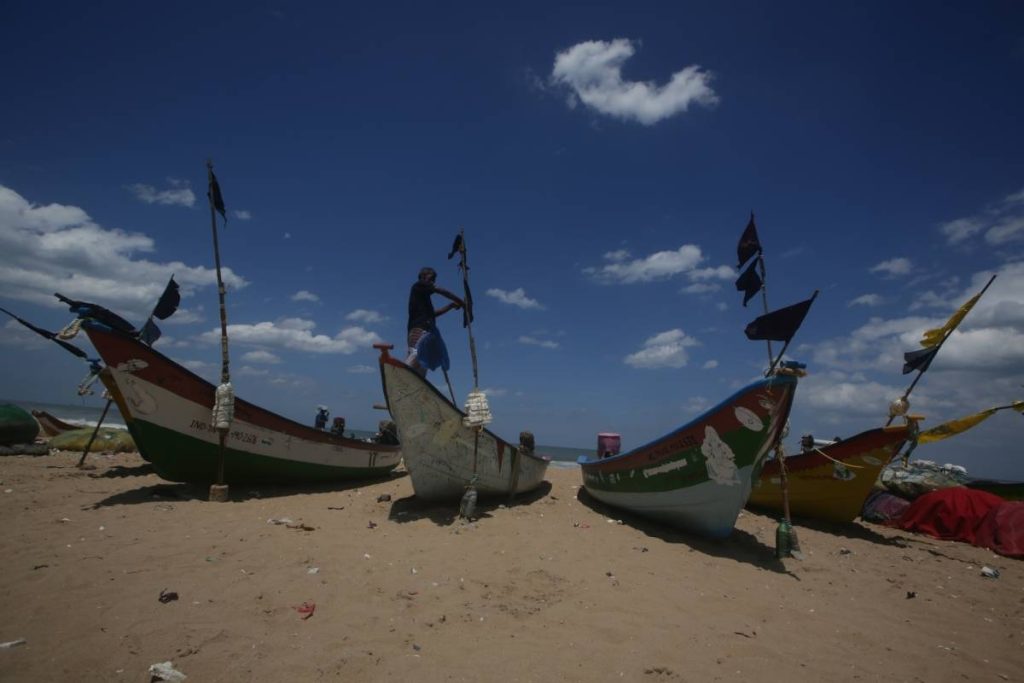
 The Pakistan government has released 20 Indian fishermen from the District Prison and Correctional Facility in Karachi, Dawn news reported.

Most were imprisoned after crossing over to Pakistani waters four years ago with some also leaving after five years.

Many wore colourful beaded necklaces and bracelets around their necks and wrists which they had made those themselves.

Since the education provided to prisoners in jails here is in Urdu or English, the Indian fishermen find it very hard to follow. Therefore, they fare better in learning handicrafts or vocational training, the report said.

There was something very special in Ravendra Govind and Makwaran Bhawesh Kumar’s luggage. It was a model of a Pakistani Coast Guard boat made of blue and white beads. There was also a small white helicopter and a lifeboat resting on one of the decks of the bigger boat.

“It is a model of the boat which arrested us at sea four years ago,” Ravendra was quoted as saying in the Dawn news report.

“Its image is imprinted in my mind so me and my friend here”, he gestured towards his friend Makwaran, “started working on this model.”
But the beautiful boat bore an Indian flag and the name ‘Jiyan Ind’ on one side. The men had also given it the name Ravi.Vadhel.

Asked why it didn’t carry the Pakistani boat’s name, Makwaran added that though the image of the boat they could not get out of their heads, the Indian flag was imprinted on their hearts, the report said.

Both the friends said that their parents back home had found suitable brides for them and they would be married soon after reaching home.

The jail staff when calling out the names of the deportees came across two names for whom they said, “Oh come on, won’t you stay longer. We will miss you here,” followed by giggles and laughter all around. The fishermen said that they have been treated very well by the jail staff with whom they also made friends, Dawn reported.

“The food served to us was exceptionally delicious. We would get chicken dishes three times a week, eggs every morning with paratha, toast and great tea. “But our favourite dish in jail will have to be karhi-pakora,” said Himat Balal Babu, the report said.

Another deportee, Arjun Babu, was sporting very long tresses. He said that he had been growing his hair from the time of his arrest five years ago. “It was for the fulfilment of my wish to be released soon. It was a mannat,” he explained. “My hair grew so long and I believe it is thanks to my mannat that all we 20 are being released today,” he said, adding that he would get a haircut as soon as he reaches home but not immediately just to be safe. “I’ll look for a barber after crossing the border,” he smiled, the report said.

Meanwhile, Ravendra said that he was glad to be leaving for home now but was sad about leaving behind several other Indian fishermen in jail for also having crossed over to Pakistan unknowingly like him. “Please release them also so that they can be with their families,” he pleaded. He also said he will also ask the authorities in India to release the Pakistani fishermen languishing in Indian jails for years for the same offence. All the deportees belonged to the Indian state of Gujarat, the report said.

The names of the rest are: Ranveer Maoo Jee, Babu Naran, Bhupat Bhagwan, Naran Parbat, Bhavesh Shara Bhai, Rukhad Arjun, Dana Bhupat, Ransi Bachu, Pola Sahur, Meepa Aama Bhai, Biso Naga, Parma Haresh Kumar, Paresh Bhai, Taba Bhai, Vaju Lakhman and Juseb Moosa.

The deportees were presented with gift bags and a sum of 5,000 PKR each by the Edhi Foundation, who were also responsible for transporting them to Lahore, the report said.

They are expected to reach Lahore, by road, on Monday evening from where they would be handed over to Indian authorities through the Wagah Border, the report said.

ALSO READ: Pakistan issues visas to Sikh pilgrims from India

Previous Story

Pak likely to allow transportation of Indian wheat to Afghanistan

Next Story

Plummeting Pakistani rupee reveals deeper economic problems

Previous Story

Pak likely to allow transportation of Indian wheat to Afghanistan

Next Story

Plummeting Pakistani rupee reveals deeper economic problems

Latest from -Top News

Pakistan Risks Overstretching Itself in Yemen War

Pakistan’s expanding military role in Saudi Arabia amid the Yemen conflict could strain its defence resources and fragile finances…reports Asian Lite News Desk Pakistan’s military involvement in the war in Yemen may prove unsustainable because of mounting financial pressures and competing security demands, according to a new report. Islamabad’s growing military presence in Saudi Arabia risks stretching its defence resources while exposing the country to greater strategic and economic challenges. An article by Andrew Wilson in One World Outlook describes Pakistan’s involvement as a case of “fiscal and strategic overreach”, arguing that the country lacks the financial flexibility to sustain an expanded military commitment. Pakistan’s external finances depend heavily on an International Monetary Fund (IMF) programme, financial support from Gulf countries and remittances from Pakistani workers in the region. The report argues that deeper military involvement in the conflict could place additional pressure on these sources of financial stability. It also warns that deploying troops and military equipment abroad could weaken Pakistan’s capacity to address security challenges along its eastern border and deal with two domestic insurgencies. The move could also draw Islamabad into a conflict it has sought to approach cautiously. A Reuters report in May, citing Pakistani security and government sources, said Islamabad had deployed around 8,000 troops, a squadron of approximately 16 aircraft, mostly JF-17 fighter jets, two drone squadrons and a Chinese HQ-9 air-defence battery to Saudi Arabia. According to those sources, Riyadh was financing the deployment, with Pakistani personnel operating the equipment. The sources also said a confidential agreement contemplated the possibility of deploying up to 80,000 troops. Islamabad has not confirmed those figures, although it has acknowledged its military presence in Saudi Arabia, including the deployment of fighter jets at King Abdulaziz Air Base from April. The One World Outlook article argues that Saudi financial support can cover allowances and operating expenses but cannot easily replace military equipment needed elsewhere or resolve the political and strategic challenges of participating in the Yemen conflict. Pakistan’s defence budget is another concern. For the 2026-27 financial year, the federal government allocated PKR 3 trillion, or approximately $10.8 billion, to defence services. The allocation represents an 18 per cent increase from the original PKR 2.55 trillion provision and amounts to around 2.1 per cent of projected gross domestic product (GDP). Defence spending accounts for approximately 16 per cent of the federal government’s PKR 18.8 trillion expenditure. Military pensions are budgeted separately at PKR 822 billion, while debt servicing costs stand at approximately PKR 8 trillion, more than two-and-a-half times the defence allocation. The report argues that these competing financial obligations leave little room for additional military expenditure without placing further pressure on public finances. Pakistan’s reliance on IMF assistance also limits its fiscal flexibility. The country must meet the conditions attached to the programme, including a primary budget surplus target of 2 per cent of GDP and continued restraint on development spending. According to the article, these requirements make it difficult for Islamabad to finance an additional military commitment without compromising other budgetary priorities. Pakistan’s economic indicators offer limited reassurance. Economic growth for the 2025-26 financial year is estimated at between 3.6 and 3.7 per cent, while inflation reached approximately 10.3 per cent in September following an energy price shock. Foreign exchange reserves stood at around $21.5 billion at the end of September. Although this marks an improvement from the low levels recorded in 2023, the report notes that the reserves cover only a few months of imports. Financial assistance from Gulf partners remains central to Pakistan’s external stability. The article says Islamabad holds approximately $8 billion in Saudi deposits at its central bank. In July, the State Bank of Pakistan said Riyadh had extended the maturity of $5 billion in deposits to December 2028, easing the country’s immediate external financing requirements. A further $3 billion deposit was also extended in the spring. However, the article argues that these arrangements provide temporary relief rather than long-term financial independence, particularly as regional conflict threatens the stability of the Gulf economies on which Pakistan relies. The report concludes that Pakistan faces a difficult balance between supporting Saudi Arabia militarily and preserving the financial and military resources needed to address its domestic and regional challenges.
Go toTop

Don't Miss

‘China may use Pakistan as proxy to arm Myanmar junta’

Citing intelligence sources, Yan suggested that Beijing is considering using

UN Slams Pakistan Over Minority Attacks

The minorities in Pakistan – including Ahmadiyya Muslims, Christians, Hindus,