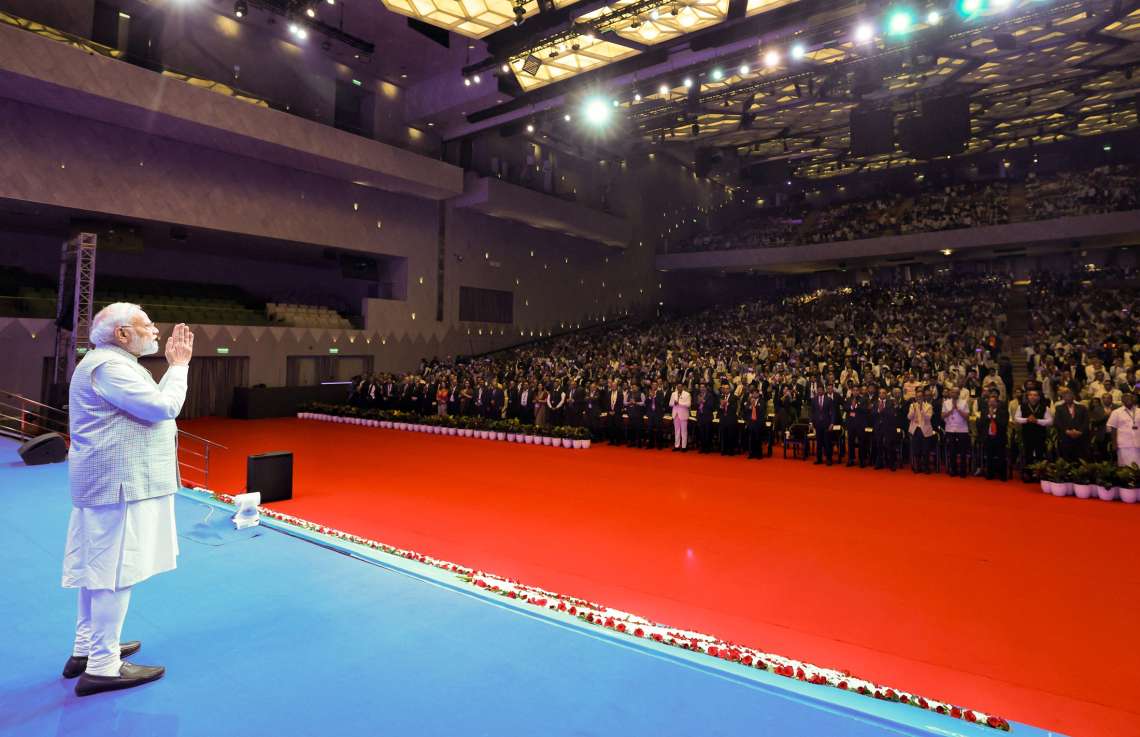
Paying rich tribute to heroes of Nowshera, Brig Usman, Naik Jadunath Singh, Lt R.R. Rane and others, PM said he brought the wishes of the 130 crore Indian, reports Asian Lite News
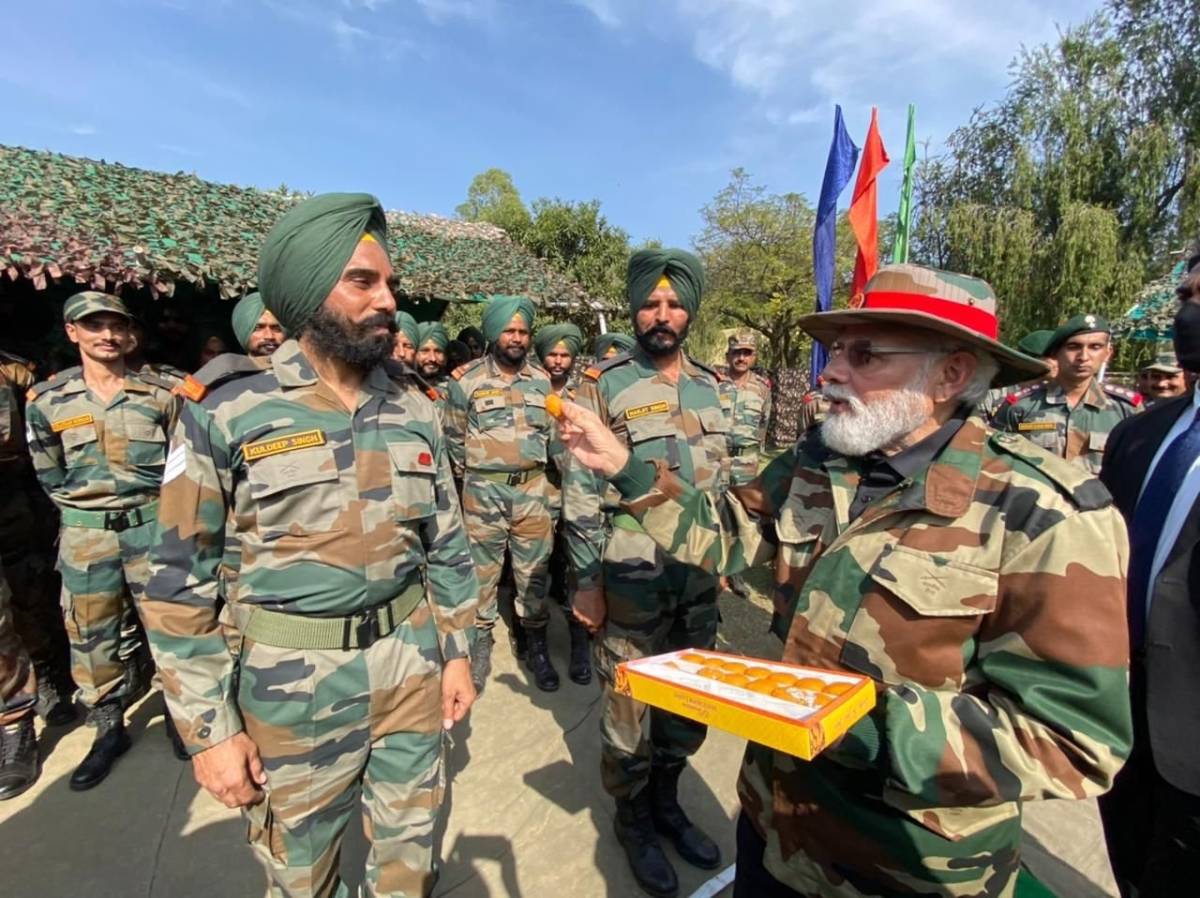
Prime Minister Narendra Modi told army soldiers on Thursday that he has brought wishes of 130 crore Indians for them as he celebrated Diwali with soldiers in J&K’s Rajouri district.
Paying rich tribute to heroes of Nowshera, Brig Usman, Naik Jadunath Singh, Lt R.R. Rane and others, he said, “I have brought the wishes of the 130 crore Indian for you”.
“Today’s India, in the ‘Amrit Kaal’ of the freedom is alert about its capabilities and resources. Connectivity in border areas from Ladakh to Arunachal Pradesh, from Jaisalmer to Andaman Nicobar has been established with modern infrastructure, leading to unprecedented improvement in the infrastructure and convenience for soldiers. Participation of women in the country’s defence is touching new heights. Indian Armed forces are as professional as the top armed forces of the world, but its human values make it distinct and extraordinary. We don’t perceive the nation as government, power or empire, for us, it is living, present soul, defending this is not limited to defending just the geographical boundaries. For us, national defence means defending national vibrancy, national unity, and national integration”, Modi said while addressing soldiers in Nowshera sector of Rajouri district.
Like all his previous years, Prime Minister Narendra Modi celebrated this Diwali also with armed forces.
The Prime Minister said that spending Diwali with the Armed Forces, for him, is in the same spirit as to celebrate Diwali with his family. He said, that is why, he has spent all his Diwali with the armed forces at the border after assuming constitutional post.
He said he has not come alone, but has brought with him the wishes of 130 crore Indians. He said, this evening, every Indian will light one ‘diya’ to convey his or her wishes for the brave soldiers of the country.
“Serving the country as being done by the brave sons and daughters of the country, is a good fortune that is not available to everyone”, he said.
From Nowshera, Modi greeted the countrymen on Diwali and other upcoming festivals such as Goverdhan Puja, Bhaiyya Dooj and Chatth Puja. He also wished Gujarati people for their new year.
He said Nowshera’s history celebrates the bravery of India and its present is the embodiment of the bravery and determination of the soldiers. The region has stood strongly against the aggressor and encroachers.
He paid rich tribute to the heroes of Nowshera, Brigadier Mohammad Usman and Naik Jadunath Singh who made the supreme sacrifice for defending the motherland.
He saluted Lt R.R. Rane and other bravehearts who set unprecedented examples of valour and patriotism. The Prime Minister also described his feelings for taking blessings of Baldev Singh and Basant Singh who supported armed forces steadfastly.
He also praised the Brigade stationed there for their role in the surgical strike. He recalled the moment of relief when all the brave soldiers returned safely from the strike.
The Prime Minister said that the responsibility of protecting the freedom of the county vests with everyone and today’s India, in the Amrit Kaal of the freedom is alert about its capabilities and resources. He also talked about the growing ‘Aatmnirbharta’ in defence resources as opposed to earlier time of dependence on the foreign countries.
He said 65 per cent of the Defence Budget is being used inside the country. A list of 200 products, a positive list, that will be procured only indigenously has been prepared. The list is going to be expanded soon, he said. He also talked of the 7 new Defence companies launched on Vijaya Dashmi as the old ordnance factories will now make specialized sector specific equipment and ammunition.
Defence Corridors are also coming up. India’s youth is involved in vibrant defence related startups. All this will strengthen India’s position as defence exporter, he said.
The Prime Minister emphasized that Indian Military power needs to be expanded and transformed according to the changing needs. He said fast changing technology landscape has demanded new changes, that is why it is critical to ensure coordination in the integrated Military leadership. CDS and Department of Military Affairs are steps in that direction. Similarly, modern border infrastructure will enhance the country’s military muscle, he said.
He remarked that connectivity in border areas from Ladakh to Arunachal Pradesh, from Jaisalmer to Andaman Nicobar has been established with modern infrastructure, leading to unprecedented improvement in the infrastructure and convenience for soldiers.
The Prime Minister expressed happiness that the participation of women in the country’s defence is touching new heights. After being deployed on the frontlines in Navy and Air Force, now women’s role is being expanded in Army also.
Along with opening up of the Permanent Commission, NDA, National Military School, National Indian Military College for women, the Prime Minister mentioned his Independence Day announcement of opening up Sainik Schools for the girls.
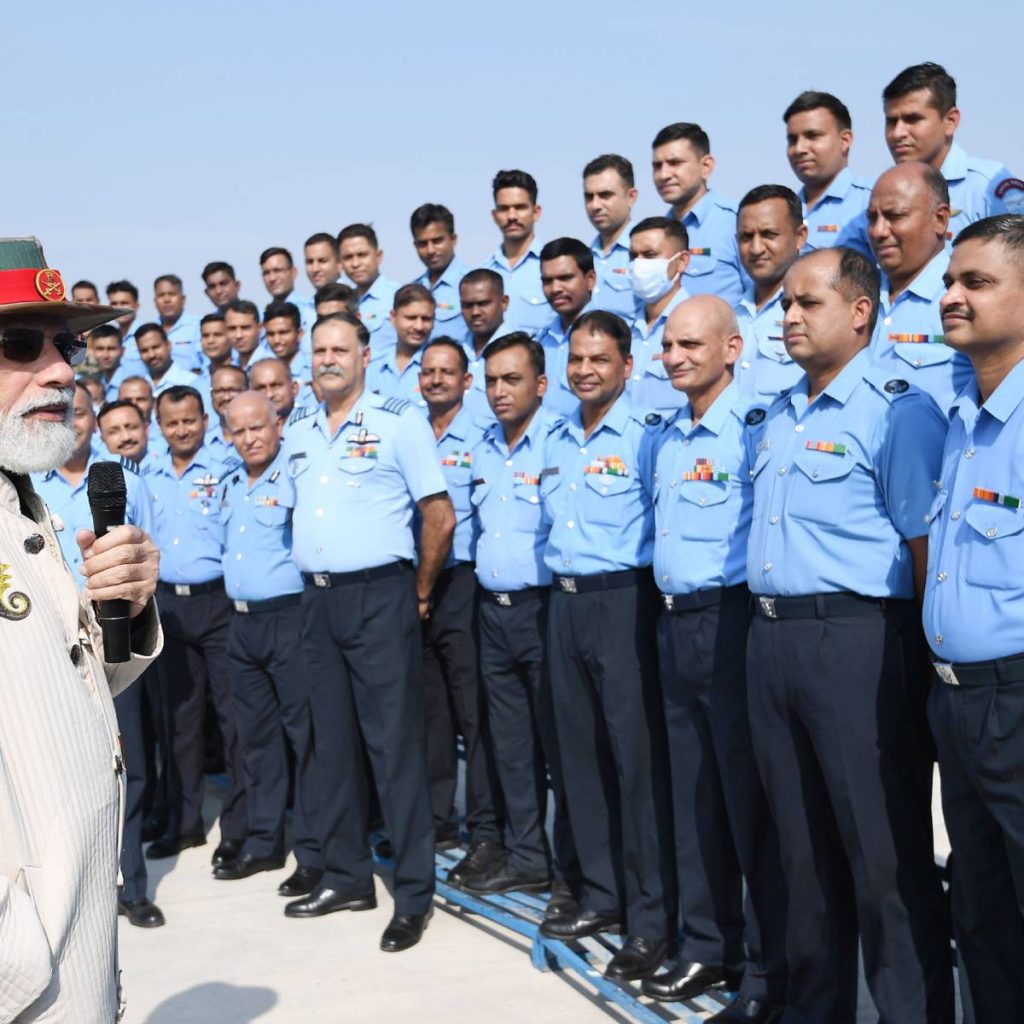
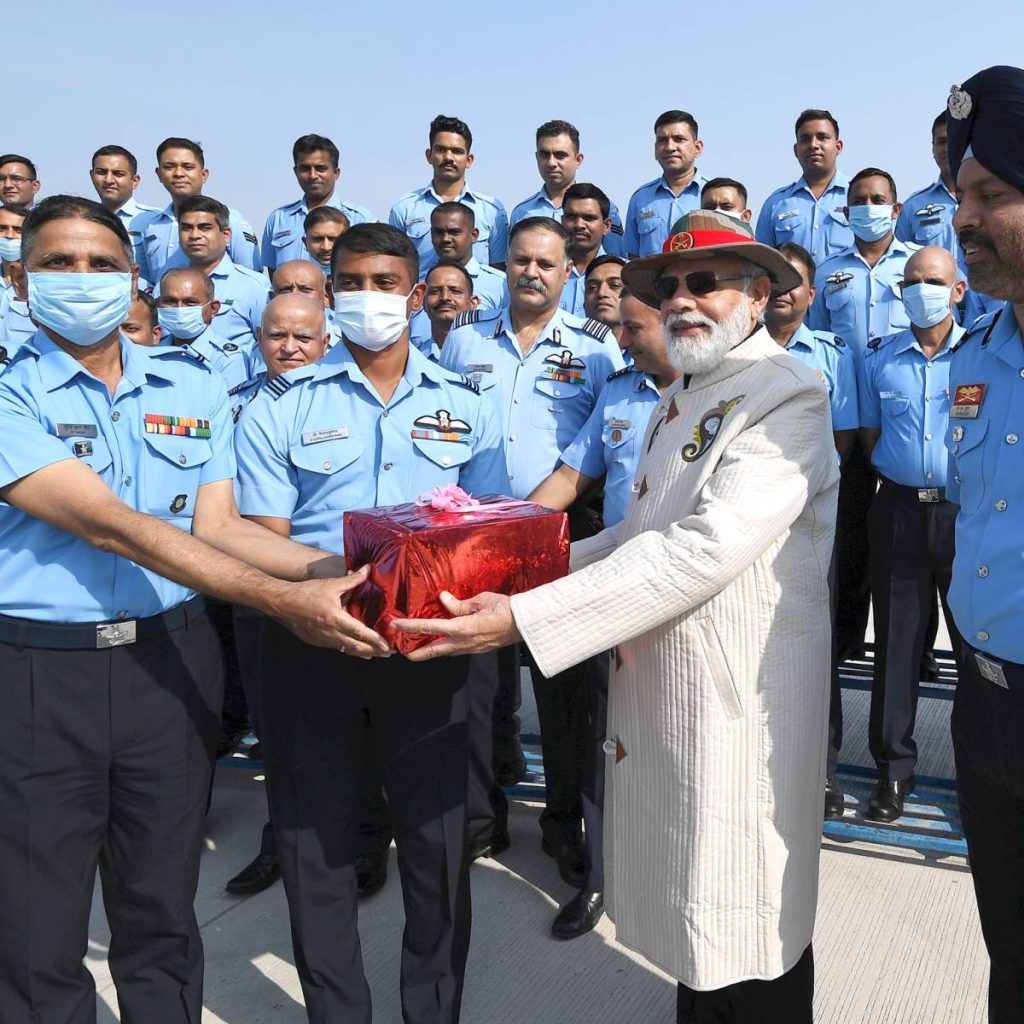
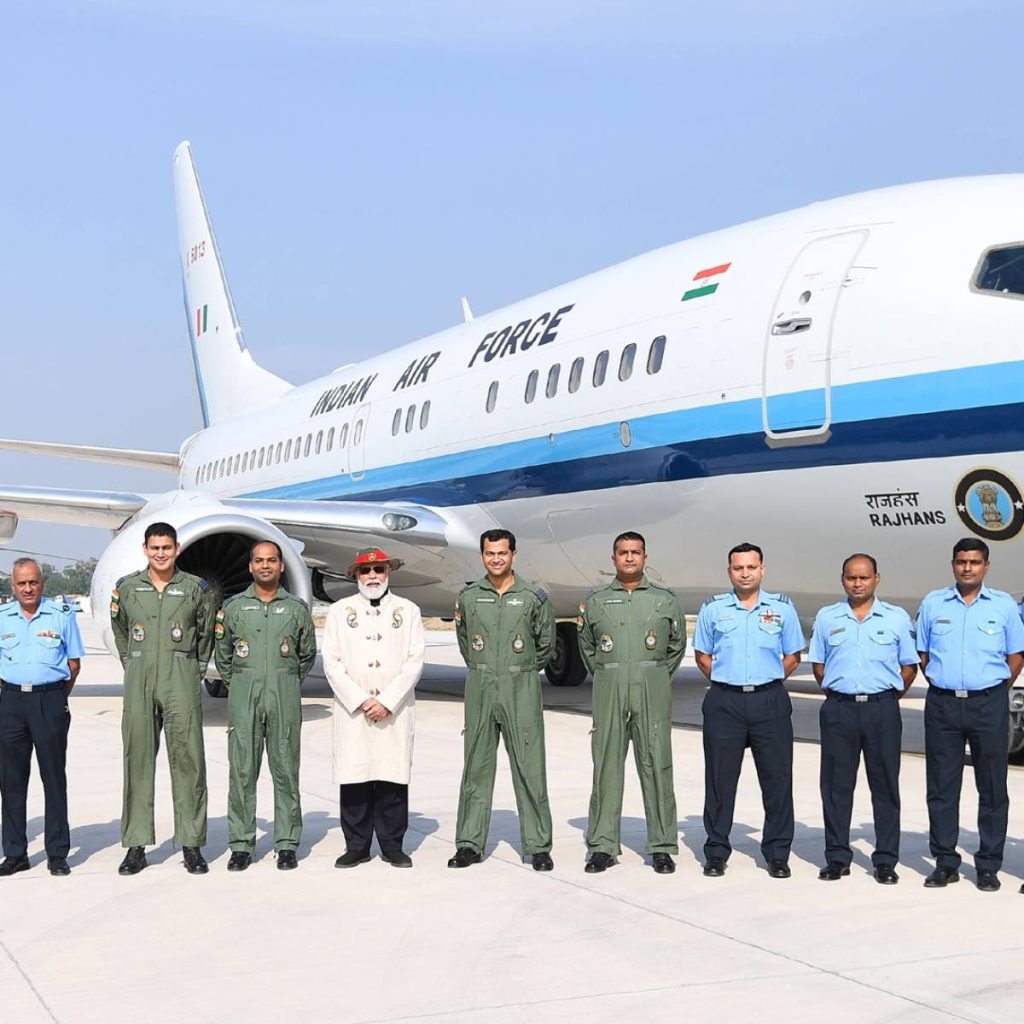
The Prime Minister said that in the armed forces, he not only sees boundless capabilities but also unwavering service spirit, strong determination and incomparable sensitivity. This makes Indian armed forces, unique among the armed forces of the world. Indian Armed forces are as professional as the top armed forces of the world but its human values make it distinct and extraordinary, the Prime Minister said.
“For you, this is not just a job for salary, for you this is a worship, in which you channel the spirit of 130 crore people,” the Prime Minister said. He continued, “empires come and go but India was eternal thousands of years ago and remains so today and will remain eternal after thousands of years later. We don’t perceive the nation as government, power or empire, for us, it is living, present soul, defending this is not limited to defending just the geographical boundaries. For us national defence means defending this living national vibrancy, national unity, and national integration”.
The Prime Minister concluded, “if our armed forces are blessed with sky touching valour, their hearts are ocean of human kindness also, that is why our armed forces not only defend the borders but are also always ready to help during calamity and natural disasters. It has grown as a strong trust in the heart of every Indian. You are the custodians and defenders of India’s unity and integrity and the emotion of Ek Bharat Shreshtha Bharat. I am fully confident that with the inspiration of your bravery, we will take India to the zenith of growth and progress”.
ALSO READ-Modi Celebrates Diwali With Army Troops in J&K
READ MORE-Sudan army chief orders release of 4 Ministers of transitional govt