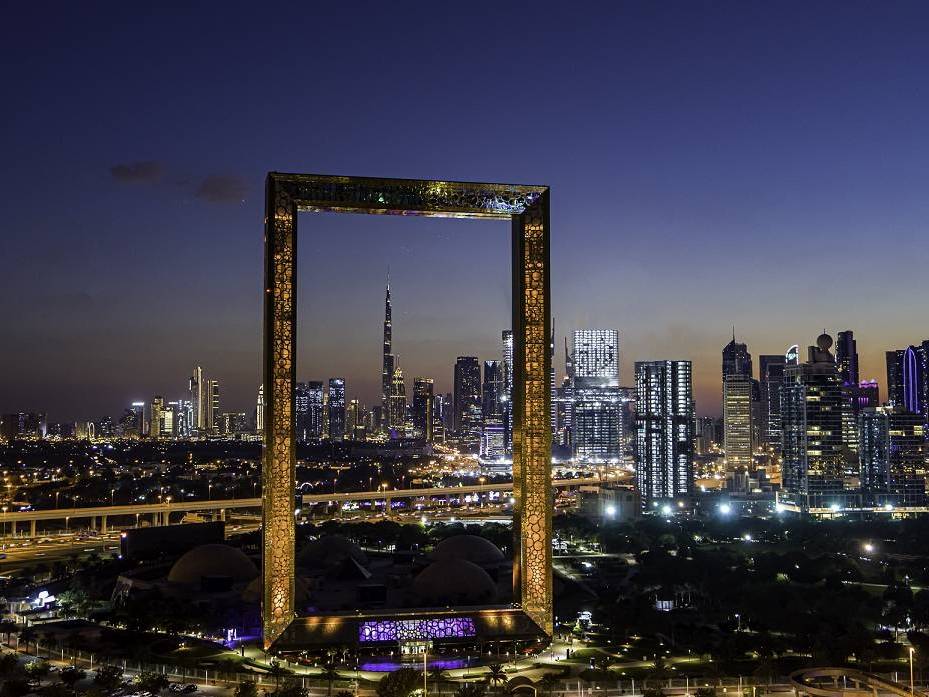
Dubai welcomed 3.97 million international overnight visitors between January and March 2022, up from 1.27 million visitors for the corresponding period last year
As the world looks to emulate Dubai’s successful tourism recovery strategy, the city welcomed 3.97 million international overnight visitors between January and March 2022, up from 1.27 million visitors for the corresponding period last year, representing a massive 214 percent YoY visitation growth that places the city firmly on track for a momentous year while reaffirming Dubai’s position as the first choice destination for global travellers. Dubai also ranked No.1 globally in hotel occupancy in the first quarter of 2022, with 82%.
H.H. Sheikh Hamdan bin Mohammed bin Rashid Al Maktoum, Crown Prince of Dubai and Chairman of Executive Council of Dubai, said: “Dubai’s ability to surpass other major global cities in key tourism indicators demonstrates the success of the far-reaching vision of His Highness Sheikh Mohammed bin Rashid Al Maktoum, Vice President and Prime Minister of UAE and Ruler of Dubai, to create a hub for business, investment, entrepreneurship and tourism that rivals the world’s best. The strength of His Highness’s vision and his steadfast determination to make it a reality have enabled Dubai to overcome the most complex global challenges, including the repercussions of the recent worldwide health crisis, to create a destination that offers rich value for travellers whether they are visiting for leisure or business.”
“The exceptional number of visitors in the first three months of the year is testament to the fact that Dubai is at the forefront of global tourism recovery. These results attest to the emirate’s ability to develop a compelling new value proposition in a changed global environment and create innovative new offerings that meet the needs and preferences of the most discerning global travellers. In addition, the vast global diversity of its visitors reflects Dubai’s appeal as a destination that cuts across nationalities, regions and continents, and its growing status as a city that bridges global markets and cultures,” H.H. added.
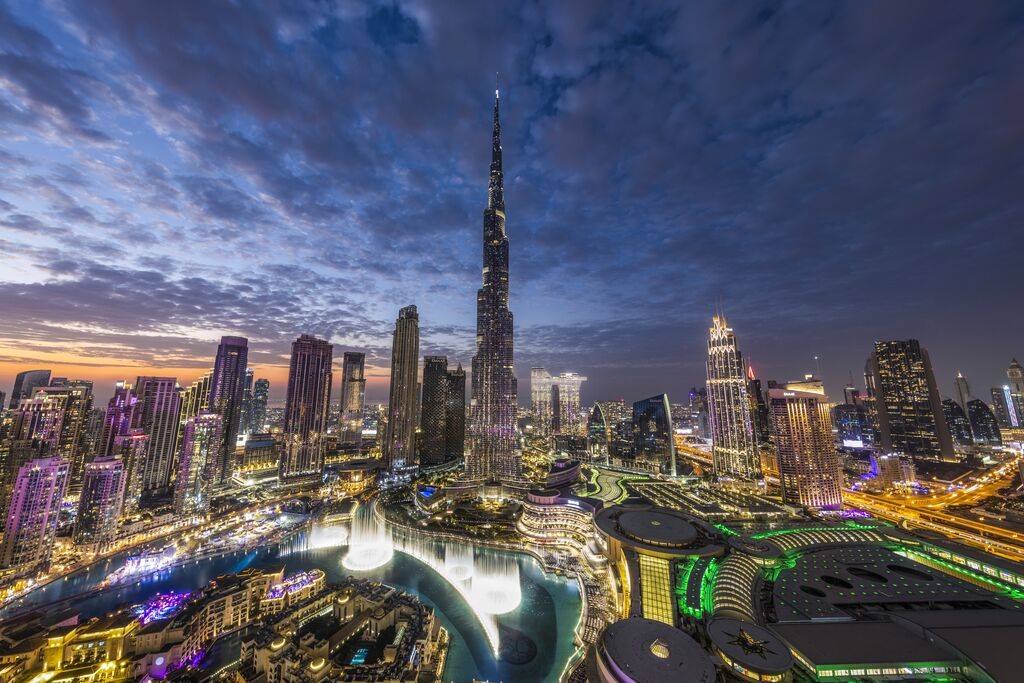
According to the latest data released by Dubai’s Department of Economy and Tourism (DET) at the ongoing Arabian Travel Market (ATM) in Dubai, the first quarter international visitation reflected the best Q1 performance since the global pandemic, creating a clear pathway for the city to progress towards its coveted goal of becoming the world’s most visited destination.
March 2022 was a particularly exceptional month for post-pandemic tourism arrivals, as the city welcomed 1.78 million international visitors, a 11 percent increase over pre-pandemic visitation. The city welcomed 1.61 million overnight visitors in March 2019. Dubai’s impressive Q1 2022 results also include a stellar performance by hotels that saw significant growth across key hospitality metrics.
Helal Saeed Almarri, Director General, DET, commented: “Spearheaded by the visionary leadership and guidance of His Highness Sheikh Mohammed bin Rashid Al Maktoum, Vice President and Prime Minister of UAE and Ruler of Dubai, the exceptional performance in Q1 2022 cements Dubai’s position as the destination of choice for international travellers and lays a solid groundwork for the city to deliver sustainable growth. The hugely successful Expo 2020 Dubai, alongside a compelling portfolio of leisure and business events in the first three months of this year, has firmly placed the city on the world stage, while reinforcing Dubai’s position as a global economy and tourism hub.
“Since leading global tourism recovery with the reopening of the city to international travellers in July 2020, Dubai has only gone from strength to strength, building on the momentum year on year by carefully calibrating a multi-pronged approach with the support of our valued ecosystem of stakeholders and partners to ensure the city remains open, safe and accessible. With our result-oriented strategy becoming a role model for recovery, we are delighted to welcome the world as it yearns to be a part of Dubai’s successful tourism journey.
“While these critical metrics of Q1 2022 allow us to benchmark our progress, we will seek to broaden Dubai’s global appeal to new and diversified market segments, and focus on encouraging greater length of stay and repeat visitation. And as we move forward through 2022, we will also continually strive to achieve Dubai’s vision to become the most sought-after travel destination and the best city in the world to live in and work,” Almarri added.
Strongholds stage remarkable comeback With the easing of travel restrictions around the world, Dubai’s traditional source markets delivered impressive tourism volumes in the first quarter. Regional markets continued to make an impact on international visitation, further underscoring the success of Dubai’s diversified multi-geographic strategy. MENA and GCC collectively contributed to 35 percent of the total volumes, reflecting Dubai’s continued appeal to travellers from proximity markets. Catering to the family-dominated GCC tourists were a host of attractions, retail, sporting and entertainment events. Western Europe accounted for 24 percent of Dubai’s tourism arrivals, while South Asia accounted for 14 percent of total international visitation.
Hotels lead robust rebound Dubai hotels achieved significant growth across key hospitality metrics in Q1 2022 with Average Daily Rate (AED649), Guests’ Length of Stay (4.3 nights) and Occupied Room Nights (10.22 million) exceeding pre-pandemic levels. In Q1 2019, ADR was AED498 while Guests’ Length of Stay was 3.5 nights and Occupied Room Nights was registered at 8.63 million. Continued domestic and international investment into the sector helped further boost hotel inventory, with an eight per cent increase in the number of hotel establishments and 10 percent growth in the number of rooms compared to the corresponding period in 2021. Dubai’s visitors and residents are now able to choose from a total of 769 hotel establishments and 140,192 rooms, compared to 716 hotels establishments that were open with 117,434 rooms in Q1 2019.
ALSO READ: Dubai Culture showcases Emirate’s artistic landmarks at ATM 2022
In the first three months of 2022, hotels achieved average occupancy levels of 82 percent, which is almost on par with the occupancy levels of 84 percent for the same period in 2019. In terms of hotel occupancy, Dubai ranked No.1 globally in Q1 2022, ahead of other international destinations including London (56.0 percent), New York (55.3 percent) and Paris (51.2 percent), according to data from hotel management analytics firm STR.
Achievements and accolades Building upon the city’s drive to further diversify its offerings to ensure a broad choice to travellers of all ages and interests, Q1 2022 saw the opening of new attractions and leisure landmarks including the Museum of the Future. Dubai also continued to capture a raft of awards and recognition from across the industry, elevating the destination’s global reputation.
Dubai’s recent selection as the world’s most popular destination, the No.1 destination for ‘City Lovers’ and No. 4 destination for ‘Food Lovers’ in the Tripadvisor Travellers’ Choice Awards 2022 speaks volumes to the city’s endless appeal to diverse audiences from around the world.