The highly sensitive trip is taking place after 10 months of a brutal war that has seen tens of thousands killed and wounded on both sides of the conflict, along with devastation for Ukrainian civilians…reports Asian Lite News
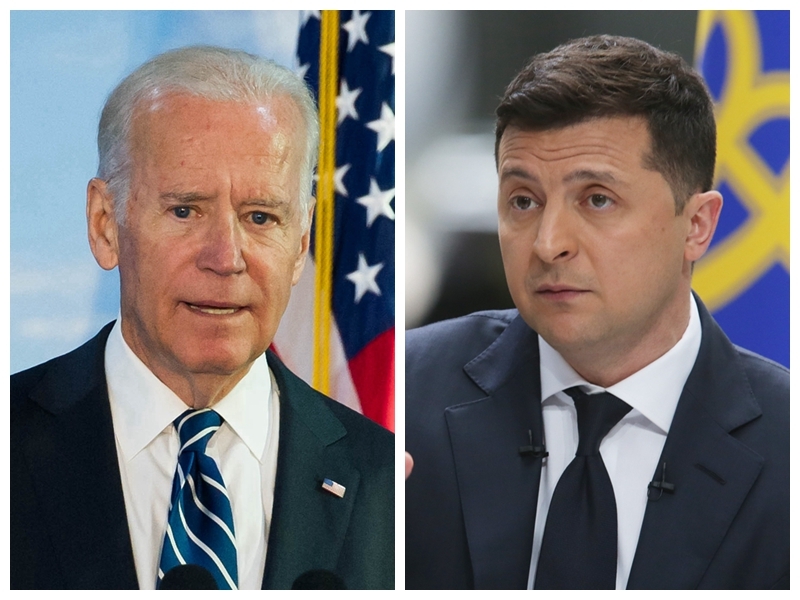
Ukrainian President Volodymyr Zelensky was making his way to Washington on Wednesday for a summit with President Joe Biden and an address to a joint session of Congress in his first known trip outside the country since Russia’s invasion began in February.
The highly sensitive trip is taking place after 10 months of a brutal war that has seen tens of thousands killed and wounded on both sides of the conflict, along with devastation for Ukrainian civilians. It also comes as US lawmakers are set to vote on a year-end spending package that includes about $45 billion in emergency assistance to Ukraine and as the Pentagon prepares to send Patriot surface-to-air missiles to the country to defend itself.
Zelensky headed abroad after making a daring and dangerous trip Tuesday to what he called the hottest spot on the 1,300-kilometer (800-mile) front line of the conflict, the city of Bakhmut in Ukraine’s contested Donetsk province. He praised Ukrainian troops for their “courage, resilience and strength” as artillery boomed in the background.
In a statement Tuesday night, White House press secretary Karine Jean-Pierre said Biden looks forward to the visit and that the address to Congress will demonstrate “the strong, bipartisan support for Ukraine.”
“The visit will underscore the United States’ steadfast commitment to supporting Ukraine for as long as it takes, including through the provision of economic, humanitarian, and military assistance,” she said.
US and Ukrainian officials have made clear they don’t envision an imminent resolution to the war and are preparing for fighting to continue for some time. Biden has repeated that while the US will arm and train Ukraine, American forces will not be directly engaged in the conflict.
Biden and Zelensky first discussed the idea of a visit to Washington during their most recent phone call, on Dec. 11, and a formal invitation followed three days later, said a senior US administration official, briefing reporters on condition of anonymity because of the sensitive nature of the visit. Zelensky accepted the invitation on Friday and it was confirmed on Sunday, when the White House began coordinating with House Speaker Nancy Pelosi to arrange the congressional address.
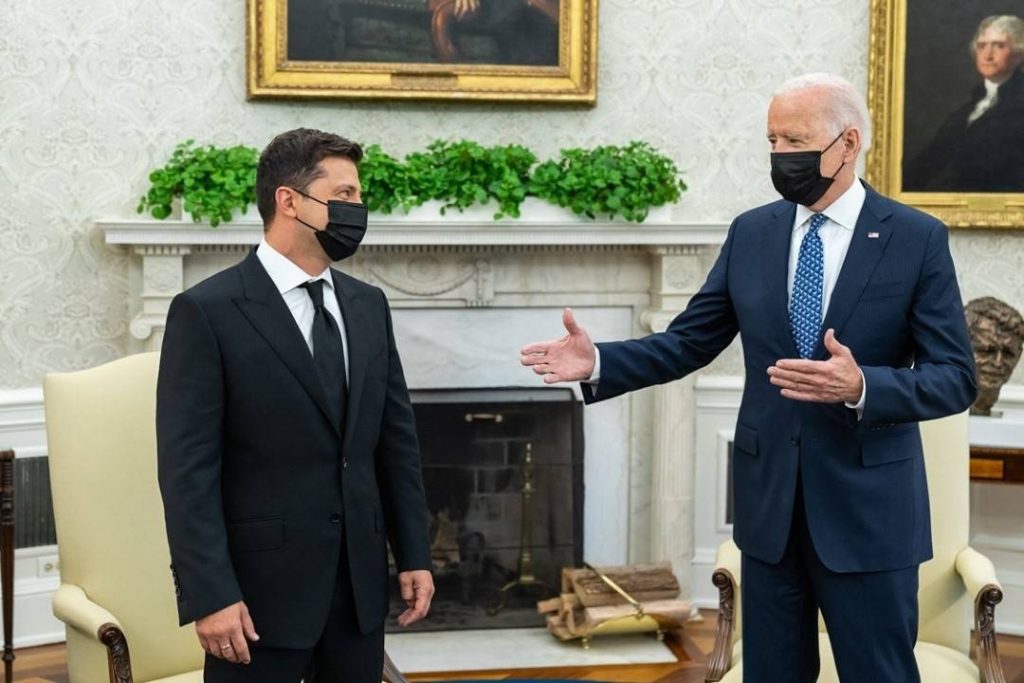
The White House consulted with Zelensky on security for his departure from Ukraine and travel to Washington, including the risk of Russian action while Zelensky was briefly out of the country, the official added, declining to detail the measures taken to safeguard the Ukrainian leader. The official said the US expected Russia to continue its attacks on Ukrainian forces and civilian infrastructure targets despite the trip.
The tranche of US funding pending before Congress would be the biggest American infusion of assistance yet to Ukraine — even more than Biden’s $37 billion emergency request — and is meant to ensure that support flows to the war effort for months to come.
On Wednesday, the US was also set to announce that it will send a major package of $1.8 billion in military aid to Ukraine that will for the first time include a Patriot missile battery and precision guided bombs for its fighter jets, US officials said.
The aid signals an expansion by the US in the kinds of advanced weaponry it will send to Ukraine to bolster its air defenses against what has been an increasing barrage of Russian missiles in recent weeks. The package will include about $1 billion in weapons from Pentagon stocks and $800 million in funding through the Ukraine Security Assistance Initiative, officials said.
The decision to send the Patriot battery comes despite threats from Russia’s Foreign Ministry that the delivery of the advanced surface-to-air missile system would be considered a provocative step and that the Patriot and any crews accompanying it would be a legitimate target for Moscow’s military.
It’s not clear exactly when the Patriot would arrive on the front lines in Ukraine, since US troops will have to train Ukrainian forces on how to use the high-tech system. The training could take several weeks, and is expected to be done in Germany. To date, all training of Ukraine’s forces by the US and its Western allies has taken place in European countries.
The visit comes at an important moment as the White House braces for greater resistance when Republicans take control of the House in January and give more scrutiny to aid for Ukraine. GOP leader Kevin McCarthy has said his party’s lawmakers will not write a “blank check” for Ukraine.
Biden and Zelensky frequently have talked by phone as the White House arranges new tranches of military assistance for Ukraine. The calls have been mostly warm, with Biden praising Ukraine for remaining steadfast against the Russians and Zelensky thanking the US president for support.
The one exception was a June phone call soon after Biden notified Zelensky that an additional $1 billion package was headed to Ukraine. Zelensky didn’t miss a beat in ticking off the additional assistance he said Ukraine needed.
That irked Biden, who underscored to Zelensky the American people’s generosity. But the brief moment of tension hasn’t caused any lasting difficulty, according to officials familiar with the episode.
Pelosi, who visited Zelensky earlier this year in Kyiv, encouraged lawmakers to be on hand for Wednesday evening’s session.
“We are ending a very special session of the 117th Congress with legislation that makes progress for the American people as well as support for our Democracy,” Pelosi wrote Tuesday in a letter to colleagues. “Please be present for a very special focus on Democracy Wednesday night.”