Planet d also orbits in the habitable zone, but the scientists needed an additional year of TESS observations to discover TOI 700 e….reports Asian Lite News
NASA mission has discovered a second Earth-sized, rocky planet within the habitable zone of its star — the range of distances where liquid water could occur on a planet’s surface.
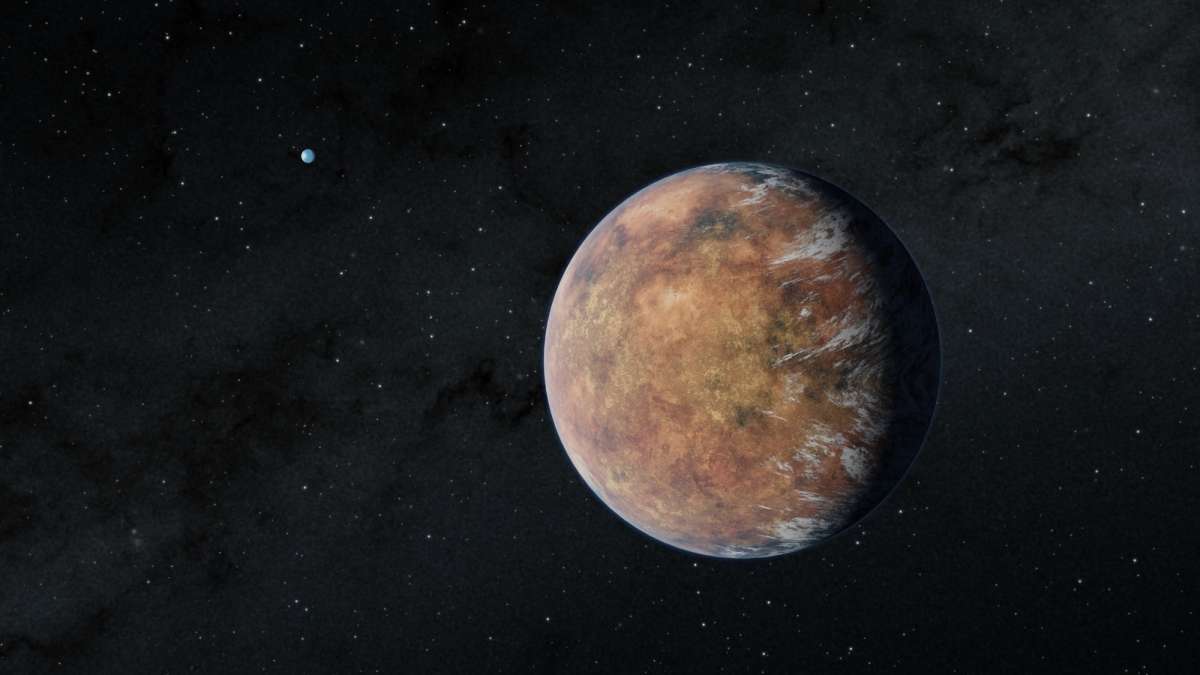
Using data from NASA’s Transiting Exoplanet Survey Satellite (TESS), the astronomers found “TOI 700 e” which is one of only a few systems with multiple, small, habitable-zone planets that we know of.
Astronomers previously discovered three planets in this system, called TOI 700 b, c, and d.
Planet d also orbits in the habitable zone, but the scientists needed an additional year of TESS observations to discover TOI 700 e.
“That makes the TOI 700 system an exciting prospect for additional follow up. Planet e is about 10 per cent smaller than planet d, so the system also shows how additional TESS observations help us find smaller and smaller worlds,” said Emily Gilbert, a postdoctoral fellow at NASA’s Jet Propulsion Laboratory in Southern California who led the work.
TOI 700 is a small, cool M dwarf star located around 100 light-years away in the southern constellation Dorado.
In 2020, Gilbert and others announced the discovery of the Earth-size, habitable-zone planet d, which is on a 37-day orbit, along with two other worlds.
The innermost planet, TOI 700 b, is about 90 per cent Earth’s size and orbits the star every 10 days.
TOI 700 c is over 2.5 times bigger than Earth and completes an orbit every 16 days.
“The planets are probably tidally locked, which means they spin only once per orbit such that one side always faces the star, just as one side of the Moon is always turned toward Earth,” the US space agency said in a statement late on Tuesday.
TOI 700 e, which may also be tidally locked, takes 28 days to orbit its star, placing planet e between planets c and d in the so-called optimistic habitable zone.
Scientists define the optimistic habitable zone as the range of distances from a star where liquid surface water could be present at some point in a planet’s history.
This area extends to either side of the conservative habitable zone, the range where researchers hypothesize liquid water could exist over most of the planet’s lifetime. TOI 700 d orbits in this region.
“Finding other systems with Earth-size worlds in this region helps planetary scientists learn more about the history of our own solar system,” said scientists.
Gilbert presented the result on behalf of her team at the 241st meeting of the American Astronomical Society in Seattle, the US.
A paper about the newly discovered planet was accepted by The Astrophysical Journal Letters.