Dr. Kannan Balakrishnan, Dr. Aswin Prasanth, and Dr. Sharon P Thomas
What the Evidence Won’t Tell You
There is a particular kind of silence that follows a verdict—the silence of a courtroom after a judge pronounces guilt, when the evidence has been weighed, the expert has testified, and the machinery of justice has reached its conclusion. It feels, in that moment, like the silence of settled truth.
What the long history of forensic error teaches us is that this silence is often something else entirely: the silence of a story that has simply stopped being questioned.
Modern societies place enormous faith in evidence. We trust fingerprints, DNA profiles, surveillance footage, phone records, and digital traces. We imagine facts as neutral objects waiting to be assembled into a coherent picture of reality. Yet both literature and forensic science offer a more unsettling lesson: evidence never speaks for itself. It must always be interpreted.
When Clues Create Their Own Mysteries
Long before forensic laboratories and DNA databases transformed criminal investigations, literature had already begun questioning a fundamental assumption about evidence: that clues reliably point toward the truth.

In Thomas Pynchon’s The Crying of Lot 49, Oedipa Maas is asked to settle the estate of a former lover. What begins as a routine legal task slowly becomes an obsession. She starts noticing strange symbols—a muted post horn scribbled on walls, cryptic references in old plays, mysterious messages circulating through underground mailboxes. Each clue seems to point toward a secret postal network operating beneath American society. Yet the more evidence she gathers, the less certain she becomes. Is she uncovering a hidden conspiracy, or creating one by connecting unrelated fragments? The novel never answers the question. Pynchon leaves readers trapped in the same uncertainty as his protagonist.

Jorge Luis Borges presents a similar puzzle in “Death and the Compass.” Detective Erik Lönnrot investigates a series of murders that appear linked by mystical and geometric patterns. Convinced that he has decoded the criminal’s logic, he predicts where the next crime will occur and travels there triumphantly. Only then does he discover that the pattern itself was a trap designed specifically for him. The clues were real, but they had been arranged to exploit his desire for an elegant explanation. Borges’ detective is defeated not by a lack of evidence but by excessive confidence in his interpretation.
The Swiss writer Friedrich Dürrenmatt takes this skepticism further in The Pledge. A veteran detective promises the mother of a murdered child that he will find the killer. He painstakingly assembles clues, identifies a likely suspect, and devises an elaborate trap. Everything points toward success. Yet chance intervenes: the suspect dies in an accident before reaching the trap, and the detective never learns how close he came to being right. His life collapses under the weight of a mystery that reality refuses to resolve. Dürrenmatt’s point is devastatingly simple: the world does not always provide the satisfying conclusions that detective stories promise.
These writers remind us that clues do not automatically produce truth. They produce stories. The challenge lies in deciding which story to believe.
The Authority We Lend to Objects
If literature warns us about the instability of clues, forensic science reveals how those warnings operate in the real world.
We have always wanted physical evidence to be more reliable than human memory. A fingerprint does not forget. A bloodstain does not lie under cross-examination. A strand of hair preserved in an evidence bag seems to carry the past intact, waiting only for the right expert to read it.
Yet the history of forensic science is, in large part, the history of that trust being tested—not always by fraud or incompetence, but by the confidence with which stories are built around evidence.
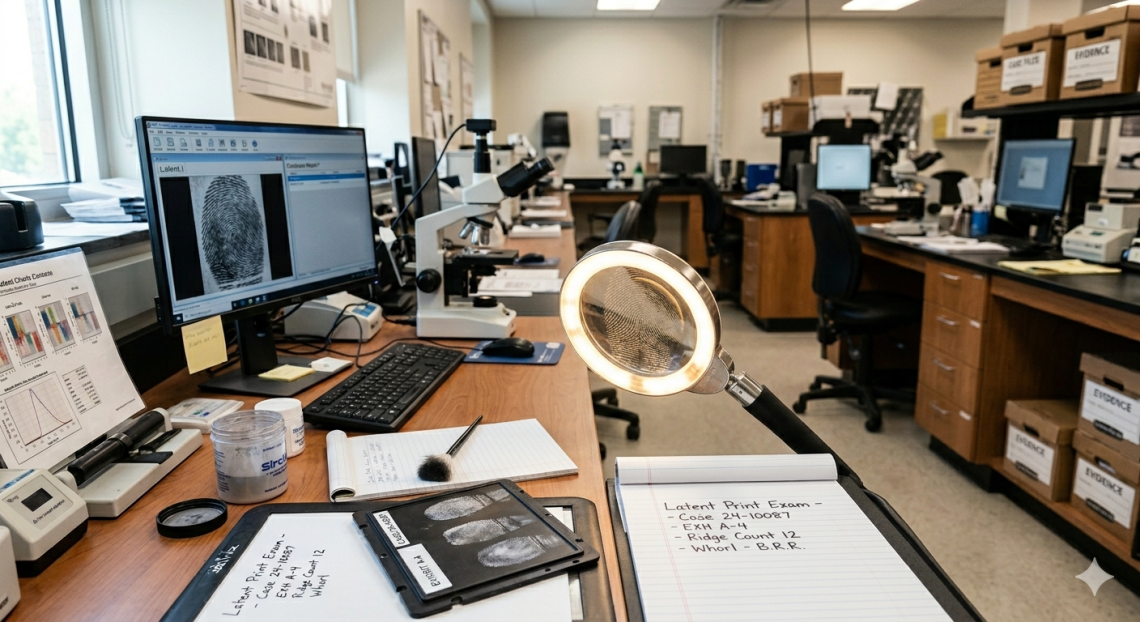
One of the most striking examples is the case of Brandon Mayfield. Following the 2004 Madrid train bombings, the FBI recovered a partial fingerprint from a bag of detonators. Three experienced examiners independently concluded that the print belonged to Mayfield, an attorney from Portland, Oregon. He was arrested and publicly identified as a significant suspect.
He was entirely innocent.
Spanish investigators later identified the actual source of the print. The FBI examiners had unconsciously interpreted an ambiguous fingerprint through the lens of an emerging narrative. The error was not merely technical. It was cognitive.
The fingerprint did not mislead the investigators. The story surrounding the fingerprint did.
India’s Long Reckoning
India’s experience with forensic evidence offers similar lessons.
The 2008 Aarushi Talwar murder case remains one of the most debated criminal investigations in contemporary India. From the beginning, the inquiry was marred by serious procedural failures. The crime scene was contaminated, evidence was disturbed, and crucial forensic opportunities were lost. Yet investigators repeatedly presented competing theories with great confidence. As one theory collapsed, another took its place.
Rajesh and Nupur Talwar were convicted in 2013, only to be acquitted by the Allahabad High Court in 2017. The court observed that the prosecution’s case rested largely on conjecture and inference rather than reliable evidence. The same physical traces had been repeatedly reinterpreted to support shifting narratives.
The broader history of narco-analysis and brain mapping in India offers another cautionary tale. During the 2000s, these techniques were often presented as scientific breakthroughs capable of extracting hidden truths from suspects. Their aura of scientific authority proved immensely persuasive. Yet in Selvi v. State of Karnataka (2010), the Supreme Court rejected compulsory narco-analysis, questioning both its constitutional validity and its scientific reliability.
The problem was not simply bad science. It was the tendency to mistake the appearance of scientific procedure for scientific certainty.
The Examiner’s Mind
What connects these cases across continents and decades is something forensic psychologists call contextual bias—the influence of surrounding information on how evidence is interpreted.
Research by cognitive scientist Itiel Dror has shown that the same piece of evidence can produce different conclusions depending on the contextual information provided to the examiner. When analysts are told that a suspect has confessed, possesses a criminal record, or has already been identified by other investigators, their interpretations often shift accordingly.
The evidence remains unchanged.
The mind examining it does not.
This is not a flaw unique to corrupt institutions or careless professionals. It is a consequence of human cognition operating under uncertainty. We are pattern-seeking creatures. Once a theory begins to take shape, contradictory evidence becomes harder to see, while confirming evidence becomes easier to recognize.
The detective who already believes he knows the culprit may interpret bloodstains differently. The forensic analyst who knows the stakes may find it difficult to say, “I don’t know.”
Learning to Live with Uncertainty
The most important development in modern forensic science may not be the discovery of new technologies but the growing recognition of uncertainty itself.
The strongest forensic methods do not promise certainty. They quantify doubt.
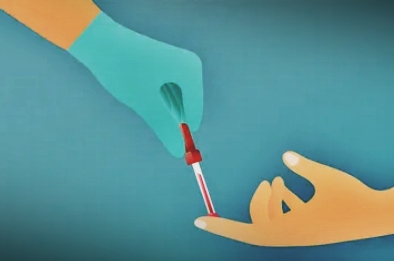
DNA analysis, for example, does not simply declare that a suspect was present at a crime scene. Instead, it provides statistical probabilities and acknowledges margins of error. The numbers matter because they prevent evidence from being transformed too quickly into a narrative.
India’s forensic infrastructure has expanded and modernized, with increasing attention to accreditation, validation studies, and quality control. Yet new equipment alone cannot solve the deeper problem.
The real challenge is cultural.
It requires judges, investigators, journalists, and the public to become comfortable with statements such as: “This evidence is consistent with this interpretation,” or “The conclusion is supported with moderate confidence.”
Such statements often sound weaker than declarations of certainty. In reality, they are stronger because they are more honest.
The Stories We Tell from Clues
The convergence of literature and forensic science leads to a surprising conclusion. Both fields are ultimately concerned with storytelling.
A detective novel begins with fragments—a footprint, a note, a missing person—and attempts to build a coherent narrative. A criminal investigation proceeds in much the same way. Facts do not arrange themselves. Human beings arrange them.
Pynchon warned us about conspiracies built from scattered clues. Borges warned us about elegant theories that become traps. Dürrenmatt warned us that reality often refuses to follow narrative logic. Modern forensic science has arrived at similar insights through a different route, discovering that evidence is always filtered through human perception, expectation, and judgment.
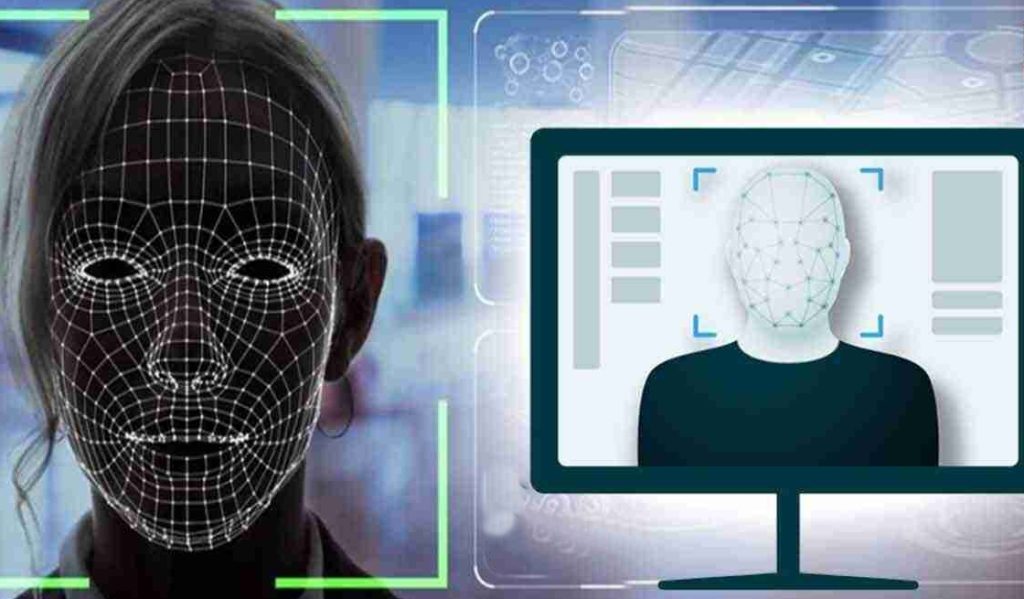
In an age of conspiracy theories, AI-generated information, deepfakes, and overwhelming quantities of data, the problem is no longer a lack of evidence. It is an excess of it.
The challenge facing citizens, scientists, and institutions alike is not merely finding clues but deciding how much confidence to place in the stories built from them.
After all, the evidence does not speak for itself.
It speaks in the accent of whoever first picked it up.
Dr. Kannan Balakrishnan is an Assistant Professor and Head of the Department of Forensic Science at JAIN (Deemed-to-be University), Off-Campus Kochi, Kerala, India.
Dr. Aswin Prasanth is an Assistant Professor in the Department of Languages at JAIN (Deemed-to-be University), Off-Campus Kochi, Kerala, India.
Dr. Sharon P Thomas is an Assistant Professor and Academic Coordinator of the Department of Forensic Science at JAIN (Deemed-to-be University), Off-Campus Kochi, Kerala, India