September 18, 2023
4 mins read

Bengaluru Shines As Prime NRI Investment Hub

Sources say that NRIs from Asian regions, from countries like Singapore and from the  Middle East, are also making huge investments apart from those in the US…reports M.K. Ashoka

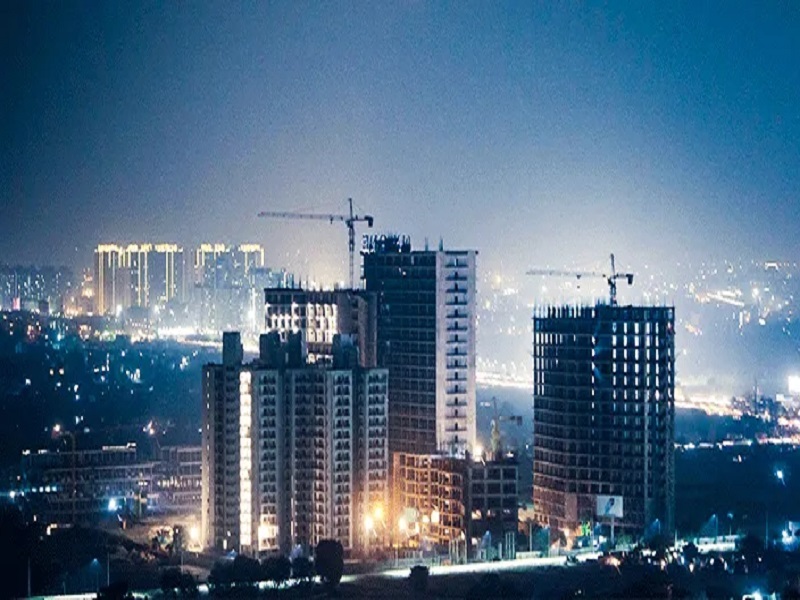
India’s IT capital Bengaluru has evolved as the major investment destination for NRI investors in residential real estate.

Real estate industry pundits are claiming that 2023 is going to be a remarkable year in connection with NRI investments as the slew of infrastructure projects, new IT corridors emerging in the city and conducive atmosphere in terms of peace, law and order situation in Bengaluru, and cosmopolitan outlook are also contributing to the trend.

Sources say that NRIs from Asian regions, from countries like Singapore and from the  Middle East, are also making huge investments apart from those in the US. The trend is catching up as NRIs in the Middle East and Singapore want to come back to India and settle down here.

Bengaluru, Hyderabad and Pune are preferred destinations for investments in the real estate sector, say trade experts.

Talking to IANS, BCD Group MD Angad Bedi said: “As we observe the increase in NRI investment in India and particularly in Bengaluru, 2023 is destined to be a remarkable year, with expected investments reaching an astounding $80 billion by the year’s end, a remarkable increase from the $65 billion invested in the previous year.

“First, India’s economy is growing steadily, providing a fertile environment for NRIs to capitalise on emerging opportunities. Secondly, the proactive measures taken by the Indian government to facilitate investment opportunities for NRIs, combined with an array of enticing incentives, have fostered an investment-friendly environment.”

“The recent appreciation of the rupee has increased the appeal of Indian assets to non-resident Indians with Bengaluru and Mumbai, the biggest markets with a combined 42 per cent share of the H1 2023 sales. Bengaluru is witnessing huge interest from UHNIs and NRIs with the residential prices in the city experiencing the highest increase of around 11-12 per cent y-o-y in the first half of this year as compared to the 6-9 per cent price rise in major cities during the period,” he added.

Cornerstone Group CEO Captain K. Srinivas told IANS that, the country’s real GDP growth witnessed a yoy growth of 6.1 per cent as of March 2023 and is expected to reach 6.5 per cent by FY24.

This economic resilience is creating a favourable condition for the NRIs to foresee a bright future where they can not only multiply their investments multifold, but also get long term value appreciation. The case in point is the country’s real estate sector where a lot of NRIs are infusing their cash flows due to the sector’s phenomenal growth story, especially in Bengaluru, he added.

This positive investment sentiment can be witnessed across all asset classes as NRIs are equally enthusiastic about the country’s luxury residential segment that is growing exponentially, as well as the CRE segment, he said.

“Apart from the existing office REITs, Q2-23 saw the launch of India’s maiden retail REIT ‘Nexus Select Trust’ and it raised Rs 32 billion from its share sale in May 2023. A lot of NRI investors are actively eyeing on these developments as they see great potential in the market. Besides, with the rising demand, large scale urbanisation and overall uptick in land and real estate prices across the key markets in India, the NRIs are enthusiastically optimistic to park their money in various investment machines in India,” Srinivas said.

Property First founder and MD Bhavesh Kothari said: “The country’s GDP is expected to reach 6.5 per cent by FY24. These robust economic conditions have created and continue to create favourable conditions for the NRIs to invest in real estate as they can multiply their investments, benefit from land appreciation value and envision a promising future. This has led to increased investments, especially in high-growth markets like Bengaluru where the luxury residential segment and CRE segments are in high demand.”

In Bengaluru, the investment inflow is quite optimistic as the city and its various sub-markets are witnessing large-scale infrastructural growth and the emergence of new IT corridors, especially in the north suburban areas and areas like Sarjapur, that witnessed some massive land deals in the last 2 years, Kothari added.

Being the IT nerve centre of India and a global tech city, Bengaluru is also attracting NRI investors who are investing in the growing co-working segment and the traditional Grade A office spaces, on the back of continued demand from global MNCs and enterprises, he added.

According to industry experts, the surge in NRI investment in residential real estate is a trend that is expected to propel 2023 investments to an anticipated $25 billion, up from $20 billion in 2022. This trend is supported by a surge in housing demand, increasing disposable incomes among NRIs, and an emphasis on infrastructure development by the government.

ALSO READ: India, Japan Review Progress in Cybersecurity & ICTs

Previous Story

India, Japan Review Progress in Cybersecurity & ICTs

Next Story

‘World’s First BSL-3 Lab Assisting Nipah Testing in Kerala’

Previous Story

India, Japan Review Progress in Cybersecurity & ICTs

Next Story

‘World’s First BSL-3 Lab Assisting Nipah Testing in Kerala’

Latest from -Top News

Pakistan Risks Overstretching Itself in Yemen War

Pakistan’s expanding military role in Saudi Arabia amid the Yemen conflict could strain its defence resources and fragile finances…reports Asian Lite News Desk Pakistan’s military involvement in the war in Yemen may prove unsustainable because of mounting financial pressures and competing security demands, according to a new report. Islamabad’s growing military presence in Saudi Arabia risks stretching its defence resources while exposing the country to greater strategic and economic challenges. An article by Andrew Wilson in One World Outlook describes Pakistan’s involvement as a case of “fiscal and strategic overreach”, arguing that the country lacks the financial flexibility to sustain an expanded military commitment. Pakistan’s external finances depend heavily on an International Monetary Fund (IMF) programme, financial support from Gulf countries and remittances from Pakistani workers in the region. The report argues that deeper military involvement in the conflict could place additional pressure on these sources of financial stability. It also warns that deploying troops and military equipment abroad could weaken Pakistan’s capacity to address security challenges along its eastern border and deal with two domestic insurgencies. The move could also draw Islamabad into a conflict it has sought to approach cautiously. A Reuters report in May, citing Pakistani security and government sources, said Islamabad had deployed around 8,000 troops, a squadron of approximately 16 aircraft, mostly JF-17 fighter jets, two drone squadrons and a Chinese HQ-9 air-defence battery to Saudi Arabia. According to those sources, Riyadh was financing the deployment, with Pakistani personnel operating the equipment. The sources also said a confidential agreement contemplated the possibility of deploying up to 80,000 troops. Islamabad has not confirmed those figures, although it has acknowledged its military presence in Saudi Arabia, including the deployment of fighter jets at King Abdulaziz Air Base from April. The One World Outlook article argues that Saudi financial support can cover allowances and operating expenses but cannot easily replace military equipment needed elsewhere or resolve the political and strategic challenges of participating in the Yemen conflict. Pakistan’s defence budget is another concern. For the 2026-27 financial year, the federal government allocated PKR 3 trillion, or approximately $10.8 billion, to defence services. The allocation represents an 18 per cent increase from the original PKR 2.55 trillion provision and amounts to around 2.1 per cent of projected gross domestic product (GDP). Defence spending accounts for approximately 16 per cent of the federal government’s PKR 18.8 trillion expenditure. Military pensions are budgeted separately at PKR 822 billion, while debt servicing costs stand at approximately PKR 8 trillion, more than two-and-a-half times the defence allocation. The report argues that these competing financial obligations leave little room for additional military expenditure without placing further pressure on public finances. Pakistan’s reliance on IMF assistance also limits its fiscal flexibility. The country must meet the conditions attached to the programme, including a primary budget surplus target of 2 per cent of GDP and continued restraint on development spending. According to the article, these requirements make it difficult for Islamabad to finance an additional military commitment without compromising other budgetary priorities. Pakistan’s economic indicators offer limited reassurance. Economic growth for the 2025-26 financial year is estimated at between 3.6 and 3.7 per cent, while inflation reached approximately 10.3 per cent in September following an energy price shock. Foreign exchange reserves stood at around $21.5 billion at the end of September. Although this marks an improvement from the low levels recorded in 2023, the report notes that the reserves cover only a few months of imports. Financial assistance from Gulf partners remains central to Pakistan’s external stability. The article says Islamabad holds approximately $8 billion in Saudi deposits at its central bank. In July, the State Bank of Pakistan said Riyadh had extended the maturity of $5 billion in deposits to December 2028, easing the country’s immediate external financing requirements. A further $3 billion deposit was also extended in the spring. However, the article argues that these arrangements provide temporary relief rather than long-term financial independence, particularly as regional conflict threatens the stability of the Gulf economies on which Pakistan relies. The report concludes that Pakistan faces a difficult balance between supporting Saudi Arabia militarily and preserving the financial and military resources needed to address its domestic and regional challenges.

UK and Germany Ratify Kensington Treaty

Britain and Germany ratify the Kensington Treaty, agreeing new cooperation on AI, quantum research, defence and security while targeting investment, jobs and Russian hybrid threats…reports Asian Lite News Desk Britain and Germany

Economic tide is turning in Bangladesh

If there is one thing that can bring some comfort to the struggling Bangladeshi economy, it is good relations with India. Bangladesh should remember that Delhi’s backing, through easy supplies of essentials
Go toTop

Don't Miss

India’s Rich Buddhist Heritage Shines at G20 Summit

The teachings of the Buddha are grounded in ideals like

IBPC Celebrates R-Day in Dubai 

The Indian Business and Professional Council (IBPC) marked the 75th