In all the joint declarations released after the SCO meetings in the past few years, India has opposed the BRI, even as other member nations have supported it…reports Asian Lite News
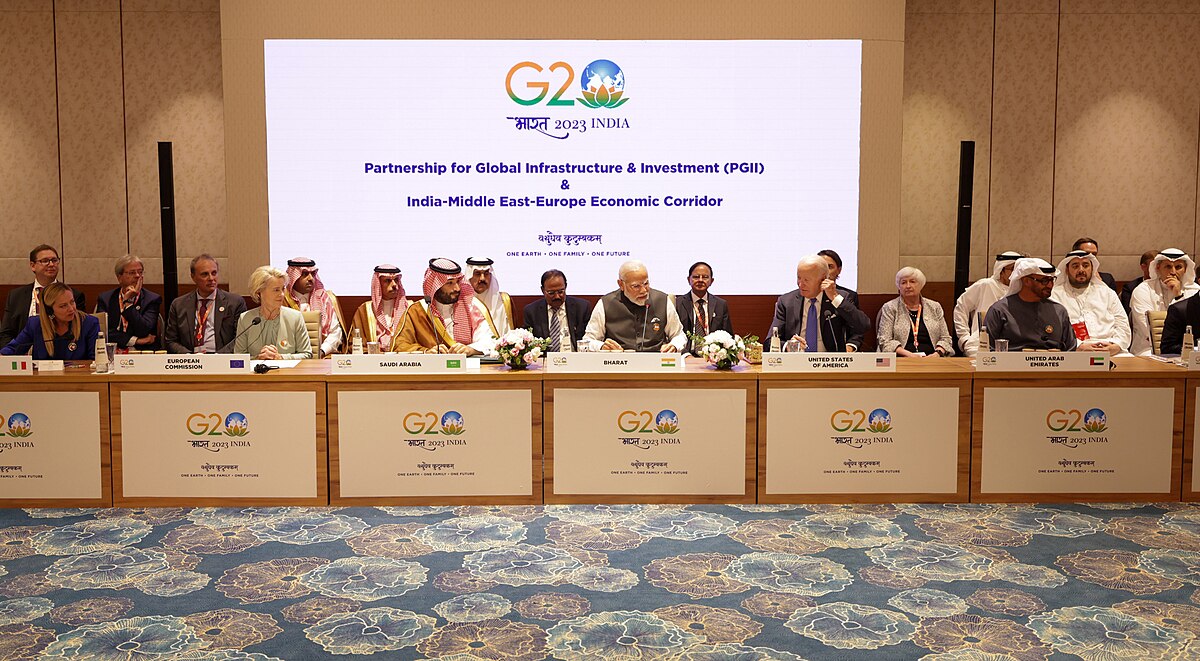
As Italy clearly indicated during the sidelines of the recently concluded G20 Delhi summit, that it plans to quit China’s Belt and Road Initiative (BRI), it reaffirmed the gradually evolving belief, that how economically unfeasible the whole project is proving to be for any of its supporters.
Though it managed to garner a lot of support from many central Asian and even European nations (like Italy), who saw a potential of boosting their trade in Asia through it, India has been a long standing opponent of the project.
The main thrust of India’s opposition to BRI has been that the China-Pakistan Economic Corridor (CPEC), which is part of the BRI, is a violation of its territorial integrity and sovereignty as it includes land that India claims as its own.
India has also pointed out at the lack of transparency and openness in the initiative.
India has been opposed to the concept of BRI, since it came under actual implementation in 2017.
Chinese President Xi Jinping had first conceptualised it in 2013, and it was projected as an initiative to promote economic growth and partnerships, benefitting all host nations who had signed up for it, while diplomatically it aimed at deepening international cooperation.
Officially, BRI focuses on improving connectivity and cooperation among Asian countries, Africa, China and Europe. It aims to enhance land as well as maritime routes. Several SCO member nations too support the initiative.
However India has always maintained that the CPEC which is a part of BRI, runs through Pakistan occupied Kashmir (PoK) and therefore is violative of India’s territorial integrity and sovereignty.
In all the joint declarations released after the SCO meetings in the past few years, India has opposed the BRI, even as other member nations have supported it.
The New Delhi Declaration issued after the day-long virtual SCO summit, which was hosted by India in July earlier this year, while reaffirming their support for BRI, Kazakhstan, Kyrgyz Republic, Pakistan, Russia, Tajikistan and Republic of Uzbekistan noted the ongoing work to implement this project, including efforts to link the construction of the Eurasian Economic Union and BRI.
India however, opposed the initiative.
Apart from territorial concerns, India’s trade concerns related to Beijing is another key reason behind it’s decision not to join the Regional Comprehensive Economic Partnership (RCEP), the trade deal signed by the 10 members of the Association of Southeast Asian Nations (ASEAN) and Australia, China, Japan, South Korea and New Zealand, a few years ago.
ALSO READ-IMEC Aims to Rival China’s Belt and Road Initiative