Rashid attributed the Indian economy’s growth to three factors: falling unemployment that signals strong domestic demand; easing of inflation, and lower import bills…reports Arul Louis
As the fastest-growing major economy at a clip of 5.8 per cent this year, India is a “bright spot” when the world economy is expected to grow by only 1.9 per cent, according to the UN’s chief official monitoring the global economy.
For next year, the UN is projecting a growth rate of 6.7 per cent, a “very high growth relative to other G20 member countries”, the group of the large developed and emerging economies headed by India, said Hamid Rashid, the Chief of the Global Economic Monitoring Branch, on Wednesday.
Meanwhile in New Delhi, India’s President Droupudi Murmu credited India’s economic performance to its leadership.
“India has been among the fastest-growing major economies because of the timely and proactive interventions of the government. The ‘Aatmanirbhar Bharat’ initiative, in particular, has evoked great response among the people at large,” Murmu said in her Republic Day speech.
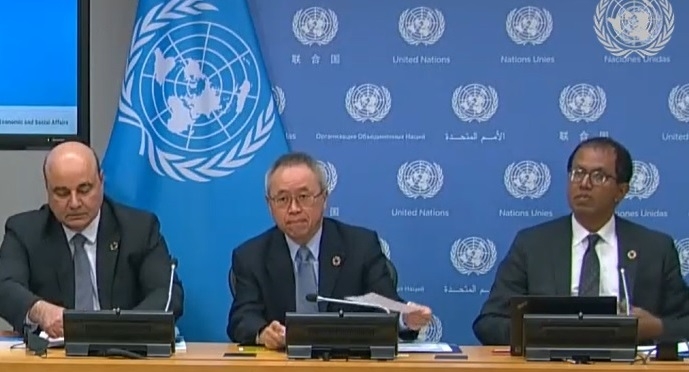
Briefing reporters at the release of the UN’s World Economic Situation and Prospects (WESP) report, Rashid said that India’s growth trajectory will be “good” for attaining the UN’s Sustainable Development Goals for poverty reduction and development.
China, which came in second, is projected to grow by 4.8 per cent this year and 4.5 next year, according to the WESP, the UN’s flagship economic report.
The US economy is projected to grow by 0.4 per cent this year and 1.7 per cent the next, while for developed economies as a whole, the report cut the growth rate projected in May by 0.2 per cent to 0.4 per cent this year and 1.6 per cent next year, a reduction of 1.7 per cent.
Rashid attributed the Indian economy’s growth to three factors: falling unemployment that signals strong domestic demand; easing of inflation, and lower import bills.
He said that the “unemployment rate has come down significantly in the last four years” to 6.4 per cent and “that means the domestic demand has been pretty strong”.
The WESP said that this occurred because “the economy added jobs both in urban and rural areas in 2022”.
“The inflation pressure also has eased quite significantly,” Rashid said with the year-on-year inflation rate to be 5.5 per cent this year and 5 per cent next year.
“That means that the central bank would not have to be aggressive over monetary tightening,” he said.
India has also benefitted to from lower imports, especially energy import cost that has been lower than in previous years, he added.
“I think this is a sustainable growth rate for India, given India also has a significant number of people living in poverty. So this would be a great boost if India can sustain this growth rate in the near term,” Rashid said.
He also pointed to two risk factors for India’s economy mainly emanating from the global situation.
One is from higher interest rates that would raise the debt servicing cost which has exceeded 20 per cent of the budget, he said.
“That is a significantly high debt servicing cost and that would probably have some drag on the growth prospect,” he said.
The second risk is from global external demands falling.
If Europe and the US go into a very slow growth mode resulting in lower global exports, the world economy may suffer, Rashid said.
“But on the balance, we believe that Indian economy is on a strong footing given the strong domestic demand in the near term,” he said.
For South Asia as a whole, the report said the region’s “economic outlook has significantly deteriorated due to high food and energy prices, monetary tightening and fiscal vulnerabilities” and it forecast a 4.8 per cent growth year and 5.9 per cent next year.
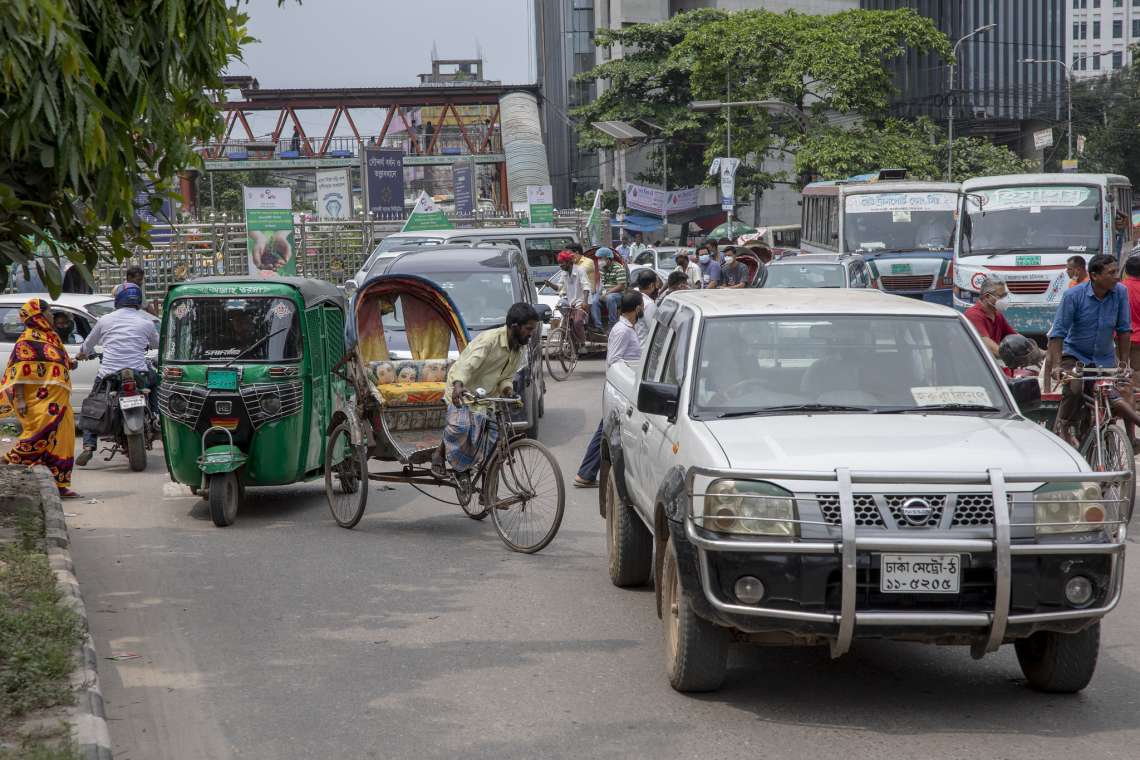
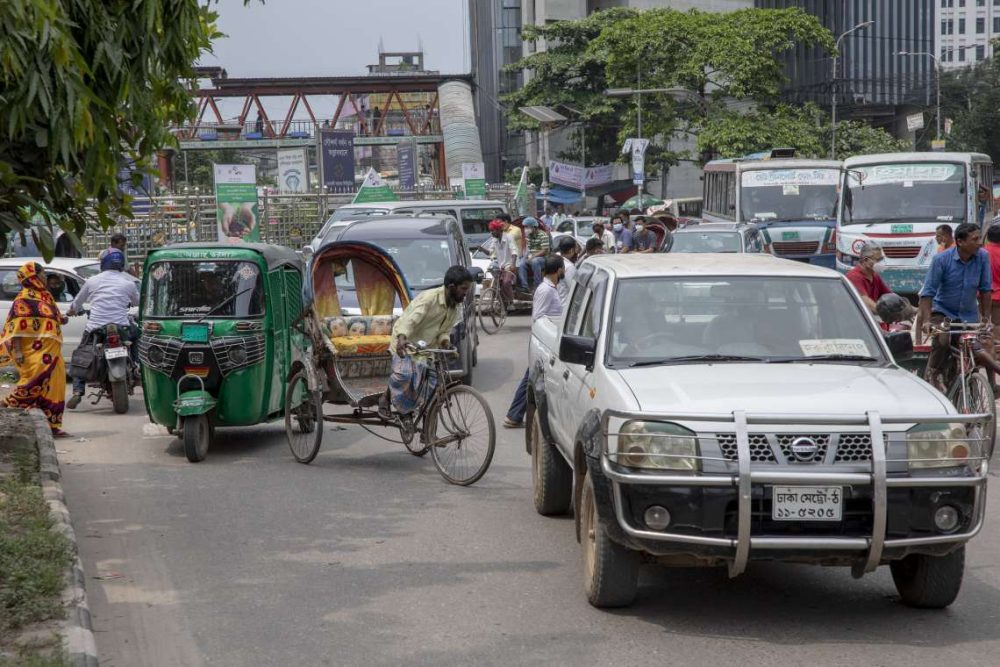
This was buoyed by India as the report said, “The prospects are more challenging for other economies in the region. Bangladesh, Pakistan and Sri Lanka sought financial assistance from the International Monetary Fund (IMF) in 2022.”
Bangladesh, Pakistan and Sri Lanka have gone to the International Monetary Fund for help.
Rashid said, “We call for greater international support in this difficult time for countries, especially countries that are facing significant challenges with debt burden and again we call for more meaningful restructuring of debt.”
“It might be more prudent and may make more economic sense to re-profile the debt, reschedule the debt, (the) external debt burden,” he said.
But he said that the assistance should not go into consumption, but into investment in “productive capacity (that) can be very important driver of both short-term recovery and long-term resilience”.
ALSO READ-‘India among fastest growing economies’