October 4, 2023
5 mins read

Sunak to promise ‘fundamental change’ to party faithful

Sunak will aim to rally Conservative members with a call to action, in all but the last roll of the dice to reset his premiership…reports Asian Lite News

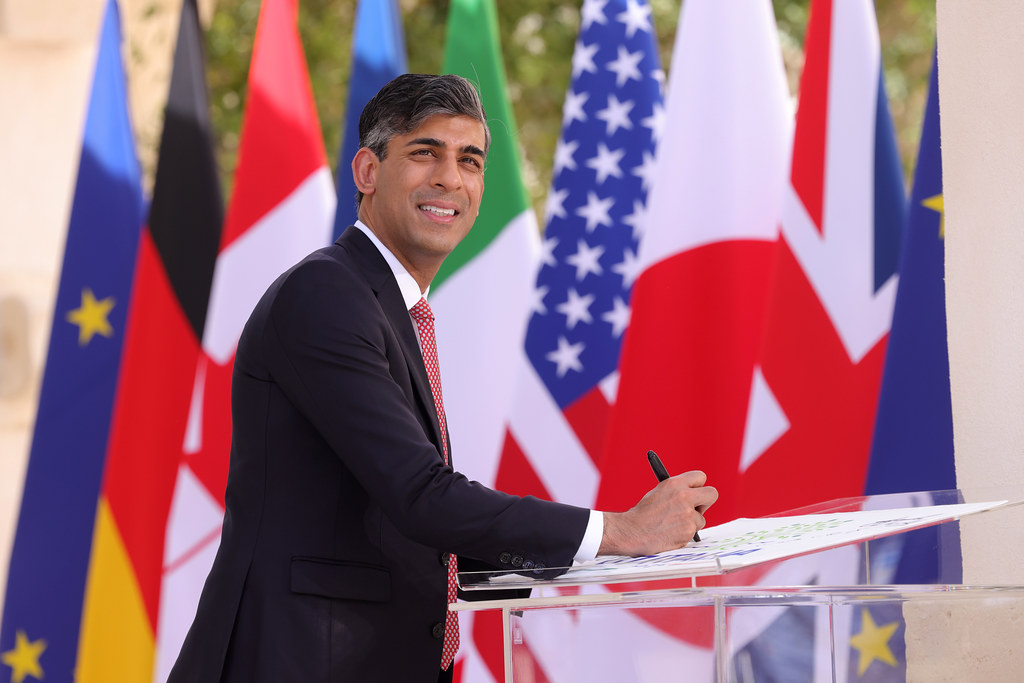
British Prime Minister Rishi Sunak will set out his mission to fundamentally change the country at his Conservative party’s conference on Wednesday, promising to overturn a political system that prefers the “easy decision, not the right one”.

Trailing the opposition Labour Party in the opinion polls before a national election expected next year, Sunak will aim to rally Conservative members with a call to action, in all but the last roll of the dice to reset his premiership.

But, as the conference in the northern English city of Manchester draws to an end, his attempt to revitalise his tenure by promising action rather than empty promises has been largely overshadowed by a row over the future of a high-speed train line.

After a year in power, Sunak will take the stage at what could be his last party conference to say he will do things differently, prioritising long-term decisions above short-term opportunism.

“Politics doesn’t work the way it should. We’ve had 30 years  of a political system which incentivises the easy decision, not the right one. Thirty years of vested interests standing in the way of change,” he will say, according to excerpts of his speech.

“Our political system is too focused on short-term advantage, not long-term success … Our mission is to fundamentally change our country.”

His message risks being undermined by a row over the HS2 high-speed railway and his refusal, so far, to announce a decision on whether its second phase with a line to Manchester, the host city of his party’s conference, should go ahead.

Sunak and his finance minister, Jeremy Hunt, have attacked the eye-watering costs of a project that has been dogged by delays and large increases to its budget, which estimates say could hit 100 billion pounds, but both have kept their counsel on whether it will be mothballed.

If it is scrapped or delayed, business leaders say Sunak should be accused of being driven by short-term political gain rather than considering the value a new high-speed train line could offer generations to come.

Hoping to change the narrative, Sunak will also take aim at Labour leader Keir Starmer, a taste of what is gearing up to be an ugly election campaign.

“The Labour party have set out their stall: to do and say as little as possible and hope no one notices. They want to take people’s votes for granted and keep doing politics the same old way,” he will say.

“It is about power for the sake of power. It is in short, everything that is wrong with our politics.”

In a convention centre built from a former railway station, Mr Sunak will reflect on his first year in No 10 and acknowledge a “feeling that Westminster is a broken system”.

“It isn’t anger, it is an exhaustion with politics. In particular, politicians saying things, and then nothing ever changing,” he is expected to say. And you know what? People are right. Politics doesn’t work the way it should. We’ve had 30 years of a political system which incentivises the easy decision, not the right one – 30 years of vested interests standing in the way of change.”

Sunak will accuse Labour – recording a consistently double-digit lead over the Conservatives – of failing to “set out their stall” under Keir Starmer and betting on voters’ “apathy”.

And he will say he is the reformer: “Politicians spent more time campaigning for change than actually delivering it. Our mission is to fundamentally change our country.”

Sunak has struggled to keep the conference on track amid Tory criticism over HS2.

And his predecessor Liz Truss drew big conference crowds as she demanded immediate tax cuts to “make Britain grow again”, a year after she left office following a chaotic 49 days.

Sunak instead compared himself to Baroness Thatcher, who tackled inflation before cutting taxes during her premiership between 1979 and 1990.

He has repeatedly ducked questions about scaling back HS2 despite northern leaders, businesses and former Tory premiers Boris Johnson, Theresa May and David Cameron all warning against the move.

But Sunak did on Tuesday say the costs of the project had gone “far beyond” what had been predicted, and the sums involved were “enormous”. The HS2 scheme was given a budget of £55.7 billion ($67bn) in 2015 but costs have ballooned, with an estimate of up to £98 billion – in 2019 prices – in 2020.

Since then, soaring inflation will have pushed costs even higher. It is unclear whether HS2 will reach central London in Euston, or terminate in the western suburbs of Old Oak Common.

Sunak would be expected to outline measures to soften the blow to the north, and has hinted at better train and bus connectivity in the region, and money to fix potholes. Transport Secretary Mark Harper acknowledged that “some people won’t like” the decision Sunak makes.

Street used a conference fringe event to issue a last-ditch plea for Sunak to change course. “I think they are about to make an incredible political gaffe,” he said.

“Every Labour MP in the North is lining up tomorrow to say … the Tories have come to Manchester to shaft the North.”

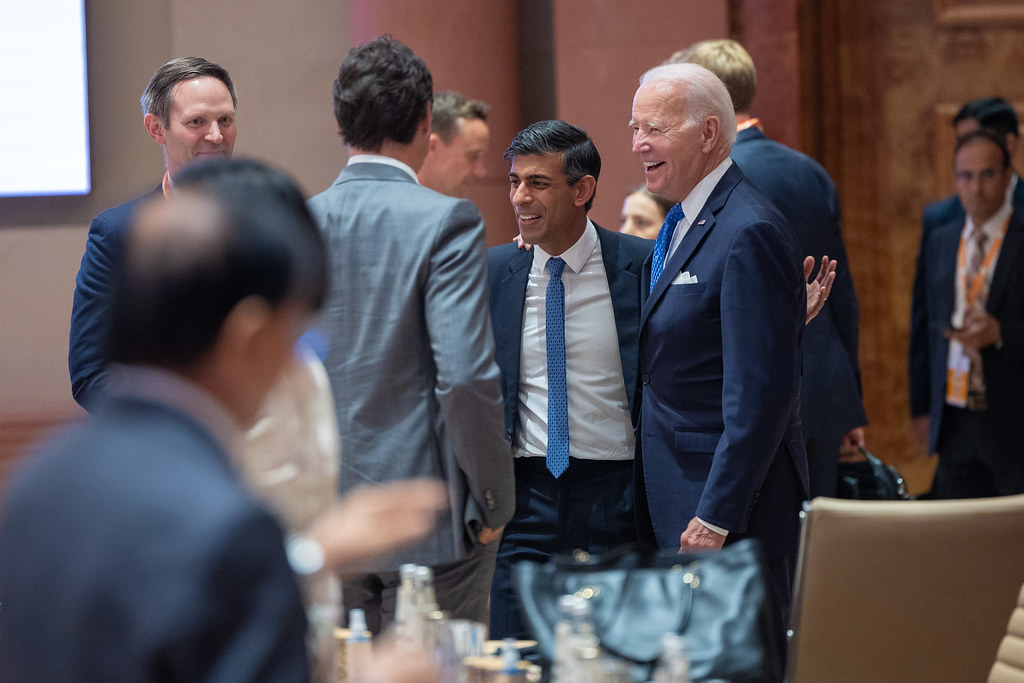
ALSO READ-Biden, Sunak seek trade pact before 2024 polls

Previous Story

‘Over 400 Indian Firms Have Invested in Vietnam’

Next Story

Biden, Sunak seek trade pact before 2024 polls

Previous Story

‘Over 400 Indian Firms Have Invested in Vietnam’

Next Story

Biden, Sunak seek trade pact before 2024 polls

Latest from -Top News

Pakistan Risks Overstretching Itself in Yemen War

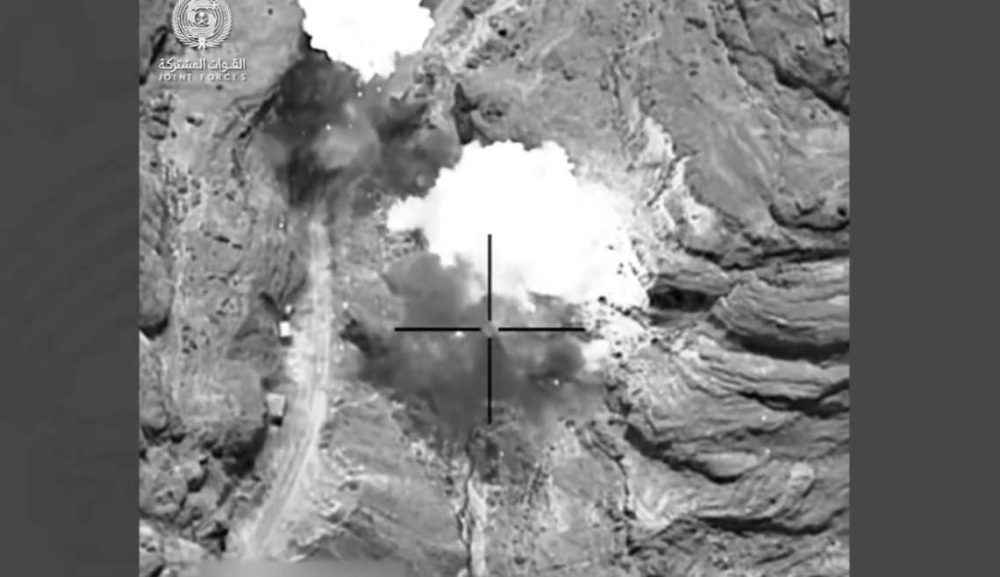
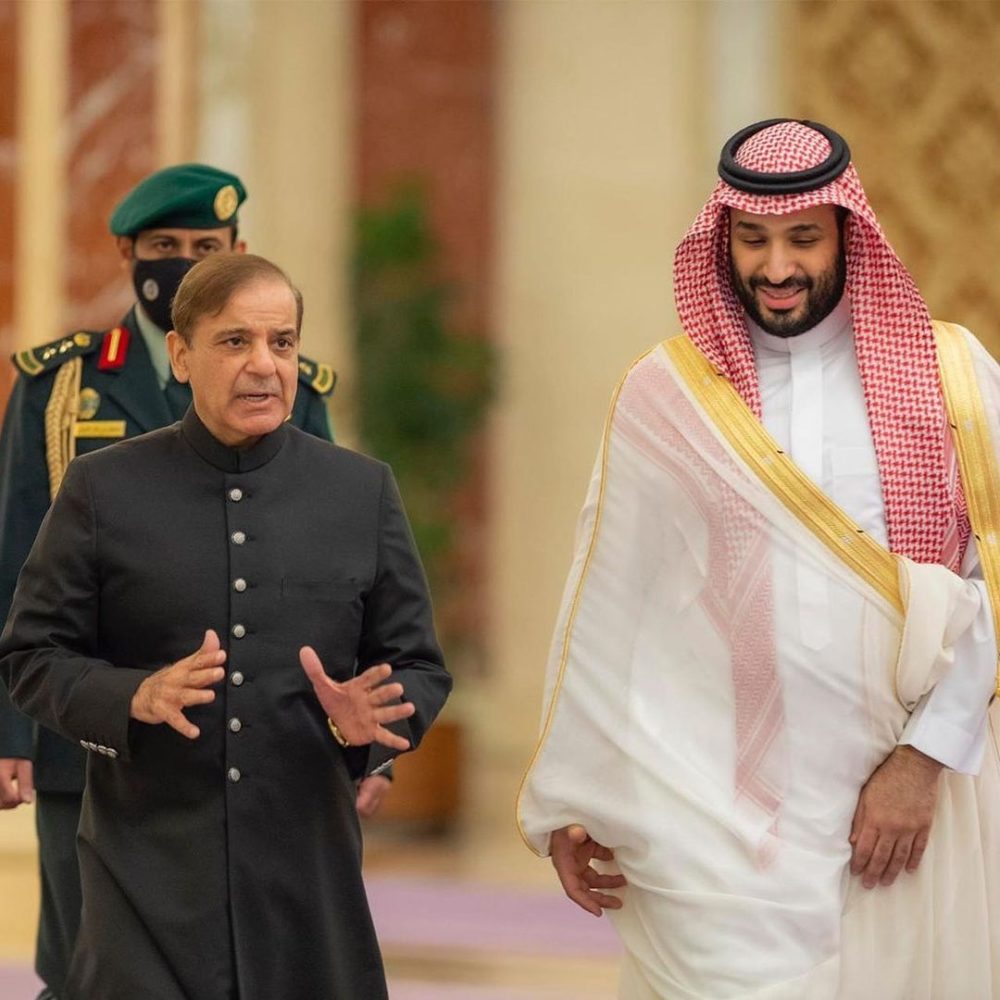
Pakistan’s expanding military role in Saudi Arabia amid the Yemen conflict could strain its defence resources and fragile finances…reports Asian Lite News Desk Pakistan’s military involvement in the war in Yemen may prove unsustainable because of mounting financial pressures and competing security demands, according to a new report. Islamabad’s growing military presence in Saudi Arabia risks stretching its defence resources while exposing the country to greater strategic and economic challenges. An article by Andrew Wilson in One World Outlook describes Pakistan’s involvement as a case of “fiscal and strategic overreach”, arguing that the country lacks the financial flexibility to sustain an expanded military commitment. Pakistan’s external finances depend heavily on an International Monetary Fund (IMF) programme, financial support from Gulf countries and remittances from Pakistani workers in the region. The report argues that deeper military involvement in the conflict could place additional pressure on these sources of financial stability. It also warns that deploying troops and military equipment abroad could weaken Pakistan’s capacity to address security challenges along its eastern border and deal with two domestic insurgencies. The move could also draw Islamabad into a conflict it has sought to approach cautiously. A Reuters report in May, citing Pakistani security and government sources, said Islamabad had deployed around 8,000 troops, a squadron of approximately 16 aircraft, mostly JF-17 fighter jets, two drone squadrons and a Chinese HQ-9 air-defence battery to Saudi Arabia. According to those sources, Riyadh was financing the deployment, with Pakistani personnel operating the equipment. The sources also said a confidential agreement contemplated the possibility of deploying up to 80,000 troops. Islamabad has not confirmed those figures, although it has acknowledged its military presence in Saudi Arabia, including the deployment of fighter jets at King Abdulaziz Air Base from April. The One World Outlook article argues that Saudi financial support can cover allowances and operating expenses but cannot easily replace military equipment needed elsewhere or resolve the political and strategic challenges of participating in the Yemen conflict. Pakistan’s defence budget is another concern. For the 2026-27 financial year, the federal government allocated PKR 3 trillion, or approximately $10.8 billion, to defence services. The allocation represents an 18 per cent increase from the original PKR 2.55 trillion provision and amounts to around 2.1 per cent of projected gross domestic product (GDP). Defence spending accounts for approximately 16 per cent of the federal government’s PKR 18.8 trillion expenditure. Military pensions are budgeted separately at PKR 822 billion, while debt servicing costs stand at approximately PKR 8 trillion, more than two-and-a-half times the defence allocation. The report argues that these competing financial obligations leave little room for additional military expenditure without placing further pressure on public finances. Pakistan’s reliance on IMF assistance also limits its fiscal flexibility. The country must meet the conditions attached to the programme, including a primary budget surplus target of 2 per cent of GDP and continued restraint on development spending. According to the article, these requirements make it difficult for Islamabad to finance an additional military commitment without compromising other budgetary priorities. Pakistan’s economic indicators offer limited reassurance. Economic growth for the 2025-26 financial year is estimated at between 3.6 and 3.7 per cent, while inflation reached approximately 10.3 per cent in September following an energy price shock. Foreign exchange reserves stood at around $21.5 billion at the end of September. Although this marks an improvement from the low levels recorded in 2023, the report notes that the reserves cover only a few months of imports. Financial assistance from Gulf partners remains central to Pakistan’s external stability. The article says Islamabad holds approximately $8 billion in Saudi deposits at its central bank. In July, the State Bank of Pakistan said Riyadh had extended the maturity of $5 billion in deposits to December 2028, easing the country’s immediate external financing requirements. A further $3 billion deposit was also extended in the spring. However, the article argues that these arrangements provide temporary relief rather than long-term financial independence, particularly as regional conflict threatens the stability of the Gulf economies on which Pakistan relies. The report concludes that Pakistan faces a difficult balance between supporting Saudi Arabia militarily and preserving the financial and military resources needed to address its domestic and regional challenges.
Go toTop

Don't Miss

Migration threatens to ‘overwhelm’ Europe, says Sunak

Sunak then hinted at the need to change international law

Sunak, Shapps bicker over deployment of British soldiers to Ukraine

Britain has provided five-week military training courses to around 20,000