April 25, 2023
4 mins read

RAF plane lands in Sudan as UK begins evacuations

The C-17 Globemaster was on the ground at the eastern Sudanese port on the Red Sea along with troops who “may form part of a second rescue”…reports Asian Lite News

Foreign Secretary James Cleverly said officials have started contacting British nationals in Sudan and he evacuation is to begin from Tuesday.

A team of troops from the UK arrived at Port Sudan on Monday on a reconnaissance mission. The flight comes as the UK government assessed options for an evacuation of British nationals stranded in the crisis-hit country.

The C-17 Globemaster was on the ground at the eastern Sudanese port on the Red Sea along with troops who “may form part of a second rescue.”

It comes after the government was criticized for its evacuation on Sunday of British diplomats from Khartoum, but not other UK nationals.

Alicia Kearns, chair of the House of Commons Foreign Affairs Select Committee, said on Sunday that 3,000 to 4,000 British nationals were still in Sudan, with “well over 1,000” asking for help in order to leave the country.

James Heappey, the armed forces minister, said in a briefing that the UK recognized “the job isn’t done” when it came to rescuing those still stranded.

He added that government plans were continuing “at pace” and that Prime Minister Rishi Sunak would be given options to help Britons trapped in Sudan “as and when they arise.”

The UK development minister, Andrew Mitchell, said on Monday morning that he was unable to give a timeline for a possible rescue of British nationals.

“The situation is absolutely desperate and a ceasefire is required,” he said. “The only advice that Britain can give to people is to stay indoors because that is the safe option.”

Rival military factions agreed to a 72-hour ceasefire from Monday night in Sudan, where at least 400 people have been killed in fighting since 15 April.

France evacuates 388 people of 28 countries

As war rages intensified in Sudan, France evacuated 388 people from 28 countries. Evacuation from the capital, Khartoum, has proved intensely dangerous since conflict erupted over the weekend between Sudan’s military and a powerful paramilitary group, the Rapid Support Forces, New York Times reported. But after days hunkered inside their homes, often as battle rages in the streets outside, more Sudanese and foreign nationals have sought to flee the city of five million people.

“French evacuation operations are underway. Last night, two military flight rotations evacuated 388 people of 28 countries, including Indian nationals,” tweeted the Embassy of France in India.

Millions of residents are trapped inside their homes, many running low on water and food after the eruption of fighting on April 15 between the army and the Rapid Support Forces (RSF) paramilitary group.

It has triggered a humanitarian crisis, killing at least 420 people and leaving behind charred tanks, gutted buildings and shops that have been looted and torched.

The WHO retweeted a post from Sudan’s Health Ministry on Sunday saying at least 420 people had been killed and 3,700 injured in the fighting so far.

Countries scrambled to evacuate their diplomats and citizens from the Sudanese capital on Saturday and Sunday. “Today, on my orders, the United States military conducted an operation to extract US government personnel from Khartoum,” President Joe Biden said in a statement.

In a separate statement, US Secretary of State Antony Blinken said that all US personnel and their families had been evacuated and operations at the US Embassy in Khartoum have been “temporarily suspended.”

The foreign governments began landing aircraft and organising convoys in Khartoum to pull out their nationals. The US said special forces using MH-47 Chinook helicopters swept into Sudan’s battle-stricken capital from a US base in Djibouti, spending just one hour on the ground to bring out fewer than 100 people.

Germany and France announced Sunday that they had begun evacuating their nationals and those from other countries. Other European countries, including Italy, the Netherlands and Greece, also said they were planning rescue efforts, reported Al Jazeera.

Long convoys of UN vehicles and buses were seen leaving Khartoum heading east to Port Sudan on the Red Sea, 850km (530 miles) away by road, carrying “citizens from all over the world”, according to one Sierra Leonean evacuee.

Turkey began rescue operations at dawn Sunday via road from the southern city of Wad Madani. Still, the effort was postponed from one site in Khartoum after explosions near a mosque designated as the assembly area, the embassy said on Twitter.

An Italian air force C-130 that left Khartoum with evacuees landed Sunday night at an air base in Djibouti, the country’s Defence Ministry said.

ALSO READ-France exposes West’s disunity over anti-China deterrence

Previous Story

Pak Army chief in China to bolster military ties

Next Story

Sunak goes live on LinkedIn to push growth plans

Previous Story

Pak Army chief in China to bolster military ties

Next Story

Sunak goes live on LinkedIn to push growth plans

Latest from -Top News

Pakistan Risks Overstretching Itself in Yemen War

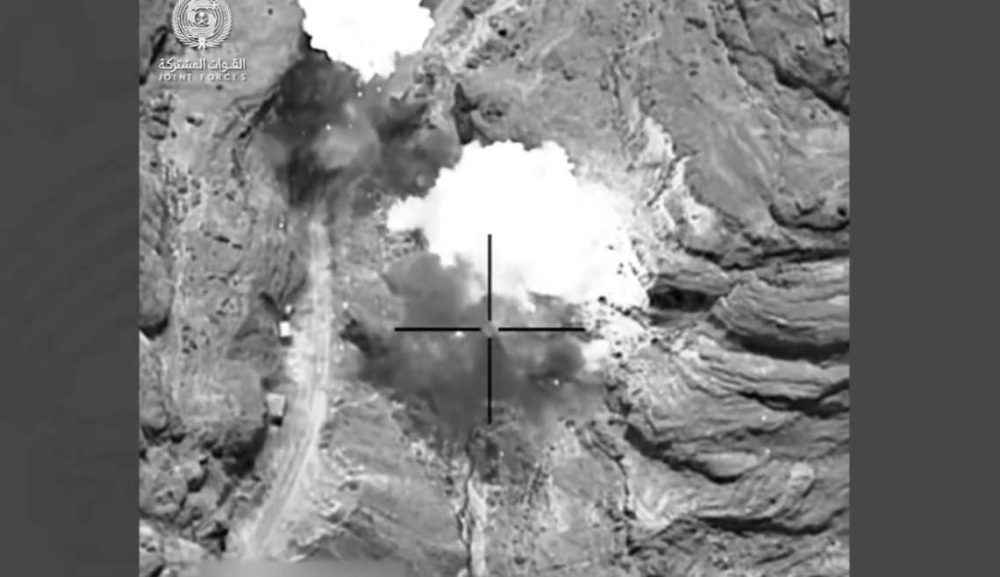
Pakistan’s expanding military role in Saudi Arabia amid the Yemen conflict could strain its defence resources and fragile finances…reports Asian Lite News Desk Pakistan’s military involvement in the war in Yemen may prove unsustainable because of mounting financial pressures and competing security demands, according to a new report. Islamabad’s growing military presence in Saudi Arabia risks stretching its defence resources while exposing the country to greater strategic and economic challenges. An article by Andrew Wilson in One World Outlook describes Pakistan’s involvement as a case of “fiscal and strategic overreach”, arguing that the country lacks the financial flexibility to sustain an expanded military commitment. Pakistan’s external finances depend heavily on an International Monetary Fund (IMF) programme, financial support from Gulf countries and remittances from Pakistani workers in the region. The report argues that deeper military involvement in the conflict could place additional pressure on these sources of financial stability. It also warns that deploying troops and military equipment abroad could weaken Pakistan’s capacity to address security challenges along its eastern border and deal with two domestic insurgencies. The move could also draw Islamabad into a conflict it has sought to approach cautiously. A Reuters report in May, citing Pakistani security and government sources, said Islamabad had deployed around 8,000 troops, a squadron of approximately 16 aircraft, mostly JF-17 fighter jets, two drone squadrons and a Chinese HQ-9 air-defence battery to Saudi Arabia. According to those sources, Riyadh was financing the deployment, with Pakistani personnel operating the equipment. The sources also said a confidential agreement contemplated the possibility of deploying up to 80,000 troops. Islamabad has not confirmed those figures, although it has acknowledged its military presence in Saudi Arabia, including the deployment of fighter jets at King Abdulaziz Air Base from April. The One World Outlook article argues that Saudi financial support can cover allowances and operating expenses but cannot easily replace military equipment needed elsewhere or resolve the political and strategic challenges of participating in the Yemen conflict. Pakistan’s defence budget is another concern. For the 2026-27 financial year, the federal government allocated PKR 3 trillion, or approximately $10.8 billion, to defence services. The allocation represents an 18 per cent increase from the original PKR 2.55 trillion provision and amounts to around 2.1 per cent of projected gross domestic product (GDP). Defence spending accounts for approximately 16 per cent of the federal government’s PKR 18.8 trillion expenditure. Military pensions are budgeted separately at PKR 822 billion, while debt servicing costs stand at approximately PKR 8 trillion, more than two-and-a-half times the defence allocation. The report argues that these competing financial obligations leave little room for additional military expenditure without placing further pressure on public finances. Pakistan’s reliance on IMF assistance also limits its fiscal flexibility. The country must meet the conditions attached to the programme, including a primary budget surplus target of 2 per cent of GDP and continued restraint on development spending. According to the article, these requirements make it difficult for Islamabad to finance an additional military commitment without compromising other budgetary priorities. Pakistan’s economic indicators offer limited reassurance. Economic growth for the 2025-26 financial year is estimated at between 3.6 and 3.7 per cent, while inflation reached approximately 10.3 per cent in September following an energy price shock. Foreign exchange reserves stood at around $21.5 billion at the end of September. Although this marks an improvement from the low levels recorded in 2023, the report notes that the reserves cover only a few months of imports. Financial assistance from Gulf partners remains central to Pakistan’s external stability. The article says Islamabad holds approximately $8 billion in Saudi deposits at its central bank. In July, the State Bank of Pakistan said Riyadh had extended the maturity of $5 billion in deposits to December 2028, easing the country’s immediate external financing requirements. A further $3 billion deposit was also extended in the spring. However, the article argues that these arrangements provide temporary relief rather than long-term financial independence, particularly as regional conflict threatens the stability of the Gulf economies on which Pakistan relies. The report concludes that Pakistan faces a difficult balance between supporting Saudi Arabia militarily and preserving the financial and military resources needed to address its domestic and regional challenges.
Go toTop

Don't Miss

Boris pledges £700 m to fund new N-plant

Johnson will formally leave office on Tuesday, handing power to

‘Sunak breached code in probe into wife’s assets’

Sunak has taken responsibility for the disclosure and acknowledged that,