February 25, 2024
1 min read

BJP is scared of INDIA bloc, says AAP leader

The partners in the INDIA bloc, Congress and the AAP, announced a seat-sharing pact for Delhi, Gujarat, Haryana, Chandigarh and Goa….reports Asian Lite News

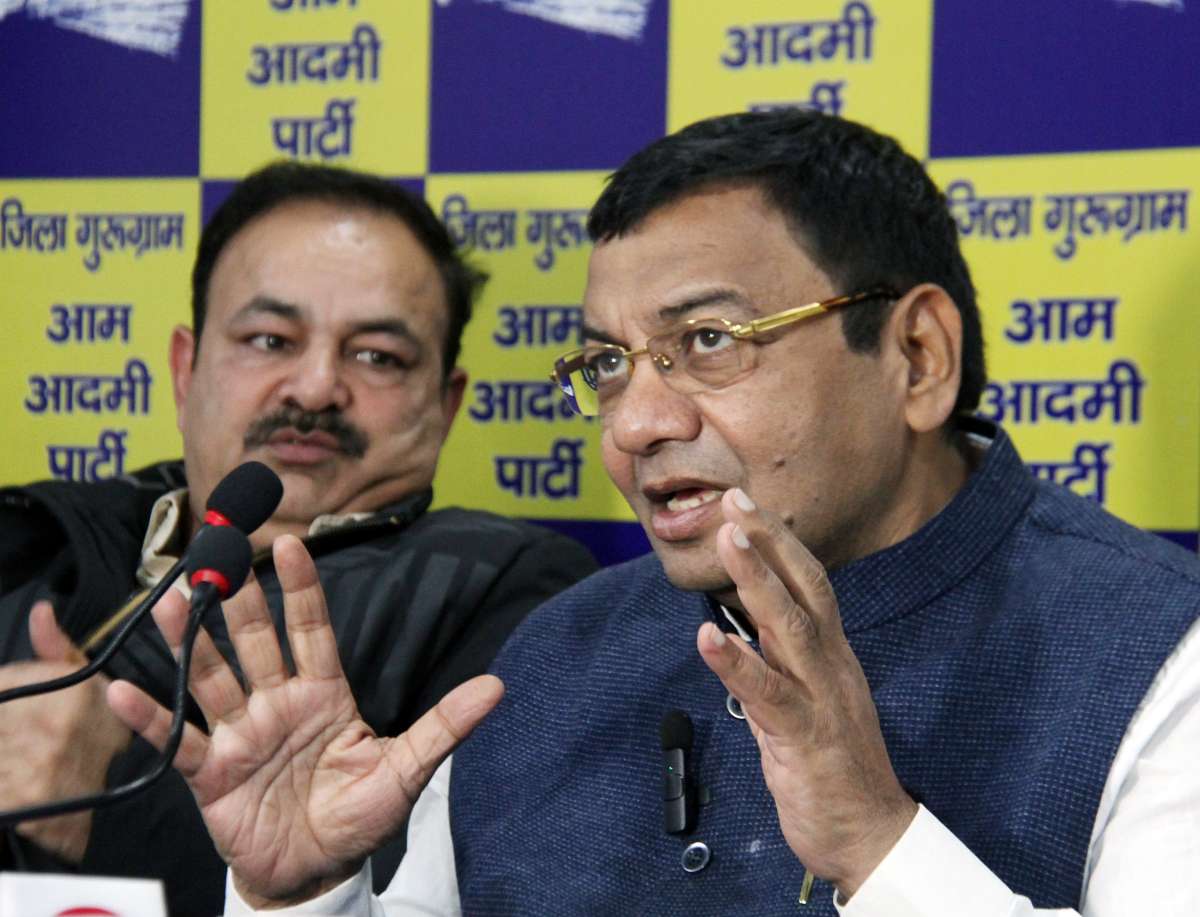
AAP Haryana president Sushil Gupta on Saturday said that the Bharatiya Janata Party is scared of the INDIA bloc and wants to get Delhi Chief Minister Arvind Kejriwal arrested.

Highlighting that the INDIA bloc is a “strong one”, he said, “The alliance formula made in Haryana, Delhi, Gujarat, Goa, and Chandigarh, has scared the BJP.”

Asserting that the INDIA bloc will register a major victory in the Lok Sabha elections 2024, he said, “We will win on all the 10 seats in Haryana and seven seats in Delhi.”

Elaborating on the objective of why securing a win in the upcoming general elections is crucial for the INDIA bloc, he said, “This is an election to restore democracy, to save the constitutional bodies of the country and to develop the nation.”

Stating that the Modi government is scared of the AAP-Congress alliance, he concluded, “We are going to fight strongly on all the ten seats in Haryana. It is not about which party of the INDIA bloc is going to get what. The only thing is our alliance will strongly fight for all the seats and will win them all.”

Earlier in the day, terming the seat-sharing pact between the Congress and the Aam Aadmi Party (AAP) ahead of the Lok Sabha polls as “bizarre”, Union Minister Hardeep Singh Puri said that the path to ‘hell’ is paved with ‘skewed’ alliances.

Notably, the partners in the INDIA bloc, Congress and the AAP, announced a seat-sharing pact for Delhi, Gujarat, Haryana, Chandigarh and Goa.

ALSO READ: BJP core group meeting focuses on prominent seats in 5 states for LS polls

Previous Story

‘Zero-tolerance policy towards misuse of money in polls’

Next Story

AIADMK releases AI-generated clip of Jayalalithaa

Previous Story

‘Zero-tolerance policy towards misuse of money in polls’

Next Story

AIADMK releases AI-generated clip of Jayalalithaa

Latest from Asia News

Nepal Floods Cause $1.66 Billion In Damage, Says World Bank

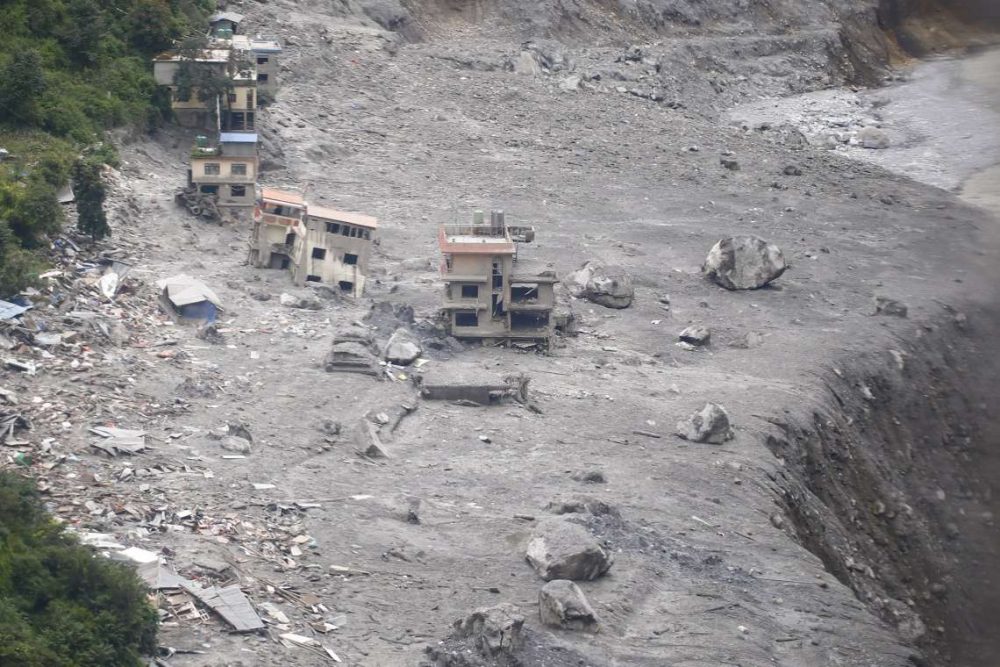
Nepal’s August 2026 floods caused an estimated US$1.66 billion in direct physical damage, with infrastructure accounting for 83 per cent of the total…reports Asian Lite News Desk Nepal’s devastating floods in August 2026 caused an estimated US$1.66 billion in direct physical damage, with infrastructure accounting for 83 per cent of the total, according to a World Bank report. The estimate, included in the World Bank’s Nepal Development Update unveiled this week, is close to the Nepal government’s preliminary Rapid Damage and Needs Assessment (RDNA), which put physical damage at US$1.81 billion. The government’s assessment also estimated losses beyond physical assets at US$883.32 million, taking the total economic effects of the disaster to approximately US$2.7 billion. The World Bank’s Global Rapid Post-Disaster Damage Estimation (GRADE) found that infrastructure suffered the greatest damage, estimated at US$1.38 billion, or 83 per cent of the total. Residential buildings accounted for US$185 million, or 11 per cent, while non-residential buildings sustained damage worth US$101 million, or 6 per cent. The floods along the Bhotekoshi and Trishuli rivers caused extensive damage to hydropower projects, solar energy facilities, electricity transmission infrastructure and transport networks. The energy sector, particularly hydropower, was among the worst affected. The August 2026 floods affected 12 hydropower projects and one solar project, involving 281.1 MW of operational capacity and 395.02 MW of capacity under construction. Damage to transmission lines and substations also disrupted the transmission of 149.6 MW of electricity to the national grid. The total affected capacity reached approximately 430.7 MW, equivalent to 10.6 per cent of Nepal’s installed hydropower and solar capacity at the end of fiscal year 2025-26, which concluded in mid-July. The disaster also severely damaged transport infrastructure along the 82-km Rasuwa trade corridor, which connects Kathmandu with the Rasuwagadhi border point with China. More than 55 km of the corridor was damaged, including 40 km that was completely destroyed. The floods also damaged 37 motorable bridges and 68 suspension bridges. The disaster resulted in significant human losses along the affected corridor and beyond. According to Nepal’s National Disaster Risk Reduction and Management Authority, 1,455 people had been confirmed dead, while 5,285 remained missing following the disaster. The World Bank report found that the physical damage was concentrated in three districts in central Nepal: Rasuwa, Nuwakot and Dhading. Rasuwa was the worst-affected district, accounting for US$1.07 billion, or 64 per cent, of the total direct damage. Nuwakot recorded an estimated US$551 million in damage, while Dhading suffered approximately US$39 million. “The findings highlight the concentration of physical damage in a small number of districts and the disproportionate impact on infrastructure, underscoring the scale of the reconstruction challenge facing the affected areas,” the World Bank said. The global development financier said the floods had demonstrated the scale and complexity of disaster risks in Nepal’s Himalayan environment. The event also showed how a single extreme weather event could trigger cascading impacts across sectors and geographical areas. The report said recovery efforts should extend beyond restoring infrastructure to its pre-disaster condition. While the principle of “Build Back Better” remained relevant, the World Bank stressed that rebuilding infrastructure to higher engineering standards in the same locations might not always be sufficient. “In some cases, simply rebuilding the same infrastructure in the same location to a higher engineering standard may not be sufficient. Nepal may need to build differently — based on a better understanding of risk, more careful decisions about location and design, greater redundancy in critical networks, stronger monitoring and early warning, and a more integrated approach to infrastructure development in the Himalayas,” the report said. The World Bank said Nepal’s recovery strategy should incorporate improved risk assessment, more informed infrastructure planning, stronger monitoring systems and better early warning mechanisms. The report emphasised that reconstruction should not only restore damaged assets but also reduce the impact of future disasters, particularly in the country’s vulnerable Himalayan regions.

Vaccine Delays Fuel Bangladesh Measles Outbreak

More than 32,000 suspected cases and over 250 deaths have been reported since mid-March, with children making up most of the fatalities….reports Asian Lite News Desk Bangladesh’s measles outbreak has intensified, with

Tsai: Stand With Taiwan, Strengthen The Indo-Pacific

The former president said stronger international partnerships would help Taiwan withstand mounting military, cyber and economic pressure while reinforcing democratic resilience….repots Asian Lite News Desk Former Taiwan President Tsai Ing-wen has called

Pakistan Knitwear Exporters Seek Relief As Costs Soar

Pakistan’s hosiery and knitwear exporters are seeking urgent government support as rising production, energy and freight costs threaten international competitiveness….reports Asian Lite News Desk Pakistan’s hosiery and knitwear export industry is facing
Go toTop

Don't Miss

UNESCO crowns India’s festival of lights

Deepawali secures UNESCO Intangible Heritage status as India hosts the

India sends extradition request for Iqbal Mirchi’s wife, sons

Mirchi, an aide of Dawood Ibrahim, was involved in drug