October 6, 2024
5 mins read

Africa roads among world’s deadliest despite few cars

As everywhere, speed, alcohol and not wearing a seat belt or helmet are among the main causes of death and injury, say experts….reports Asian Lite News

Africa has the fewest roads and cars of any region, and yet the largest ratio of vehicle deaths, caused by the usual suspects — unsafe habits, speeding and drinking — but also poor infrastructure, scant rescuers and old cars.

As everywhere, speed, alcohol and not wearing a seat belt or helmet are among the main causes of death and injury, say experts.

But in Africa, where there are 620 traffic deaths every day, these problems are compounded by bad roads, outdated vehicles, minimal prosecutions and a shortage of emergency services.

A recent World Health Organization report found that Africa surpassed the rest of the world, including Southeast Asia — which recorded the most road deaths — with a record ratio of 19.5 people killed per 100,000 inhabitants in 2021.

Home to only around four percent of the world’s automobiles, Africa accounted for 19 percent of road deaths last year.

“What is worrying is the upward trend in Africa,” said Jean Todt, a former head of the International Automobile Federation and now the United Nations(UN) special envoy for road safety.

The continent is the only region where road deaths increased between 2010 and 2021 — up 17 percent to 226,100. The spike was seen in more than half of Africa’s countries (28 out of 54). The biggest victims are pedestrians, accounting for a third of fatalities due to a lack of adequate pavements, compared to 21 percent worldwide.

“We need to have better designed streets with sidewalks, adequate signage and pedestrian lanes, particularly around schools,” Todt said. He also bemoaned the shortage of public transport for the rapidly urbanizing continent.

“Many African countries continue to design their infrastructure for motor vehicles and not for individuals, and without safety being the main concern,” said Haileyesus Adamtei, a transport expert at the World Bank.

One major culprit is the quality of the cars plying Africa’s roads, with many more than 15 years old, according to the UN Road Safety Fund. A transport ministry spokesperson in Senegal sid that faulty brakes and worn tires were common — and often deadly. “The dilapidated state of vehicles is a major factor in the lack of safety,” the spokesperson said.

The West African country introduced a raft of new rules after a head-on crash between two night buses in January 2023 killed 40 people. “But most have never been implemented,” the ministry spokesperson admitted.

Some rules, such as a ban on loading luggage on the roof of buses, which could unbalance the vehicle, were fiercely opposed by operators. It does not help that drivers can often get a license with only perfunctory lessons and testing — often avoided altogether with a bribe.

Corruption also means that permissive law enforcement often sweeps many road safety violations under the carpet. The UN has called for a “decade of action” to halve the number of road deaths by 2030.

Todt insists the aim is achievable and should top government agendas. “Beyond the human tragedy, road crashes are also a major cause of slowdown in the development of a country, costing on average four to five percent of GDP, sometimes much more in Africa,” he said.
Johannesburg street may be named after Palestinian hijacker

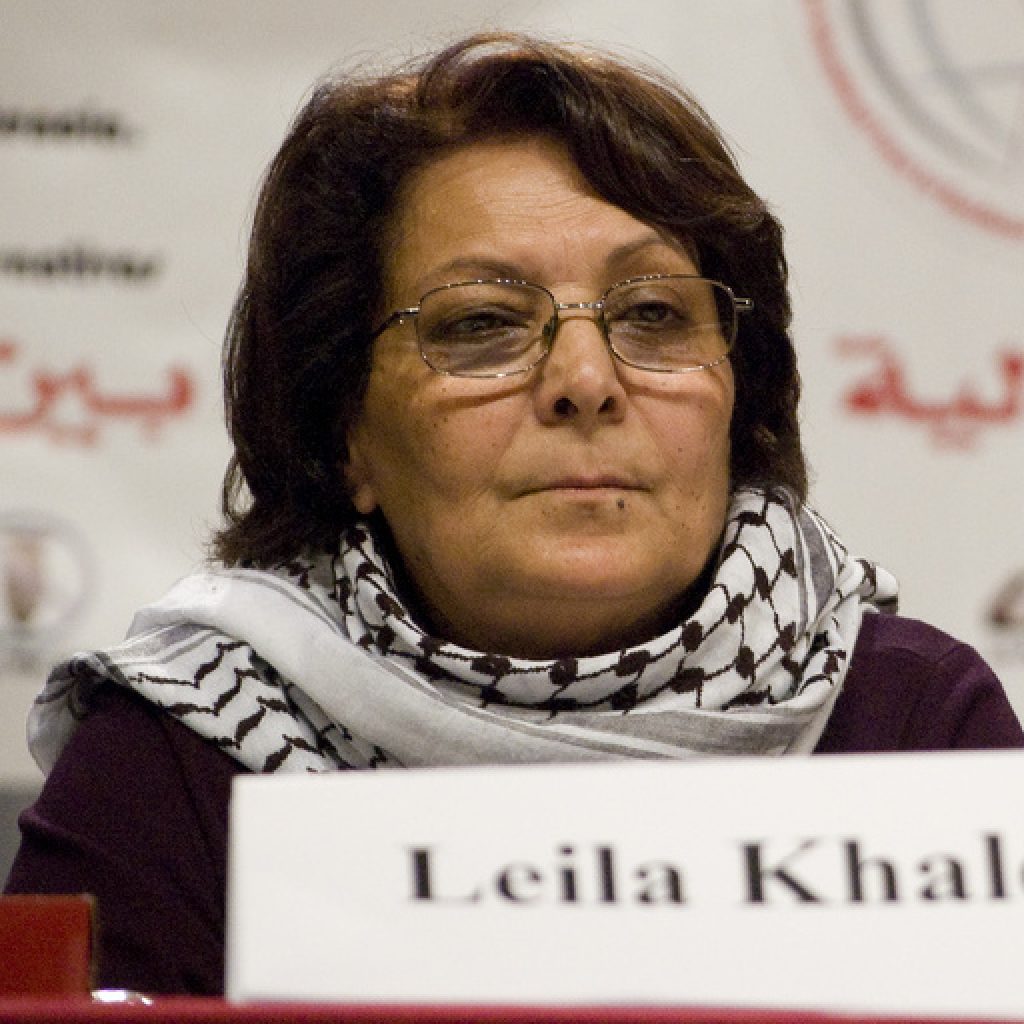
Officials in South Africa’s biggest city of Johannesburg have proposed renaming a major street after a Palestinian woman who was involved in a hijacking more than 50 years ago, sparking criticism from several political parties and the city’s Jewish community.

The city council is considering naming the street in its financial district of Sandton after Leila Khaled, a Palestinian militant and member of the Popular Front for the Liberation of Palestine group. Khaled, who is now 80 years old, gained infamy in 1969 when she was part of a group who hijacked a Trans World Airlines flight on a journey from Rome to Tel Aviv, Israel. She became known as the first woman to hijack a plane.

She was also one of two people who attempted to hijack an Israeli Airlines flight from Amsterdam to New York City the following year, which resulted in the other hijacker being fatally shot by air marshals. Israel considers Khaled a terrorist, but she is widely seen as a hero and freedom fighter by Palestinians and by some in South Africa who support the Palestinian cause.

The PFLP is part of the Palestine Liberation Organization, the internationally recognized representative of the Palestinian people. While the main PLO faction, Fatah, recognizes Israel’s right to exist, the PFLP doesn’t, and Israel, the United States and other Western allies of Israel consider it a terrorist group. South Africa has historically close ties to the Palestinians and has accused Israel of committing genocide in the war in Gaza in a highly sensitive case that’s being heard by the top UN court. South Africa and Israel have been fiercely critical of each other over that case. Khaled has previously visited South Africa.

The street renaming controversy dates back to 2018, when it was first proposed and reportedly sparked a brawl among Johannesburg city officials, according to local media coverage at the time. It was initially proposed by Al Jamaah, a pro-Palestinian minority party in the Johannesburg council, and supported by the African National Congress.

ALSO READ: UN releases $5 mn for flood victims in Nigeria

Previous Story

UN releases $5 mn for flood victims in Nigeria

Next Story

Somali President urges for investments in agricultural sector

Previous Story

UN releases $5 mn for flood victims in Nigeria

Next Story

Somali President urges for investments in agricultural sector

Latest from -Top News

Pakistan Risks Overstretching Itself in Yemen War

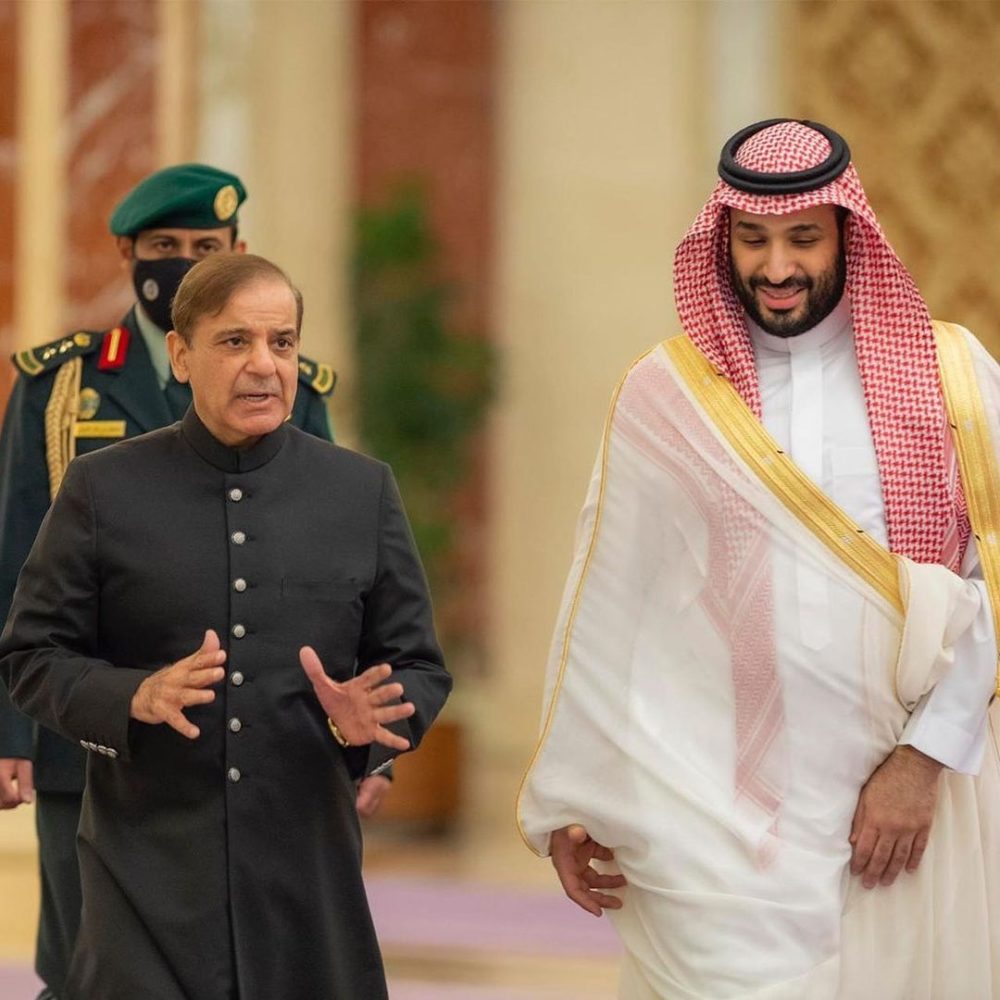
Pakistan’s expanding military role in Saudi Arabia amid the Yemen conflict could strain its defence resources and fragile finances…reports Asian Lite News Desk Pakistan’s military involvement in the war in Yemen may prove unsustainable because of mounting financial pressures and competing security demands, according to a new report. Islamabad’s growing military presence in Saudi Arabia risks stretching its defence resources while exposing the country to greater strategic and economic challenges. An article by Andrew Wilson in One World Outlook describes Pakistan’s involvement as a case of “fiscal and strategic overreach”, arguing that the country lacks the financial flexibility to sustain an expanded military commitment. Pakistan’s external finances depend heavily on an International Monetary Fund (IMF) programme, financial support from Gulf countries and remittances from Pakistani workers in the region. The report argues that deeper military involvement in the conflict could place additional pressure on these sources of financial stability. It also warns that deploying troops and military equipment abroad could weaken Pakistan’s capacity to address security challenges along its eastern border and deal with two domestic insurgencies. The move could also draw Islamabad into a conflict it has sought to approach cautiously. A Reuters report in May, citing Pakistani security and government sources, said Islamabad had deployed around 8,000 troops, a squadron of approximately 16 aircraft, mostly JF-17 fighter jets, two drone squadrons and a Chinese HQ-9 air-defence battery to Saudi Arabia. According to those sources, Riyadh was financing the deployment, with Pakistani personnel operating the equipment. The sources also said a confidential agreement contemplated the possibility of deploying up to 80,000 troops. Islamabad has not confirmed those figures, although it has acknowledged its military presence in Saudi Arabia, including the deployment of fighter jets at King Abdulaziz Air Base from April. The One World Outlook article argues that Saudi financial support can cover allowances and operating expenses but cannot easily replace military equipment needed elsewhere or resolve the political and strategic challenges of participating in the Yemen conflict. Pakistan’s defence budget is another concern. For the 2026-27 financial year, the federal government allocated PKR 3 trillion, or approximately $10.8 billion, to defence services. The allocation represents an 18 per cent increase from the original PKR 2.55 trillion provision and amounts to around 2.1 per cent of projected gross domestic product (GDP). Defence spending accounts for approximately 16 per cent of the federal government’s PKR 18.8 trillion expenditure. Military pensions are budgeted separately at PKR 822 billion, while debt servicing costs stand at approximately PKR 8 trillion, more than two-and-a-half times the defence allocation. The report argues that these competing financial obligations leave little room for additional military expenditure without placing further pressure on public finances. Pakistan’s reliance on IMF assistance also limits its fiscal flexibility. The country must meet the conditions attached to the programme, including a primary budget surplus target of 2 per cent of GDP and continued restraint on development spending. According to the article, these requirements make it difficult for Islamabad to finance an additional military commitment without compromising other budgetary priorities. Pakistan’s economic indicators offer limited reassurance. Economic growth for the 2025-26 financial year is estimated at between 3.6 and 3.7 per cent, while inflation reached approximately 10.3 per cent in September following an energy price shock. Foreign exchange reserves stood at around $21.5 billion at the end of September. Although this marks an improvement from the low levels recorded in 2023, the report notes that the reserves cover only a few months of imports. Financial assistance from Gulf partners remains central to Pakistan’s external stability. The article says Islamabad holds approximately $8 billion in Saudi deposits at its central bank. In July, the State Bank of Pakistan said Riyadh had extended the maturity of $5 billion in deposits to December 2028, easing the country’s immediate external financing requirements. A further $3 billion deposit was also extended in the spring. However, the article argues that these arrangements provide temporary relief rather than long-term financial independence, particularly as regional conflict threatens the stability of the Gulf economies on which Pakistan relies. The report concludes that Pakistan faces a difficult balance between supporting Saudi Arabia militarily and preserving the financial and military resources needed to address its domestic and regional challenges.
Go toTop

Don't Miss

3 migrants died, 3 missing as boat sinks off Tunisia’s coast

Three illegal migrants died and three others went missing after

IOM: Dehydration, drowning killing Horn of Africa migrants

The number of migrants from the Horn of African region,