October 2, 2024
3 mins read

INS Talwar strengthens naval bonds with Kenya

The visit was marked by professional interactions, collaborative training exercises, and outreach programmes, with a particular focus on fostering interoperability between the Indian Navy and the Kenyan Navy….reports Asian Lite News

In alignment with India’s growing engagement with East Africa, and as part of Prime Minister Narendra Modi’s vision of SAGAR (Security and Growth for All in the Region), Indian Naval Ship (INS) Talwar recently concluded its significant port call to Mombasa, Kenya. The visit, which took place from September 22 to September 25, 2024, aimed at reinforcing maritime cooperation between India and Kenya and enhancing regional maritime security.

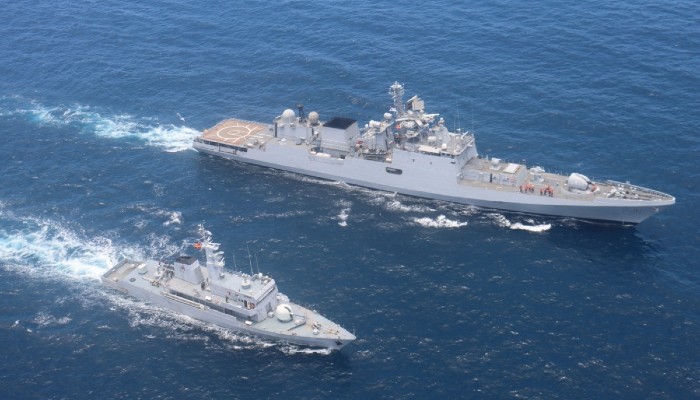
The visit was marked by professional interactions, collaborative training exercises, and outreach programmes, with a particular focus on fostering interoperability between the Indian Navy and the Kenyan Navy. The culmination of the port visit saw a high-level Joint Exclusive Economic Zone (EEZ) Surveillance and Maritime Partnership Exercise (MPX) between INS Talwar and Kenyan Naval Ship (KNS) Shujaa, which further bolstered operational readiness and coordination between the two maritime forces.

INS Talwar’s visit to Mombasa represents a strategic engagement between India and Kenya, reinforcing the Indian Navy’s ongoing efforts to support maritime security and collaboration in the Indian Ocean Region (IOR). 

During the harbour phase of the visit, the Commanding Officer of INS Talwar, along with senior naval personnel, paid an official call to Brigadier JS Kiswaa, the Deputy Commander of the Kenya Navy, at Mtongwe Naval Base. The discussions focused on enhancing professional exchanges, joint training programs, and continued naval cooperation between the two nations.

The interactions between the Indian and Kenyan naval teams included demonstrations of various naval procedures and tactics, such as Visit, Board, Search, and Seizure (VBSS) operations and Nuclear, Biological, and Chemical Defence (NBCD) measures. These drills are crucial for developing coordinated responses to threats and ensuring both nations’ ability to operate seamlessly in joint operations.

Beyond professional exchanges, the port call provided opportunities for both naval contingents to engage in cultural and social bonding. Personnel from both navies participated in yoga sessions and friendly sports fixtures, fostering camaraderie and mutual understanding. As part of their community outreach, the crew of INS Talwar visited a local orphanage in Mombasa, contributing to the goodwill and fostering positive relations between the Indian Navy and the Kenyan community.

This blend of professional and social engagement underscores the holistic approach that both navies have adopted to enhance bilateral ties. The collaborative spirit displayed during the port visit echoes the broader objectives of SAGAR, which emphasizes inclusive growth, regional cooperation, and mutual prosperity.

The maritime exercises are designed to bolster interoperability between the Indian and Kenyan naval forces, equipping both navies with the skills and coordination needed to jointly address maritime security threats, such as piracy, smuggling, and other illegal activities in the Indian Ocean Region. The joint drills also involved navigation and communication exercises, search and rescue operations, and tactical maneuvers that demonstrated the professional competence of both navies.

The crew of KNS Shujaa had earlier visited INS Talwar to familiarize themselves with the exercise program and finalize the operational procedures for the joint exercise.

INS Talwar’s visit and the joint exercises with the Kenyan Navy are part of a broader strategic vision outlined by India’s government. The visit supports the Joint Vision Statement ‘BAHARI,’ released in December 2023, which emphasizes greater collaboration between India and East African nations to safeguard the Indian Ocean Region’s security and economic interests.

India’s Vision of SAGAR places maritime security at the forefront of regional cooperation, underscoring the importance of developing strong naval partnerships with key East African nations like Kenya. Through engagements such as this port call and joint exercise, both India and Kenya can deepen their maritime cooperation, contributing to peace, stability, and growth across the region. The collaborative exercises also play a crucial role in enhancing India’s defense diplomacy, allowing the Indian Navy to engage with its counterparts in East Africa and build lasting partnerships based on trust, mutual respect, and shared goals. (India News Network)
ALSO READ: Jaishankar, Blinken discuss West Asia, Ukraine

Previous Story

Maldivian foreign minister meets Indian envoy, reflect on ties

Next Story

Taiwan calls for ‘pragmatic dialogue’, rejects Xi’s anniversary statement

Previous Story

Maldivian foreign minister meets Indian envoy, reflect on ties

Next Story

Taiwan calls for ‘pragmatic dialogue’, rejects Xi’s anniversary statement

Latest from -Top News

Pakistan Risks Overstretching Itself in Yemen War

Pakistan’s expanding military role in Saudi Arabia amid the Yemen conflict could strain its defence resources and fragile finances…reports Asian Lite News Desk Pakistan’s military involvement in the war in Yemen may prove unsustainable because of mounting financial pressures and competing security demands, according to a new report. Islamabad’s growing military presence in Saudi Arabia risks stretching its defence resources while exposing the country to greater strategic and economic challenges. An article by Andrew Wilson in One World Outlook describes Pakistan’s involvement as a case of “fiscal and strategic overreach”, arguing that the country lacks the financial flexibility to sustain an expanded military commitment. Pakistan’s external finances depend heavily on an International Monetary Fund (IMF) programme, financial support from Gulf countries and remittances from Pakistani workers in the region. The report argues that deeper military involvement in the conflict could place additional pressure on these sources of financial stability. It also warns that deploying troops and military equipment abroad could weaken Pakistan’s capacity to address security challenges along its eastern border and deal with two domestic insurgencies. The move could also draw Islamabad into a conflict it has sought to approach cautiously. A Reuters report in May, citing Pakistani security and government sources, said Islamabad had deployed around 8,000 troops, a squadron of approximately 16 aircraft, mostly JF-17 fighter jets, two drone squadrons and a Chinese HQ-9 air-defence battery to Saudi Arabia. According to those sources, Riyadh was financing the deployment, with Pakistani personnel operating the equipment. The sources also said a confidential agreement contemplated the possibility of deploying up to 80,000 troops. Islamabad has not confirmed those figures, although it has acknowledged its military presence in Saudi Arabia, including the deployment of fighter jets at King Abdulaziz Air Base from April. The One World Outlook article argues that Saudi financial support can cover allowances and operating expenses but cannot easily replace military equipment needed elsewhere or resolve the political and strategic challenges of participating in the Yemen conflict. Pakistan’s defence budget is another concern. For the 2026-27 financial year, the federal government allocated PKR 3 trillion, or approximately $10.8 billion, to defence services. The allocation represents an 18 per cent increase from the original PKR 2.55 trillion provision and amounts to around 2.1 per cent of projected gross domestic product (GDP). Defence spending accounts for approximately 16 per cent of the federal government’s PKR 18.8 trillion expenditure. Military pensions are budgeted separately at PKR 822 billion, while debt servicing costs stand at approximately PKR 8 trillion, more than two-and-a-half times the defence allocation. The report argues that these competing financial obligations leave little room for additional military expenditure without placing further pressure on public finances. Pakistan’s reliance on IMF assistance also limits its fiscal flexibility. The country must meet the conditions attached to the programme, including a primary budget surplus target of 2 per cent of GDP and continued restraint on development spending. According to the article, these requirements make it difficult for Islamabad to finance an additional military commitment without compromising other budgetary priorities. Pakistan’s economic indicators offer limited reassurance. Economic growth for the 2025-26 financial year is estimated at between 3.6 and 3.7 per cent, while inflation reached approximately 10.3 per cent in September following an energy price shock. Foreign exchange reserves stood at around $21.5 billion at the end of September. Although this marks an improvement from the low levels recorded in 2023, the report notes that the reserves cover only a few months of imports. Financial assistance from Gulf partners remains central to Pakistan’s external stability. The article says Islamabad holds approximately $8 billion in Saudi deposits at its central bank. In July, the State Bank of Pakistan said Riyadh had extended the maturity of $5 billion in deposits to December 2028, easing the country’s immediate external financing requirements. A further $3 billion deposit was also extended in the spring. However, the article argues that these arrangements provide temporary relief rather than long-term financial independence, particularly as regional conflict threatens the stability of the Gulf economies on which Pakistan relies. The report concludes that Pakistan faces a difficult balance between supporting Saudi Arabia militarily and preserving the financial and military resources needed to address its domestic and regional challenges.

UK and Germany Ratify Kensington Treaty

Britain and Germany ratify the Kensington Treaty, agreeing new cooperation on AI, quantum research, defence and security while targeting investment, jobs and Russian hybrid threats…reports Asian Lite News Desk Britain and Germany

Economic tide is turning in Bangladesh

If there is one thing that can bring some comfort to the struggling Bangladeshi economy, it is good relations with India. Bangladesh should remember that Delhi’s backing, through easy supplies of essentials
Go toTop

Don't Miss

Khalistan irked with Modi’s successful US trip

Modi was in the US on a State visit at

DY Chandrachud Completes a Year as CJI

During his inaugural year in office, Chandrachud fearlessly addressed pivotal