July 12, 2024
2 mins read

Pak govt borrows PKR 3.2 trillion from bank in just 45 days

This borrowing spree comes despite a 30 per cent increase in revenue generation compared to the previous year….reports Asian Lite News

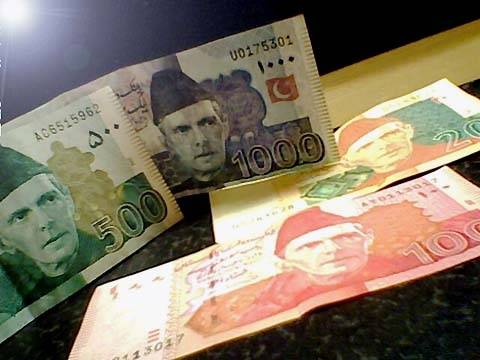
The Pakistani government has borrowed approximately Pakistani currency (PKR) 3.2 trillion from scheduled banks between May 15 to June 28 of the fiscal year 2023-24, this works out to an average of 71.8 billion PKR per day, Dawn reported

This borrowing spree comes despite a 30 per cent increase in revenue generation compared to the previous year.

The government’s reliance on borrowing suggests high spending levels. Meanwhile, the recently announced budget for the next fiscal year aims to generate 40 per cent more revenue than the previous year, partly through increased taxation, as per Dawn.

Although the government has been hinting at imposing more taxes to increase revenue, there seems to be little effort to curb spending in order to avoid borrowing.

Government borrowing from scheduled banks reached a record high of PKR 8.564 trillion during FY24, more than twice the PKR 3.716 trillion it borrowed during FY23.

The borrowing for the last 45 days of FY2 PKR 3.2 trillion was incidentally close to the entire borrowing in FY23. These borrowings come at a staggering cost since the interest rate is as high as 22 per cent, according to Pakistani news outlet.

The Pakistani government has borrowed a substantial amount of money to pay off its domestic debts, totalling 6.55 trillion PKR during the year.

The government has been exhorting the nation to be ready for more sacrifices in the wake of ongoing talks with the International Monetary Fund (IMF), but has shown reluctance to stop its lavish spending.

The economy is facing significant strain, with fixed investments plummeting to a 50-year low. The government consistently reduces its development programs, and the private sector’s borrowing from banks has almost ground to a halt due to high interest rates of 22 per cent.

All these factors combined to restrict the growth rate to a miserable 2.38 per cent.

The government has set a 3.5 per cent growth target for FY25, but a ballooning debt servicing liability, a high interest rate despite low inflation and a slump in economic activities by the private sector is unlikely to allow economic managers to reach the target.

The government raised PKR 442 billion against the target of PKR 150 billion through the auction of treasury bills on Wednesday.

The government has lowered the interest rates on short-term loans by a small margin. The interest rate for three-month loans decreased by 0.1 per cent to 20.04 per cent, and the rate for six-month loans decreased by 0.18 per cent to 19.78 per cent .

The interest rate for 12-month loans remained unchanged at 18.54 per cent . The government borrowed a total of PKR 454.7 billion (approximately PKR 1.9 billion) through these loans, with PKR 87.4 billion of that amount borrowed through a non-competitive process. (ANI)

ALSO READ: Anti-China protests erupt on sidelines of NATO summit
Previous Story

Taiwan-US ties would only get better, says President Lai 

Next Story

Pashtun icon Gilaman Wazir dies after violent attack in Islamabad

Previous Story

Taiwan-US ties would only get better, says President Lai 

Next Story

Pashtun icon Gilaman Wazir dies after violent attack in Islamabad

Latest from -Top News

Pakistan Risks Overstretching Itself in Yemen War

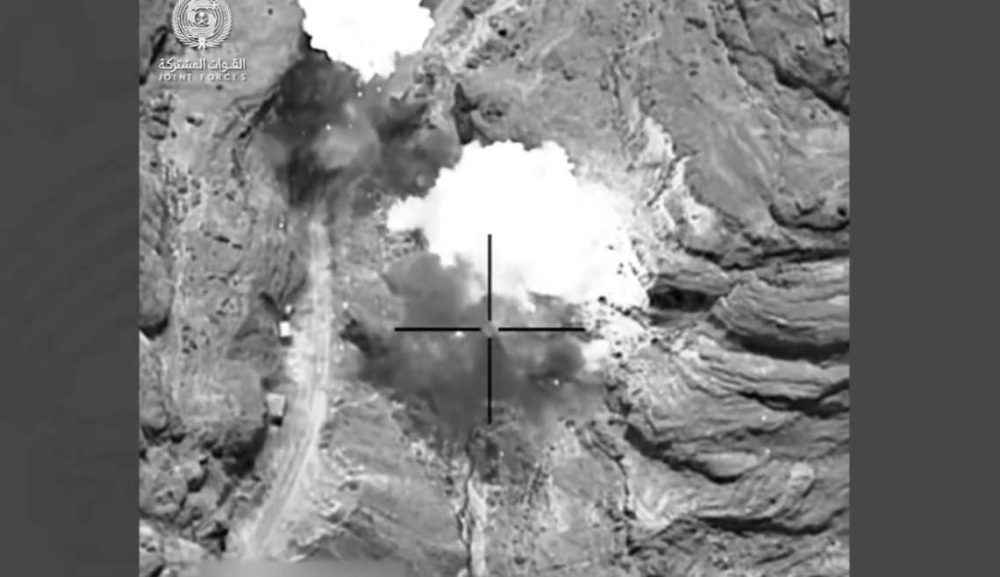
Pakistan’s expanding military role in Saudi Arabia amid the Yemen conflict could strain its defence resources and fragile finances…reports Asian Lite News Desk Pakistan’s military involvement in the war in Yemen may prove unsustainable because of mounting financial pressures and competing security demands, according to a new report. Islamabad’s growing military presence in Saudi Arabia risks stretching its defence resources while exposing the country to greater strategic and economic challenges. An article by Andrew Wilson in One World Outlook describes Pakistan’s involvement as a case of “fiscal and strategic overreach”, arguing that the country lacks the financial flexibility to sustain an expanded military commitment. Pakistan’s external finances depend heavily on an International Monetary Fund (IMF) programme, financial support from Gulf countries and remittances from Pakistani workers in the region. The report argues that deeper military involvement in the conflict could place additional pressure on these sources of financial stability. It also warns that deploying troops and military equipment abroad could weaken Pakistan’s capacity to address security challenges along its eastern border and deal with two domestic insurgencies. The move could also draw Islamabad into a conflict it has sought to approach cautiously. A Reuters report in May, citing Pakistani security and government sources, said Islamabad had deployed around 8,000 troops, a squadron of approximately 16 aircraft, mostly JF-17 fighter jets, two drone squadrons and a Chinese HQ-9 air-defence battery to Saudi Arabia. According to those sources, Riyadh was financing the deployment, with Pakistani personnel operating the equipment. The sources also said a confidential agreement contemplated the possibility of deploying up to 80,000 troops. Islamabad has not confirmed those figures, although it has acknowledged its military presence in Saudi Arabia, including the deployment of fighter jets at King Abdulaziz Air Base from April. The One World Outlook article argues that Saudi financial support can cover allowances and operating expenses but cannot easily replace military equipment needed elsewhere or resolve the political and strategic challenges of participating in the Yemen conflict. Pakistan’s defence budget is another concern. For the 2026-27 financial year, the federal government allocated PKR 3 trillion, or approximately $10.8 billion, to defence services. The allocation represents an 18 per cent increase from the original PKR 2.55 trillion provision and amounts to around 2.1 per cent of projected gross domestic product (GDP). Defence spending accounts for approximately 16 per cent of the federal government’s PKR 18.8 trillion expenditure. Military pensions are budgeted separately at PKR 822 billion, while debt servicing costs stand at approximately PKR 8 trillion, more than two-and-a-half times the defence allocation. The report argues that these competing financial obligations leave little room for additional military expenditure without placing further pressure on public finances. Pakistan’s reliance on IMF assistance also limits its fiscal flexibility. The country must meet the conditions attached to the programme, including a primary budget surplus target of 2 per cent of GDP and continued restraint on development spending. According to the article, these requirements make it difficult for Islamabad to finance an additional military commitment without compromising other budgetary priorities. Pakistan’s economic indicators offer limited reassurance. Economic growth for the 2025-26 financial year is estimated at between 3.6 and 3.7 per cent, while inflation reached approximately 10.3 per cent in September following an energy price shock. Foreign exchange reserves stood at around $21.5 billion at the end of September. Although this marks an improvement from the low levels recorded in 2023, the report notes that the reserves cover only a few months of imports. Financial assistance from Gulf partners remains central to Pakistan’s external stability. The article says Islamabad holds approximately $8 billion in Saudi deposits at its central bank. In July, the State Bank of Pakistan said Riyadh had extended the maturity of $5 billion in deposits to December 2028, easing the country’s immediate external financing requirements. A further $3 billion deposit was also extended in the spring. However, the article argues that these arrangements provide temporary relief rather than long-term financial independence, particularly as regional conflict threatens the stability of the Gulf economies on which Pakistan relies. The report concludes that Pakistan faces a difficult balance between supporting Saudi Arabia militarily and preserving the financial and military resources needed to address its domestic and regional challenges.
Go toTop

Don't Miss

Jamaat-e-Islami continues protests, seeks Shehbaz’s guarantee

Jamaat-e-Islami has remained strong-willed about the 10 demands which they

Ishaq Dar calls on Trump admin to work for peace in West Asia 

Dar acknowledged that although significant decisions were made to halt