July 24, 2024
2 mins read

Retirement age hike in China ignites public outcry amid pension woes

It is also important to note that the rural workforce in China falls under a completely different retirement system….reports Asian Lite News

China, in a move to counter its rapidly ageing population and a severe pension funding crisis, has expressed its intent to raise its statutory retirement age, as reported by CNN.

However, the move planned by the Chinese Communist Party (CCP) has been receiving severe backlash from its citizens within days of its announcement.

In the current scenario, men in urban areas could retire at age 60, receiving a pension from the state. Similarly, the retirement age for females in urban settings is around 50 or 55, depending on their respective occupations.

But, it is also important to note that the rural workforce in China falls under a completely different retirement system.

“In accordance with the principles of voluntariness and flexibility, [we] will steadily and orderly advance the reform of progressively delaying the statutory retirement age,” CCP announced during its Third Plenum, according to CNN.

Reportedly, the country has been suffering from a rapidly ageing population for over a decade. And notably, this has increased the number of people who depend upon the state’s pension system for their survival.

The CNN report claimed that in 2013’s plenum, the Communist Party said that it has become necessary to “study and formulate” a policy to delay the retirement age. Previously, in December, a report by the Chinese Academy of Social Sciences estimated that the retirement age would be increased to 65 years soon. But the same think tank from China, in another report released in 2019, predicted that China’s state fund for pensions would finish by 2035.

Additionally, the strict pandemic-related restrictions had made the situation of the state funds even worse.

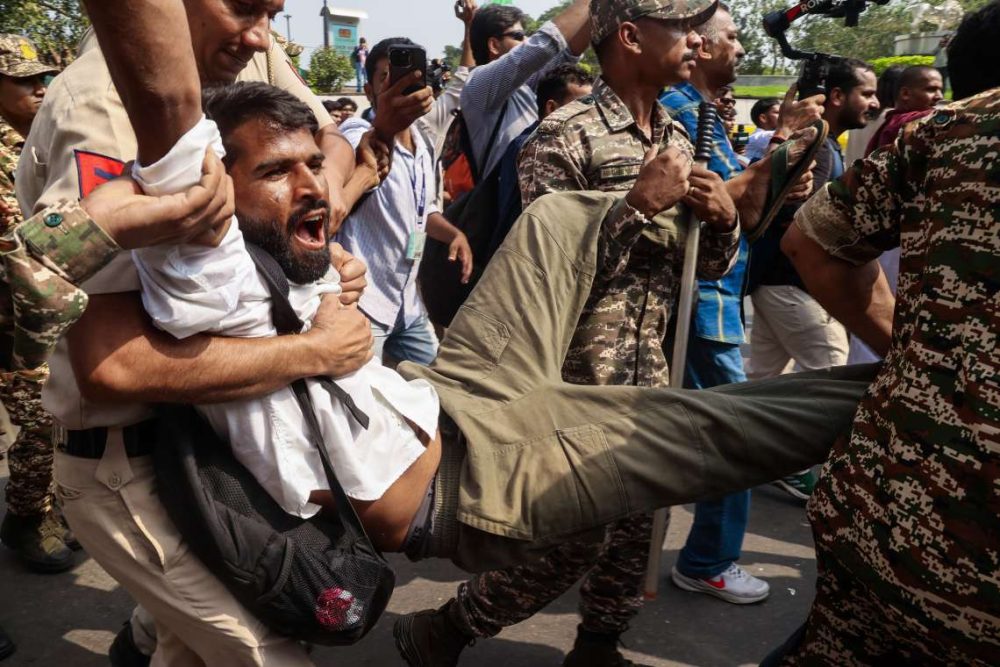
The CNN report also claimed that, last year, while raising their voice against the same issue of reducing pensions, thousands of elderly people in China organised protests in major cities complaining about cuts in their payments of medical benefits.

A similar outrage among China’s populace was noticed on social media platforms. With many expressing their discontent over the prospect of delayed access to their pensions. Moreover, the youngsters in China also complained that they would have fewer jobs if older workers stayed in the labour force longer, the CNN report added.

On Weibo, a social media platform in China, “advancing the reform of delaying retirement age” has been noted as a top trending hashtag.

According to CNN, one of the most liked comments was, “Please be aware: delaying retirement age only means you can’t receive a pension until very late. It doesn’t guarantee you would still have a job before that.”

Similarly, Xiaohongshu, China’s equivalent of Instagram, has also noticed 100 million views for posts that have the hashtag “retirement age.”

A user had mentioned on the platform, “Delaying retirement age on a ‘voluntary basis’? Just like the elder generation was ‘voluntarily’ forced to have only one child or laid off from state enterprises?”

The unemployment rate in China had seen a severe rise after the COVID-19 pandemic.

However, employers in China have continued to reduce their hiring despite the lifting of COVID restrictions in the nation. (ANI)

ALSO READ: Congress CMs to boycott NITI Aayog meet
Previous Story

Goa Shipyard launches first indigenous frigate Triput

Next Story

China activates emergency response to floods, typhoon

Previous Story

Goa Shipyard launches first indigenous frigate Triput

Next Story

China activates emergency response to floods, typhoon

Latest from -Top News

Pakistan Risks Overstretching Itself in Yemen War

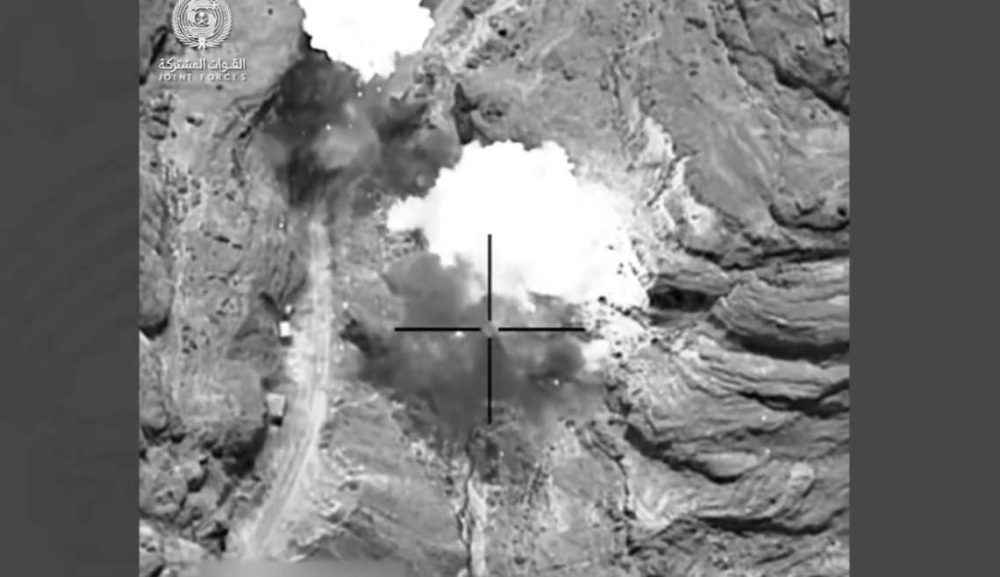
Pakistan’s expanding military role in Saudi Arabia amid the Yemen conflict could strain its defence resources and fragile finances…reports Asian Lite News Desk Pakistan’s military involvement in the war in Yemen may prove unsustainable because of mounting financial pressures and competing security demands, according to a new report. Islamabad’s growing military presence in Saudi Arabia risks stretching its defence resources while exposing the country to greater strategic and economic challenges. An article by Andrew Wilson in One World Outlook describes Pakistan’s involvement as a case of “fiscal and strategic overreach”, arguing that the country lacks the financial flexibility to sustain an expanded military commitment. Pakistan’s external finances depend heavily on an International Monetary Fund (IMF) programme, financial support from Gulf countries and remittances from Pakistani workers in the region. The report argues that deeper military involvement in the conflict could place additional pressure on these sources of financial stability. It also warns that deploying troops and military equipment abroad could weaken Pakistan’s capacity to address security challenges along its eastern border and deal with two domestic insurgencies. The move could also draw Islamabad into a conflict it has sought to approach cautiously. A Reuters report in May, citing Pakistani security and government sources, said Islamabad had deployed around 8,000 troops, a squadron of approximately 16 aircraft, mostly JF-17 fighter jets, two drone squadrons and a Chinese HQ-9 air-defence battery to Saudi Arabia. According to those sources, Riyadh was financing the deployment, with Pakistani personnel operating the equipment. The sources also said a confidential agreement contemplated the possibility of deploying up to 80,000 troops. Islamabad has not confirmed those figures, although it has acknowledged its military presence in Saudi Arabia, including the deployment of fighter jets at King Abdulaziz Air Base from April. The One World Outlook article argues that Saudi financial support can cover allowances and operating expenses but cannot easily replace military equipment needed elsewhere or resolve the political and strategic challenges of participating in the Yemen conflict. Pakistan’s defence budget is another concern. For the 2026-27 financial year, the federal government allocated PKR 3 trillion, or approximately $10.8 billion, to defence services. The allocation represents an 18 per cent increase from the original PKR 2.55 trillion provision and amounts to around 2.1 per cent of projected gross domestic product (GDP). Defence spending accounts for approximately 16 per cent of the federal government’s PKR 18.8 trillion expenditure. Military pensions are budgeted separately at PKR 822 billion, while debt servicing costs stand at approximately PKR 8 trillion, more than two-and-a-half times the defence allocation. The report argues that these competing financial obligations leave little room for additional military expenditure without placing further pressure on public finances. Pakistan’s reliance on IMF assistance also limits its fiscal flexibility. The country must meet the conditions attached to the programme, including a primary budget surplus target of 2 per cent of GDP and continued restraint on development spending. According to the article, these requirements make it difficult for Islamabad to finance an additional military commitment without compromising other budgetary priorities. Pakistan’s economic indicators offer limited reassurance. Economic growth for the 2025-26 financial year is estimated at between 3.6 and 3.7 per cent, while inflation reached approximately 10.3 per cent in September following an energy price shock. Foreign exchange reserves stood at around $21.5 billion at the end of September. Although this marks an improvement from the low levels recorded in 2023, the report notes that the reserves cover only a few months of imports. Financial assistance from Gulf partners remains central to Pakistan’s external stability. The article says Islamabad holds approximately $8 billion in Saudi deposits at its central bank. In July, the State Bank of Pakistan said Riyadh had extended the maturity of $5 billion in deposits to December 2028, easing the country’s immediate external financing requirements. A further $3 billion deposit was also extended in the spring. However, the article argues that these arrangements provide temporary relief rather than long-term financial independence, particularly as regional conflict threatens the stability of the Gulf economies on which Pakistan relies. The report concludes that Pakistan faces a difficult balance between supporting Saudi Arabia militarily and preserving the financial and military resources needed to address its domestic and regional challenges.
Go toTop

Don't Miss

China asks Taliban to ensure safety of Chinese citizens

Qin said China highly values cooperation with Afghanistan and always

China urges Philippines to tow its vessel from Ren’ai Reef

Analysts say the incident escalated an already tense situation and