June 9, 2024
4 mins read

UAE Foreign Minister chairs meeting of Education Council

Sheikh Abdullah kicked off the meeting by congratulating students, graduates, teaching staff, and parents on the approaching end of the school year …reports Asian Lite News

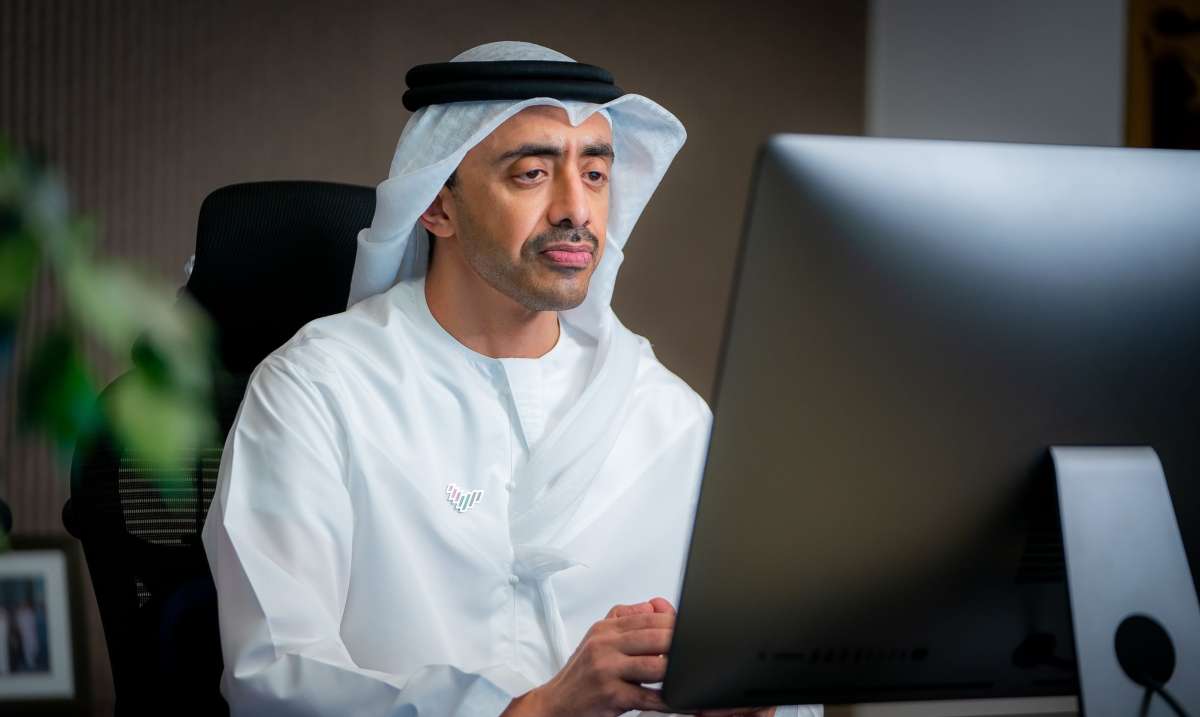
Sheikh Abdullah bin Zayed Al Nahyan, UAE’s Minister of Foreign Affairs and Chairman of the Education and Human Resources Council, chaired the council’s meeting, which was held virtually.

Attended by Sheikha Mariam bint Mohamed bin Zayed Al Nahyan, Chairperson of the Salama bint Hamdan Al Nahyan Foundation (SHF) and Vice Chairperson of the Education and Human Resources Council, the meeting aimed to follow up and drive ongoing efforts to enhance the quality of education, boost the UAE’s competitiveness, and raise its status as a hub for academic excellence.

Sheikh Abdullah kicked off the meeting by congratulating students, graduates, teaching staff, and parents on the approaching end of the school year and wishing students success on their final exams.

He said, “Thanks are due to the teachers and families of students for their crucial role in caring for, following up on, and constantly encouraging their children to strive towards academic excellence, ensuring success in their academic and professional journey.”

The Council’s Chairman stressed the significance of collaboration between all parties in strengthening the education system and working tirelessly and meticulously to address the challenges students face, supporting them in their academic progress and identifying their capabilities, interests, and inclinations, making it easier for them to choose academic and professional paths that align with their ambitions and dreams, and meet the requirements of the UAE’s various sectors.

The Council’s Chairman also commended the efforts made to establish new systems for classifying and gauging the efficiency of the country’s higher education institutions, which helps students make more informed choices when selecting universities, supporting their academic and professional goals.

Sheikh Abdullah said, “University classification is a major stride towards boosting transparency, enhancing the country’s competitiveness, and highlighting it as a global destination for pursuing higher education, attracting top students from the UAE and abroad and distinguished educational professionals from around the world. This, in turn, bolsters the sector’s output, builds a generation armed with knowledge and advanced skills, and is in line with our aspirations and ambitions, supporting our vision.”

Sheikha Mariam bint Mohamed bin Zayed Al Nahyan, Chairperson of the Salama bint Hamdan Al Nahyan Foundation (SHF) and Vice Chairperson of the Education and Human Resources Council, congratulated students, graduates, parents, teachers, and school leaders on reaching the conclusion of another academic year. She celebrated the dedication and efforts that everyone in the education sector put in throughout the year in support of the growth and development of our learners.

She said, “As we approach the end of another academic year, I hope we all take some time to reflect on the progress we’ve made since the fall and start thinking about how we’d like to continue growing in the coming year. While we often celebrate our achievements at this time of year, let’s not forget that progress and growth is just as important. I am ending this academic year feeling inspired by all the hard work I saw from our students and celebrate the progress we all made towards our ambitions.”

Also attending the meeting were Ahmad Belhoul Al Falasi, Minister of Education; Shamma bint Suhail Al Mazrouei, Minister of Community Development; Abdulrahman Al Awar, Minister of Human Resources and Emiratisation; Sarah Al Amiri, Minister of State for Public Education and Advanced Technology and the Chairwoman of the Emirates Schools Establishment (ESE); Sara Musallam, Minister of State for Early Education; Hajer AlThehli, Secretary-General of the Education and Human Resources Council; Aisha Miran, Director-General of the Knowledge and Human Development Authority in Dubai; and Muhadditha Al Hashimi, Chairperson of the Sharjah Private Education Authority.

Ahmad Belhoul Al Falasi shed light on the results of the university classification process as part of the UAE’s national framework for classifying higher education institutions, which is founded on clear standards and transparency and aims to boost the competitiveness, quality and results of higher education in the UAE.

For her part, Sarah Al Amiri presented a study highlighting the outcomes of implementing varying models of public schools, which were launched to offer a wider array of advanced options across the UAE’s educational system. She added that the ESE conducts periodic efficiency tests on operational results, to ensure continued development, enhance the quality of student life and provide more advanced school services. (ANI/WAM)

ALSO READ: UAE tops global air transport quality rankings

ALSO READ: 9 Key Biodiversity Areas identified in UAE
Previous Story

NASA awards over $10mn to 7 firms for Mars mission

Next Story

UAE to experience earliest Summer Solstice with longest day

Previous Story

NASA awards over $10mn to 7 firms for Mars mission

Next Story

UAE to experience earliest Summer Solstice with longest day

Latest from -Top News

Pakistan Risks Overstretching Itself in Yemen War

Pakistan’s expanding military role in Saudi Arabia amid the Yemen conflict could strain its defence resources and fragile finances…reports Asian Lite News Desk Pakistan’s military involvement in the war in Yemen may prove unsustainable because of mounting financial pressures and competing security demands, according to a new report. Islamabad’s growing military presence in Saudi Arabia risks stretching its defence resources while exposing the country to greater strategic and economic challenges. An article by Andrew Wilson in One World Outlook describes Pakistan’s involvement as a case of “fiscal and strategic overreach”, arguing that the country lacks the financial flexibility to sustain an expanded military commitment. Pakistan’s external finances depend heavily on an International Monetary Fund (IMF) programme, financial support from Gulf countries and remittances from Pakistani workers in the region. The report argues that deeper military involvement in the conflict could place additional pressure on these sources of financial stability. It also warns that deploying troops and military equipment abroad could weaken Pakistan’s capacity to address security challenges along its eastern border and deal with two domestic insurgencies. The move could also draw Islamabad into a conflict it has sought to approach cautiously. A Reuters report in May, citing Pakistani security and government sources, said Islamabad had deployed around 8,000 troops, a squadron of approximately 16 aircraft, mostly JF-17 fighter jets, two drone squadrons and a Chinese HQ-9 air-defence battery to Saudi Arabia. According to those sources, Riyadh was financing the deployment, with Pakistani personnel operating the equipment. The sources also said a confidential agreement contemplated the possibility of deploying up to 80,000 troops. Islamabad has not confirmed those figures, although it has acknowledged its military presence in Saudi Arabia, including the deployment of fighter jets at King Abdulaziz Air Base from April. The One World Outlook article argues that Saudi financial support can cover allowances and operating expenses but cannot easily replace military equipment needed elsewhere or resolve the political and strategic challenges of participating in the Yemen conflict. Pakistan’s defence budget is another concern. For the 2026-27 financial year, the federal government allocated PKR 3 trillion, or approximately $10.8 billion, to defence services. The allocation represents an 18 per cent increase from the original PKR 2.55 trillion provision and amounts to around 2.1 per cent of projected gross domestic product (GDP). Defence spending accounts for approximately 16 per cent of the federal government’s PKR 18.8 trillion expenditure. Military pensions are budgeted separately at PKR 822 billion, while debt servicing costs stand at approximately PKR 8 trillion, more than two-and-a-half times the defence allocation. The report argues that these competing financial obligations leave little room for additional military expenditure without placing further pressure on public finances. Pakistan’s reliance on IMF assistance also limits its fiscal flexibility. The country must meet the conditions attached to the programme, including a primary budget surplus target of 2 per cent of GDP and continued restraint on development spending. According to the article, these requirements make it difficult for Islamabad to finance an additional military commitment without compromising other budgetary priorities. Pakistan’s economic indicators offer limited reassurance. Economic growth for the 2025-26 financial year is estimated at between 3.6 and 3.7 per cent, while inflation reached approximately 10.3 per cent in September following an energy price shock. Foreign exchange reserves stood at around $21.5 billion at the end of September. Although this marks an improvement from the low levels recorded in 2023, the report notes that the reserves cover only a few months of imports. Financial assistance from Gulf partners remains central to Pakistan’s external stability. The article says Islamabad holds approximately $8 billion in Saudi deposits at its central bank. In July, the State Bank of Pakistan said Riyadh had extended the maturity of $5 billion in deposits to December 2028, easing the country’s immediate external financing requirements. A further $3 billion deposit was also extended in the spring. However, the article argues that these arrangements provide temporary relief rather than long-term financial independence, particularly as regional conflict threatens the stability of the Gulf economies on which Pakistan relies. The report concludes that Pakistan faces a difficult balance between supporting Saudi Arabia militarily and preserving the financial and military resources needed to address its domestic and regional challenges.

UK and Germany Ratify Kensington Treaty

Britain and Germany ratify the Kensington Treaty, agreeing new cooperation on AI, quantum research, defence and security while targeting investment, jobs and Russian hybrid threats…reports Asian Lite News Desk Britain and Germany

Economic tide is turning in Bangladesh

If there is one thing that can bring some comfort to the struggling Bangladeshi economy, it is good relations with India. Bangladesh should remember that Delhi’s backing, through easy supplies of essentials
Go toTop

Don't Miss

GCC banks set to thrive in 2024, UAE, Saudi lead: S&P

SP Global anticipates overall stability in key metrics for GCC

Dubai set to host India-UAE Partnership Summit

The summit is also in line with the chambers’ priority