June 5, 2024
5 mins read

Rishi Puts Starmer in a fix over taxes

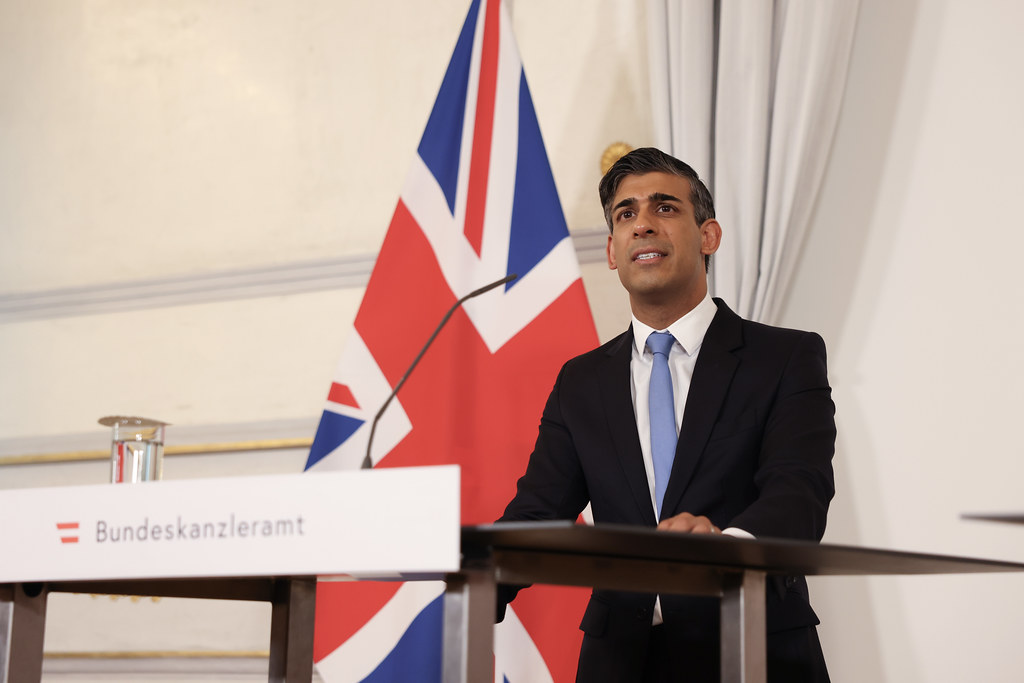
Sunak tried to boost his center-right party’s dismal outlook by urging voters to back the stability of continued Conservative government…reports Asian Lite News

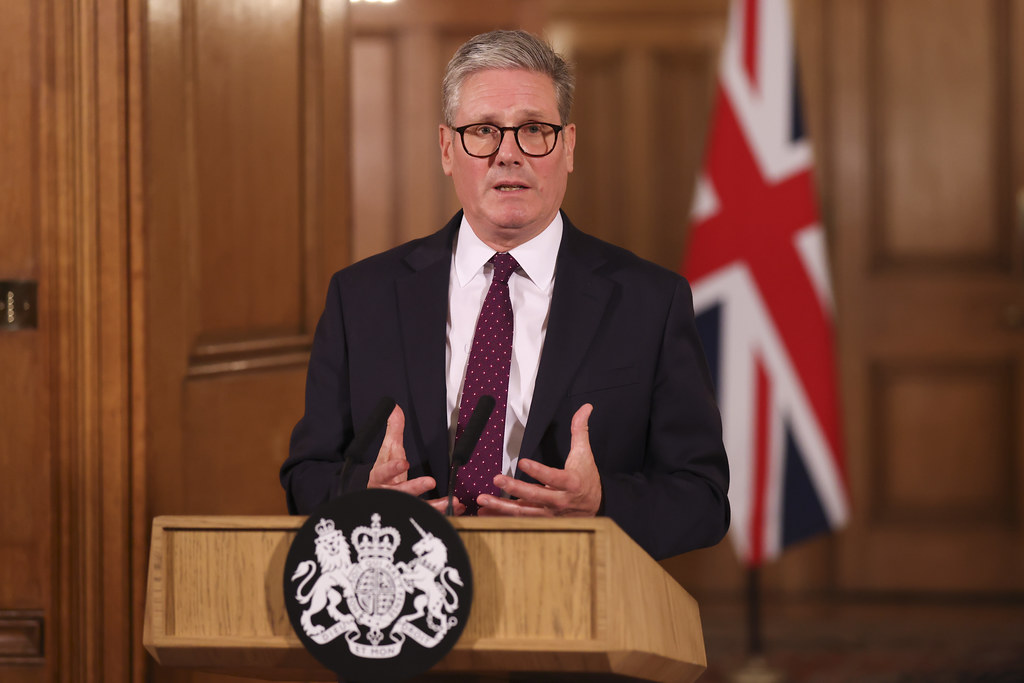
Prime Minister Rishi Sunak and opposition Labour Party leader Keir Starmer sparred Tuesday over tax, the cost of living and the country’s creaking health system in an inconclusive televised debate ahead of a July 4 election expected to make one of them the country’s next leader.

Sunak tried to boost his center-right party’s dismal outlook by urging voters to back the stability of continued Conservative government. Starmer hoped to cement his status as favorite by arguing that Britain desperately needs change. Both acknowledged the country’s many problems, from fraying public services to a broken immigration system. But neither could say outright, when asked, where the money would come from to fix them.

Sunak stressed his stewardship of the economy, which has seen inflation fall to just over 2% from a peak of more than 11% in late 2022. He said should stick with him because his “clear plan” for the economy was working.

Starmer said the election was a choice between more “chaos and division” with the Conservatives and “turning the page and rebuilding with Labour.”

Polls currently give center-left Labour a double-digit lead. To win, Starmer must persuade voters who previously backed the Tories that Labour can be trusted with the U.K.’s economy, borders and security.

Speaking in front of a live audience on a sleek, futuristic set at the studios of broadcaster ITV in Salford, northwest England, both Starmer and Sunak appeared nervous. Voters may have got the impression their choice is between two cautious and rather dull managers.

Both stuck to familiar themes. Sunak argued Labour would raise taxes because “it’s in their DNA.”

Sunak said he would stop people making dangerous journeys to the U.K. in small boats by sending asylum-seekers on a one-way trip to Rwanda, and suggested he’d be willing to take the U.K. out of the European Convention on Human Rights if its court blocked the deportations.

Starmer dwelled on the Conservatives’ record during 14 years in power, especially the chaotic last few years, which saw Prime Minister Boris Johnson ousted amid money and ethics scandals. Successor Liz Truss, elected by party members, rocked the economy with her uncosted tax-cutting plans and quit after 49 days. Sunak took over, without a national election, in October 2022.

“This government has lost control. Liz Truss crashed the economy,” Starmer said. “We cannot have five more years of this.”

A note of the personal crept in when Starmer took a dig at ex-banker Sunak’s wealth, saying his own father had been a factory worker and claiming Sunak did not understand the financial worries facing working-class people.

All 650 seats in the House of Commons are up for grabs on July 4. The leader of the party that can command a majority – either alone or in coalition – will become prime minister.

Both contenders said they would maintain Britain’s close ties with the United States if Donald Trump wins in November. Starmer said “the special relationship transcends whoever fills the post of prime minister and president.”

Sunak agreed that “having a strong relationship with our closest partner and ally in the United States is critical for keeping everyone in our country safe.”

Televised debates are a relatively recent addition to U.K. elections, first held in 2010. That debate spurred support for then-Liberal Democrat leader Nick Clegg, triggering a wave of “Cleggmania” that helped propel him into the deputy prime minister post in a coalition government with the Conservatives.

No debate since has had the same impact, but they have become a regular feature of election campaigns. Several more are scheduled before polling day, some featuring multiple party leaders as well as the two front-runners.

Rob Ford, professor of political science at the University of Manchester, said the lack of a knockout blow by either side counted as a good result for Sunak because he is behind in the polls.

“Will it matter in the end? Probably not. But it’s a bit of good news for Cons(ervatives) after a pretty rough few days. Will help with morale, at a minimum,” he wrote on X, formerly known as Twitter.

The debate came a day after populist firebrand Nigel Farage roiled the campaign, and dealt a blow to Sunak’s hopes, by announcing he will run for Parliament at the helm of the right-wing party Reform U.K.

Farage kicked off his campaign Tuesday in the eastern England seaside town of Clacton-on-Sea, where he is making an eighth attempt to win a seat in the House of Commons. His seven previous tries all failed.

The return of Farage, a key player in Britain’s 2016 decision to leave the European Union, is bad news for Sunak’s party. Reform look likely to siphon off votes of socially conservative older voters, a group the Tories have been targeting.

Farage claimed the Conservatives, who have been in office since 2010, had “betrayed” Brexit supporters because immigration had gone up, rather than down, since the U.K. left the EU.

He urged voters to “send me to Parliament to be a bloody nuisance.”

As he left a pub where he had been speaking to the media, Farage was splattered with a beverage, which appeared to be a milkshake, by a bystander. Essex Police said a 25-year-old woman from Clacton was arrested on suspicion of assault.

ALSO READ-Rishi Sunak’s Wealth Jumps £120M Amid Billionaire Slump
Previous Story

Cuba foreign minister to visit China

Next Story

Farage doused with drink at election campaign launch

Previous Story

Cuba foreign minister to visit China

Next Story

Farage doused with drink at election campaign launch

Latest from -Top News

Pakistan Risks Overstretching Itself in Yemen War

Pakistan’s expanding military role in Saudi Arabia amid the Yemen conflict could strain its defence resources and fragile finances…reports Asian Lite News Desk Pakistan’s military involvement in the war in Yemen may prove unsustainable because of mounting financial pressures and competing security demands, according to a new report. Islamabad’s growing military presence in Saudi Arabia risks stretching its defence resources while exposing the country to greater strategic and economic challenges. An article by Andrew Wilson in One World Outlook describes Pakistan’s involvement as a case of “fiscal and strategic overreach”, arguing that the country lacks the financial flexibility to sustain an expanded military commitment. Pakistan’s external finances depend heavily on an International Monetary Fund (IMF) programme, financial support from Gulf countries and remittances from Pakistani workers in the region. The report argues that deeper military involvement in the conflict could place additional pressure on these sources of financial stability. It also warns that deploying troops and military equipment abroad could weaken Pakistan’s capacity to address security challenges along its eastern border and deal with two domestic insurgencies. The move could also draw Islamabad into a conflict it has sought to approach cautiously. A Reuters report in May, citing Pakistani security and government sources, said Islamabad had deployed around 8,000 troops, a squadron of approximately 16 aircraft, mostly JF-17 fighter jets, two drone squadrons and a Chinese HQ-9 air-defence battery to Saudi Arabia. According to those sources, Riyadh was financing the deployment, with Pakistani personnel operating the equipment. The sources also said a confidential agreement contemplated the possibility of deploying up to 80,000 troops. Islamabad has not confirmed those figures, although it has acknowledged its military presence in Saudi Arabia, including the deployment of fighter jets at King Abdulaziz Air Base from April. The One World Outlook article argues that Saudi financial support can cover allowances and operating expenses but cannot easily replace military equipment needed elsewhere or resolve the political and strategic challenges of participating in the Yemen conflict. Pakistan’s defence budget is another concern. For the 2026-27 financial year, the federal government allocated PKR 3 trillion, or approximately $10.8 billion, to defence services. The allocation represents an 18 per cent increase from the original PKR 2.55 trillion provision and amounts to around 2.1 per cent of projected gross domestic product (GDP). Defence spending accounts for approximately 16 per cent of the federal government’s PKR 18.8 trillion expenditure. Military pensions are budgeted separately at PKR 822 billion, while debt servicing costs stand at approximately PKR 8 trillion, more than two-and-a-half times the defence allocation. The report argues that these competing financial obligations leave little room for additional military expenditure without placing further pressure on public finances. Pakistan’s reliance on IMF assistance also limits its fiscal flexibility. The country must meet the conditions attached to the programme, including a primary budget surplus target of 2 per cent of GDP and continued restraint on development spending. According to the article, these requirements make it difficult for Islamabad to finance an additional military commitment without compromising other budgetary priorities. Pakistan’s economic indicators offer limited reassurance. Economic growth for the 2025-26 financial year is estimated at between 3.6 and 3.7 per cent, while inflation reached approximately 10.3 per cent in September following an energy price shock. Foreign exchange reserves stood at around $21.5 billion at the end of September. Although this marks an improvement from the low levels recorded in 2023, the report notes that the reserves cover only a few months of imports. Financial assistance from Gulf partners remains central to Pakistan’s external stability. The article says Islamabad holds approximately $8 billion in Saudi deposits at its central bank. In July, the State Bank of Pakistan said Riyadh had extended the maturity of $5 billion in deposits to December 2028, easing the country’s immediate external financing requirements. A further $3 billion deposit was also extended in the spring. However, the article argues that these arrangements provide temporary relief rather than long-term financial independence, particularly as regional conflict threatens the stability of the Gulf economies on which Pakistan relies. The report concludes that Pakistan faces a difficult balance between supporting Saudi Arabia militarily and preserving the financial and military resources needed to address its domestic and regional challenges.

UK and Germany Ratify Kensington Treaty

Britain and Germany ratify the Kensington Treaty, agreeing new cooperation on AI, quantum research, defence and security while targeting investment, jobs and Russian hybrid threats…reports Asian Lite News Desk Britain and Germany

Economic tide is turning in Bangladesh

If there is one thing that can bring some comfort to the struggling Bangladeshi economy, it is good relations with India. Bangladesh should remember that Delhi’s backing, through easy supplies of essentials
Go toTop

Don't Miss

‘Starmer beat Sunak 44% to 39% in ITV debate’

Savanta said that on the issues, its survey respondents gave

Starmer to crackdown on foreign workers 

The Labour leader is hoping to turn public attention away