May 9, 2024
3 mins read

Russian defence attache expelled over spying charge

Cleverly cited the cases of six Bulgarians charged with being part of a Russian spy ring operating in the UK….repors Asian Lite News

Russia’s defence attache is to be expelled after James Cleverly identified him as a spy. Maxim Elovik, a colonel in the Russian military, is to be thrown out of the UK as part of sanctions by the Home Secretary in response to a rise in “malign” Russian activity across Britain and Europe.

Cleverly also announced several Russian-owned properties suspected of being used as spying bases would lose their diplomatic status and there would be visa restrictions on Russian diplomats that would cap the time they were allowed to stay in the UK.

The measures come after an arson attack on a Ukrainian-linked business in east London that the authorities suspect was orchestrated by the Kremlin. Five people have been charged over the warehouse fire.

The attack was part of an alleged conspiracy involving the Wagner Group, a Russian band of mercenaries with strong ties to Vladimir Putin, the Russian president.

Cleverly also cited the cases of six Bulgarians charged with being part of a Russian spy ring operating in the UK.

He said the sanctions were to make clear to Russia that the UK would “not tolerate such apparent escalations” and aimed to “target and dismantle Russian intelligence gathering”. The defence attache was being expelled as an “undeclared military intelligence officer,” he said.

It is thought to be the first diplomatic expulsion since Theresa May threw 23 Russian diplomats out in 2018, following the poisoning of double agent Sergei Skripal and his daughter Yulia.

Col Elovik, who has been stationed in Britain for more than a decade, has been a regular attendee at events, representing Russian military interests.

They included Lord Balfe, a Conservative peer who once advised David Cameron’s government on public sector pay and trade union relations. Lord Balfe confirmed to The Sunday Times he had a conversation with the military attache.

In 2014, Col Elovik travelled to the Surrey home of a British war veteran to award him the Russian Medal of Ushakov for courage and bravery for service in the Arctic convoys.

Last year – on the 80th anniversary of the siege of Leningrad – he was photographed in public laying a wreath at a memorial to Soviet soldiers in central London. In 2020, he visited HMS Belfast alongside the Royal Navy’s assistant chief of naval staff for a 15-minute service of remembrance.

Protesters picketed his offices in Highgate at the outbreak of Russia’s invasion of Ukraine in 2022, holding aloft a sign that said: “This is the house of the Military Attaché of Russia. Stop Putin”.

Several Russian-owned properties are to be stripped of their diplomatic status, which means they no longer have legal immunity from the jurisdiction of Britain and could be entered by law enforcement authorities.

They include the luxury 50-room Seacox Heath in Hawkhurst, Sussex which is used as a weekend retreat by Russian embassy staff, and the embassy’s trade and defence section in Highgate, north London, which Mr Cleverly said was believed to be a spy base.

Andrey Kelin, the Russian ambassador has been summoned to be told of the measures and to “reiterate that Russia’s actions will not be tolerated”, said the Home Office.

Cleverly told MPs there had been an escalating pattern of “malign” Russian activity across Europe including sabotage, espionage, cyber attacks, air space incursions and GPS jamming.

ALSO READ: UK govt considered Rwanda-style asylum deal with Iraq
Previous Story

Travelers stranded as widespread delays hit airports

Next Story

Ukraine extends martial law, military mobilisation

Previous Story

Travelers stranded as widespread delays hit airports

Next Story

Ukraine extends martial law, military mobilisation

Latest from -Top News

Pakistan Risks Overstretching Itself in Yemen War

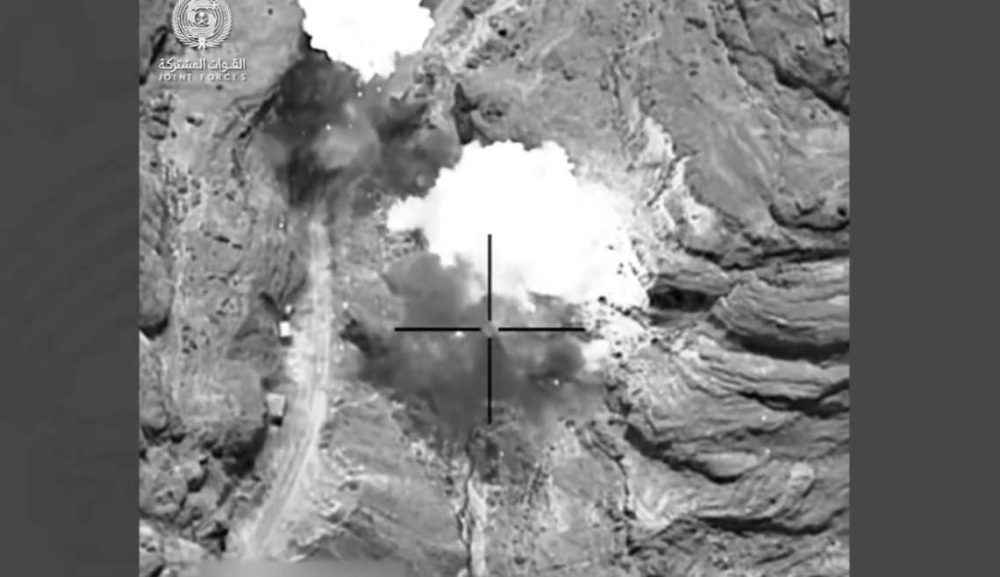
Pakistan’s expanding military role in Saudi Arabia amid the Yemen conflict could strain its defence resources and fragile finances…reports Asian Lite News Desk Pakistan’s military involvement in the war in Yemen may prove unsustainable because of mounting financial pressures and competing security demands, according to a new report. Islamabad’s growing military presence in Saudi Arabia risks stretching its defence resources while exposing the country to greater strategic and economic challenges. An article by Andrew Wilson in One World Outlook describes Pakistan’s involvement as a case of “fiscal and strategic overreach”, arguing that the country lacks the financial flexibility to sustain an expanded military commitment. Pakistan’s external finances depend heavily on an International Monetary Fund (IMF) programme, financial support from Gulf countries and remittances from Pakistani workers in the region. The report argues that deeper military involvement in the conflict could place additional pressure on these sources of financial stability. It also warns that deploying troops and military equipment abroad could weaken Pakistan’s capacity to address security challenges along its eastern border and deal with two domestic insurgencies. The move could also draw Islamabad into a conflict it has sought to approach cautiously. A Reuters report in May, citing Pakistani security and government sources, said Islamabad had deployed around 8,000 troops, a squadron of approximately 16 aircraft, mostly JF-17 fighter jets, two drone squadrons and a Chinese HQ-9 air-defence battery to Saudi Arabia. According to those sources, Riyadh was financing the deployment, with Pakistani personnel operating the equipment. The sources also said a confidential agreement contemplated the possibility of deploying up to 80,000 troops. Islamabad has not confirmed those figures, although it has acknowledged its military presence in Saudi Arabia, including the deployment of fighter jets at King Abdulaziz Air Base from April. The One World Outlook article argues that Saudi financial support can cover allowances and operating expenses but cannot easily replace military equipment needed elsewhere or resolve the political and strategic challenges of participating in the Yemen conflict. Pakistan’s defence budget is another concern. For the 2026-27 financial year, the federal government allocated PKR 3 trillion, or approximately $10.8 billion, to defence services. The allocation represents an 18 per cent increase from the original PKR 2.55 trillion provision and amounts to around 2.1 per cent of projected gross domestic product (GDP). Defence spending accounts for approximately 16 per cent of the federal government’s PKR 18.8 trillion expenditure. Military pensions are budgeted separately at PKR 822 billion, while debt servicing costs stand at approximately PKR 8 trillion, more than two-and-a-half times the defence allocation. The report argues that these competing financial obligations leave little room for additional military expenditure without placing further pressure on public finances. Pakistan’s reliance on IMF assistance also limits its fiscal flexibility. The country must meet the conditions attached to the programme, including a primary budget surplus target of 2 per cent of GDP and continued restraint on development spending. According to the article, these requirements make it difficult for Islamabad to finance an additional military commitment without compromising other budgetary priorities. Pakistan’s economic indicators offer limited reassurance. Economic growth for the 2025-26 financial year is estimated at between 3.6 and 3.7 per cent, while inflation reached approximately 10.3 per cent in September following an energy price shock. Foreign exchange reserves stood at around $21.5 billion at the end of September. Although this marks an improvement from the low levels recorded in 2023, the report notes that the reserves cover only a few months of imports. Financial assistance from Gulf partners remains central to Pakistan’s external stability. The article says Islamabad holds approximately $8 billion in Saudi deposits at its central bank. In July, the State Bank of Pakistan said Riyadh had extended the maturity of $5 billion in deposits to December 2028, easing the country’s immediate external financing requirements. A further $3 billion deposit was also extended in the spring. However, the article argues that these arrangements provide temporary relief rather than long-term financial independence, particularly as regional conflict threatens the stability of the Gulf economies on which Pakistan relies. The report concludes that Pakistan faces a difficult balance between supporting Saudi Arabia militarily and preserving the financial and military resources needed to address its domestic and regional challenges.
Go toTop

Don't Miss

Counter-terror cops turn focus to China, Russia and Iran

Top official at London’s Metropolitan Police, said there has been

Moscow wants to rebuild its image in Central Asia

With the region being so central to the Greater Eurasian