The plight of Sikhs illustrates the steady erosion of religious freedom in Pakistan. Each disappearance, forced conversion, or targeted killing chips away at the fragile promise of equality enshrined in the Constitution, writes Kuldeep Singh
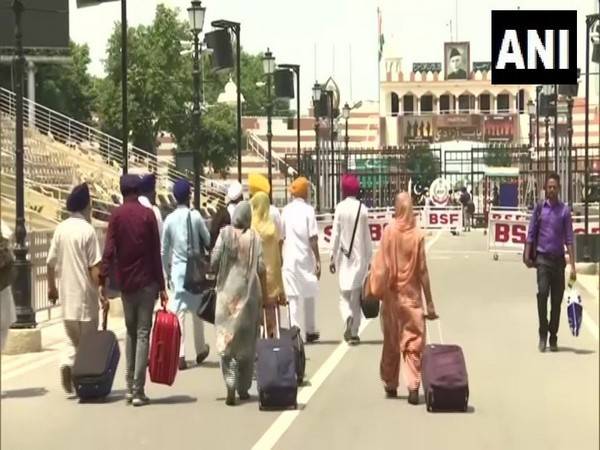
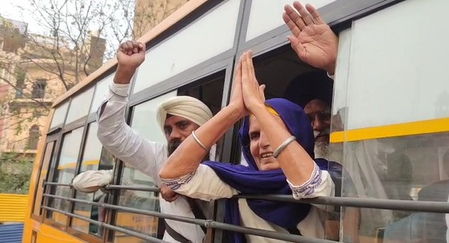
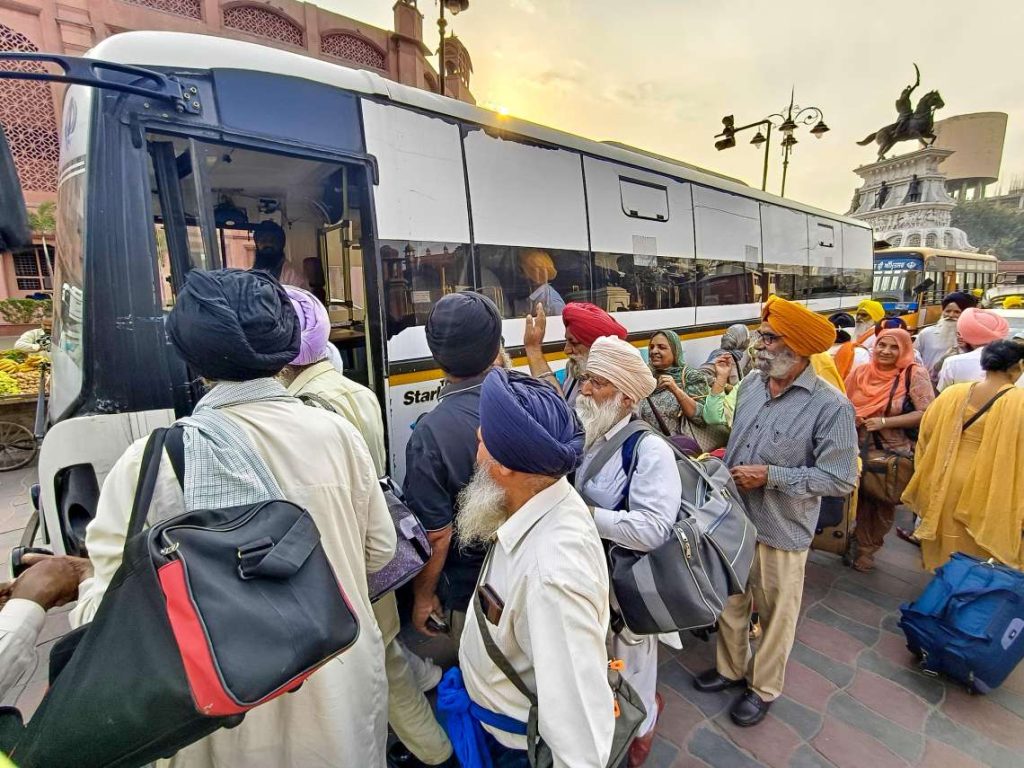
The recent case of Sarabjit Kaur, a 52‑year‑old woman from Kapurthala, Punjab, has once again drawn attention to the precarious position of Sikhs in Pakistan. Kaur, who traveled with a Sikh pilgrims’ group to mark the 555th birth anniversary of Sri Guru Nanak Dev Ji, went missing during the pilgrimage. Soon after, a marriage certificate surfaced claiming she had converted to Islam, adopted the name Noor, and married a local resident, Nasir Hussain. A video of her alleged Nikah circulated widely on social media, though its authenticity remains in question. Sikh organisations have demanded a transparent investigation, raising concerns about whether her conversion and marriage were voluntary or coerced.
This incident is not isolated. It reflects a larger malaise of forced conversions and systemic discrimination against religious minorities in Pakistan. The Sikh community, numbering barely 20,000 in the country, has long been subjected to marginalisation, violence, and exclusion. Their everyday experiences are marked by insecurity, social stigma, and institutional neglect.
The disappearance of Sarabjit Kaur echoes the mysterious vanishing of three Sikh residents from Nankana Sahib nearly a year ago, Badal Singh, his brother Suraj Singh, and their elderly father Manmohan Singh. Despite repeated pleas from the community, no progress has been made in the investigation, and suspicions linger that state elements may have been involved. Such cases highlight the indifference of authorities and the lack of accountability when minorities are targeted.
Sikhs in Pakistan have repeatedly been subjected to targeted killings, with Khyber Pakhtunkhwa emerging as a particularly dangerous region for the community. In June 2023, Diyal Singh was shot dead in Peshawar, a tragedy that followed a series of similar attacks in recent years. In 2021, Satnam Singh, a hakeem, was murdered inside his shop, while in May 2022, Ranjit Singh and Kuljit Singh were gunned down as they sat in their shops at Batta Tal Chowk. These incidents are part of a disturbing pattern that has claimed the lives of prominent Sikh figures as well: Charanjit Singh was killed in 2018, journalist Ravinder Singh in 2020, and politician Soran Singh in 2016. Since 2014, at least a dozen such attacks have been reported, underscoring the vulnerability of Sikhs as “soft targets” in Pakistan. Each killing has deepened the community’s sense of insecurity, reinforcing the perception that they are deliberately singled out and left unprotected by the state.
Beyond killings, forced conversions and coerced marriages remain a pressing concern. Sikh and Hindu girls, particularly in Sindh, are frequently abducted and compelled to convert to Islam. Organised gangs, often with clerical backing, manipulate age certificates to legitimise these conversions. In 2017, Sikhs in Hangu district alleged that a government official was pressuring them to embrace Islam. Despite repeated complaints, legislation to protect minorities remains stalled, leaving communities exposed to exploitation.
Sikhs in Pakistan continue to face entrenched forms of institutionalised discrimination that undermine their ability to live with dignity and security. One of the most glaring examples is the imposition of jizya, a protection tax demanded from non‑Muslims to allow them to practice their faith. Those who refuse to pay have, in some cases, been subjected to public killings, reinforcing a climate of fear and coercion. Beyond this, the community suffers from limited access to resources and opportunities, which deepens their marginalisation and restricts their prospects for social and economic advancement.
Social prejudice, inflamed by religious bigotry and vigilante violence, is perpetuated through mosques and public discourse, where stereotypes of non‑Muslim traditions are routinely propagated. Together, these conditions have created an environment so hostile that thousands of Sikhs have been compelled to emigrate to safer countries, particularly India. For those who remain, life is marked by constant insecurity, as they struggle to preserve their identity and faith in the face of systemic exclusion and everyday threats.
The plight of Sikhs illustrates the steady erosion of religious freedom in Pakistan. Each disappearance, forced conversion, or targeted killing chips away at the fragile promise of equality enshrined in the Constitution. The decline of the Sikh population also threatens the future of historic gurdwaras, as dwindling numbers make their upkeep increasingly difficult.
The case of Sarabjit Kaur is not merely about one woman’s disappearance; it is emblematic of a broader crisis. From missing persons to coerced conversions, from targeted killings to systemic discrimination, Sikhs in Pakistan endure a reality where justice is elusive and prejudice unchecked. Unless urgent steps are taken to safeguard minority rights, the community’s survival in Pakistan will remain under grave threat, and the country’s commitment to pluralism will continue to erode.