The release of new national security strategies by the United States and China in 2025 offers a clear framework for understanding how the two countries will manage competition and cooperation in the years ahead…reports Asian Lite News
The near-simultaneous publication of the U.S. National Security Strategy 2025 and China’s National Security in the New Era marks an important moment in relations between United States and China. Both texts were released at a time when strategic competition has moved away from short-term reactions towards a more settled and predictable pattern. As a result, the strategies provide a practical basis for assessing how ties are likely to develop in 2026 and beyond, highlighting areas of rivalry while also identifying limited space for cooperation.
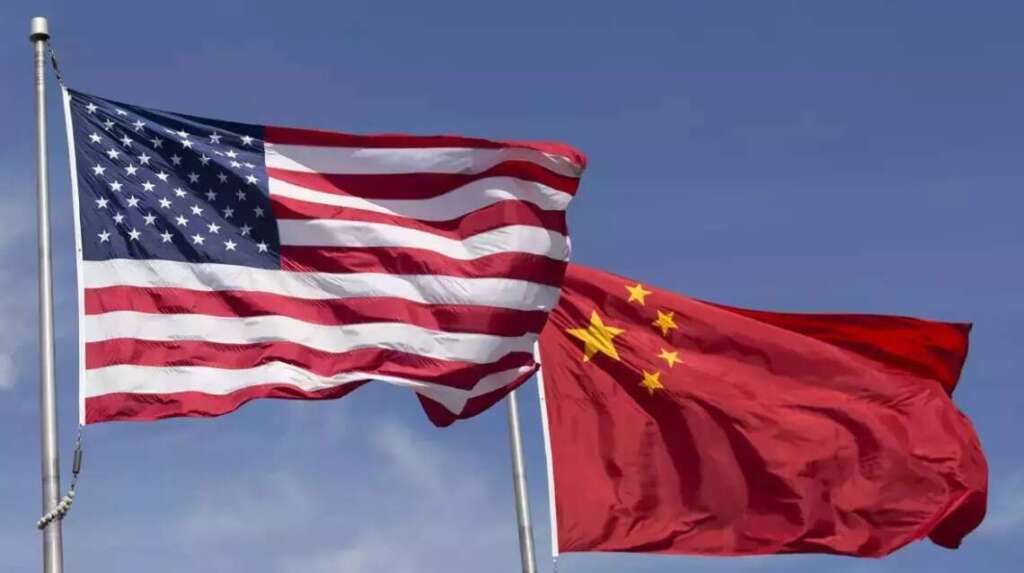
A central feature of both documents is the way each side views the other as a source of strategic risk. China describes pressure from the United States as the greatest challenge to its peaceful development, while the U.S. strategy characterises China as a comprehensive, systemic and long-term challenge. This mutual assessment underlines that competition is now embedded in official thinking on both sides, shaping policy planning across security, economic and technological fields.
Despite these differences, there is notable convergence in how both countries describe the international environment. The U.S. strategy reaffirms Washington’s role as a supporter of the rules-based international order that emerged after the Cold War, placing emphasis on freedom of navigation, transparency in trade, alliance structures and global governance standards. It states that the United States must protect a fair, open and stable international order against attempts to reshape it for narrow advantage. China, meanwhile, argues that the world is undergoing unprecedented change and that global governance structures should evolve to reflect shifting balances of power. Together, these views confirm that competition is rooted in contrasting interpretations of legitimacy and order, suggesting a long-term contest over systems rather than a temporary policy dispute.
In practical terms, this outlook points to limited strategic alignment, with engagement focused mainly on avoiding conflict and managing crises. Each side sees itself as acting in the interests of stability, even though these actions are often viewed by the other as destabilising. The U.S. strategy places strong emphasis on reinforcing its presence in the Indo-Pacific, strengthening alliances with Japan, South Korea and Australia, and expanding cooperation with Southeast Asian partners. It also highlights the Quadrilateral Security Dialogue with India as an important element of regional security. China’s strategy, by contrast, underscores continued defence modernisation, including naval, air and missile capabilities, with a focus on maintaining effective defence against external interference. This dynamic produces a situation in which both sides seek to deter conflict while remaining firm on core interests.
Regional flashpoints continue to attract close attention. The U.S. document states strong opposition to any unilateral attempt to change the status quo in the Taiwan Strait and reiterates support for Taiwan’s defence capabilities in line with the Taiwan Relations Act. This approach maintains strategic ambiguity while reinforcing deterrence. China’s security paper firmly rejects the idea that Taiwan’s status is undetermined, stating that unification is a core interest and a red line. While these positions differ sharply, both sides also signal awareness that miscalculation would carry high costs, reinforcing the importance of communication channels.
Economic and technological competition is another defining feature of the strategies. The U.S. National Supply Chain Strategy emphasises reducing strategic dependence on China in sectors such as semiconductors, clean energy, batteries, rare earths, pharmaceuticals and digital technology. It promotes resilient supply chains built with trusted partners and supported by export controls. China responds by stressing technological self-reliance and a development model centred on domestic capacity while remaining open to external engagement. These parallel approaches are contributing to the gradual emergence of distinct economic and technological ecosystems, making competition in these areas a core national security concern.
Overall, the trajectory outlined in the two strategies suggests a relationship defined by managed competition, minimal but necessary cooperation and dialogue focused on risk reduction. Climate change, global health and financial stability are among the areas where engagement remains possible and beneficial. A positive feature of both documents is their shared recognition that direct conflict would result in unacceptable losses, reinforcing incentives to maintain diplomatic and military communication.
Looking ahead to 2026, competition is expected to remain intense, particularly in technology and the Indo-Pacific region, while supply chain adjustments will continue to influence global markets. At the same time, the strategies indicate a mutual interest in stability and growth, creating narrow but meaningful opportunities for conditional cooperation. Together, the documents provide a clearer picture of how the world’s two largest powers intend to shape the international order, one marked by complexity, multiple centres of influence and an ongoing effort to balance competition with restraint.