Trade disputes, visa crackdowns and Pakistan tensions strained India–US relations in 2025, testing a strategic partnership that endured turbulence even as defence and counter-terror cooperation deepened….reports Asian Lite News
Bilateral relations between India and the United States went through sharp swings in 2025, as trade disputes, immigration crackdowns and geopolitical frictions tested a partnership often described as one of the most consequential of the 21st century. While defence and strategic cooperation continued to deepen, public disagreements over tariffs, visa policies and claims of US mediation in India–Pakistan tensions exposed new fault lines in the relationship.
The year underscored the complexity of India–US ties: resilient at the strategic level, yet vulnerable to political pressures, economic nationalism and divergent regional priorities.
Early momentum and strategic signalling
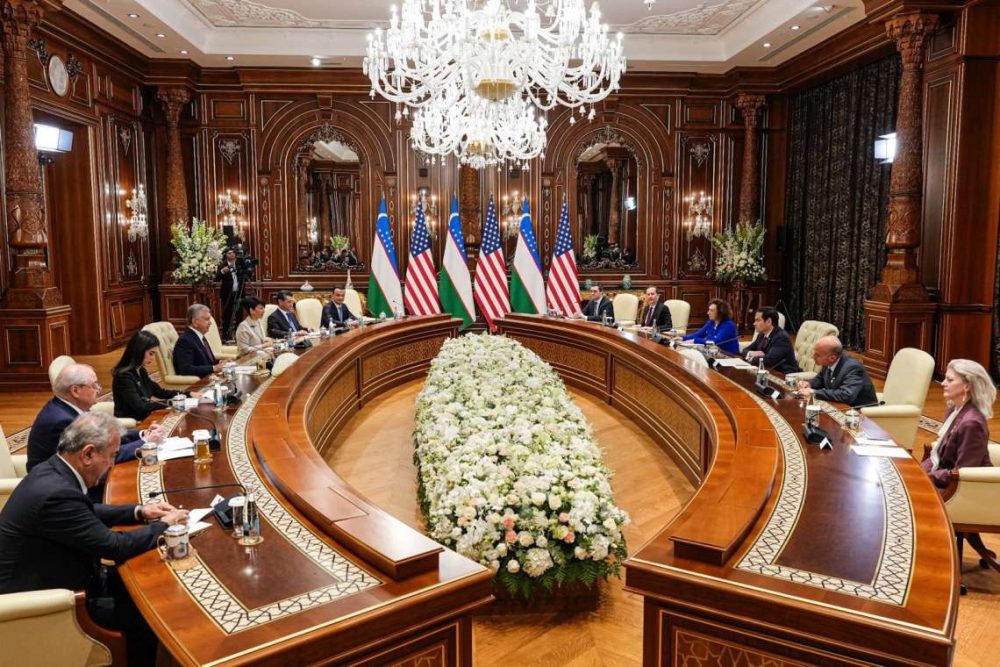
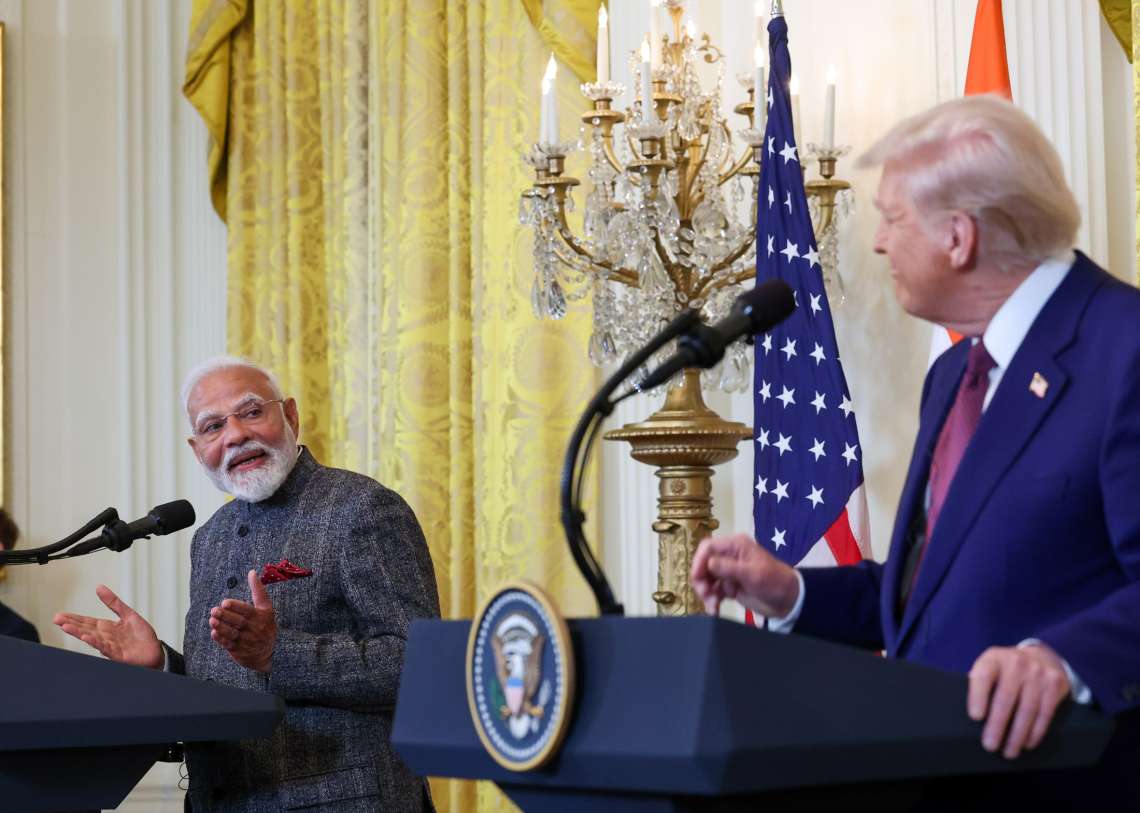
The year began on a positive diplomatic note. Prime Minister Narendra Modi travelled to Washington in February for his first bilateral meeting with President Donald Trump since the latter’s return to office as the 47th US president. Modi was among the earliest foreign leaders hosted by Trump, a gesture widely seen as signalling India’s importance in Washington’s strategic calculus.
During the visit, the two leaders discussed defence cooperation, technology partnerships and trade expansion. They announced plans to negotiate the first phase of a multi-sector Bilateral Trade Agreement by autumn 2025, with the stated aim of more than doubling bilateral trade to USD 500 billion by 2030.
Diplomatic continuity had already been on display in January, when External Affairs Minister S Jaishankar represented India at Trump’s inauguration. Shortly afterwards, Jaishankar attended the first Quad Foreign Ministers’ Meeting of the new administration alongside counterparts from Japan and Australia, reinforcing the shared commitment to a free and open Indo-Pacific.
These early engagements suggested a relationship on firm footing, anchored by defence cooperation, shared concerns over China and a broad bipartisan consensus in Washington on the value of closer ties with New Delhi.
Tariffs, trade and the Pakistan flashpoint
That momentum, however, began to erode as trade tensions resurfaced. Trump repeatedly criticised India for what he described as high tariffs on American goods, publicly labelling India a “very high tariff nation”. Senior figures in his administration echoed the criticism, framing India as a major obstacle to fair trade.
On April 2, declared by Trump as “Liberation Day”, the US imposed reciprocal tariffs on several countries, including a 26 per cent levy on Indian imports. Although Trump later suggested that a trade deal with India would materialise soon, uncertainty continued to cloud negotiations.
Some optimism returned when US Vice President JD Vance visited India and held talks with Modi. Both sides announced the Terms of Reference for the proposed bilateral trade agreement, indicating progress behind the scenes.
The diplomatic atmosphere shifted dramatically after a deadly terrorist attack in Pahalgam on April 22, in which 26 civilians were killed. The attack was carried out by The Resistance Front, a proxy of Pakistan-based Lashkar-e-Taiba. India responded with Operation Sindoor, targeting terror infrastructure in Pakistan and Pakistan-occupied Kashmir.
On May 10, Trump announced on social media that the United States had brokered a ceasefire between India and Pakistan, a claim he repeated frequently in subsequent weeks, asserting that trade pressure had helped end the conflict. Indian officials firmly rejected this narrative. After a phone conversation between Modi and Trump in June, Foreign Secretary Vikram Misri stated that Modi had clearly conveyed that there had been no discussion on US mediation or linking trade negotiations to de-escalation.
Further strain followed in August, when the US imposed an additional 25 per cent tariff on Indian imports, citing concerns over India’s continued purchases of Russian oil. This brought total US tariffs on Indian goods to 50 per cent, among the highest imposed on any trading partner, prompting criticism even from US lawmakers who warned of damage to a strategically vital relationship.
Immigration curbs, but defence ties endure
Immigration policy emerged as another major source of friction. Soon after taking office, the Trump administration launched a sweeping crackdown that included mass deportations. More than 3,200 Indian nationals were deported during the year, with reports of some being restrained during transit triggering concern in India.
Legal immigration pathways were also tightened. The administration imposed stricter conditions on H-1B visas and announced a USD 100,000 fee on new applications, citing abuse of the programme as a national security concern. The move sparked anxiety among Indian professionals and technology firms. Trump later acknowledged the importance of global talent, stating that the US lacked certain skills domestically, adding to uncertainty over the policy’s long-term direction.
Despite these challenges, cooperation in key areas continued. Counter-terrorism collaboration saw the extradition of Tahawwur Hussain Rana to India to face trial for his role in the 2008 Mumbai terror attacks. The US also designated The Resistance Front as a foreign terrorist organisation.
Defence ties were further reinforced in October with the signing of a 10-year defence cooperation framework. Signed by Defence Minister Rajnath Singh and US Secretary of War Pete Hegseth, the agreement was projected as a signal of enduring strategic alignment and a shared commitment to regional stability.
As the year closed, dialogue between Modi and Trump continued, with both sides emphasising the long-term importance of the relationship. While 2025 exposed areas of strain, it also demonstrated the underlying resilience of India–US ties.