July 9, 2025
3 mins read

Baloch Leaders Targeted with Fake Terror Charges

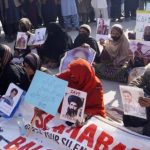
Shalee Baloch of the Baloch Women Forum condemned the illegal detention of BYC leaders and demanded the immediate release of Mahrang Baloch and her colleagues….reports Asian Lite News

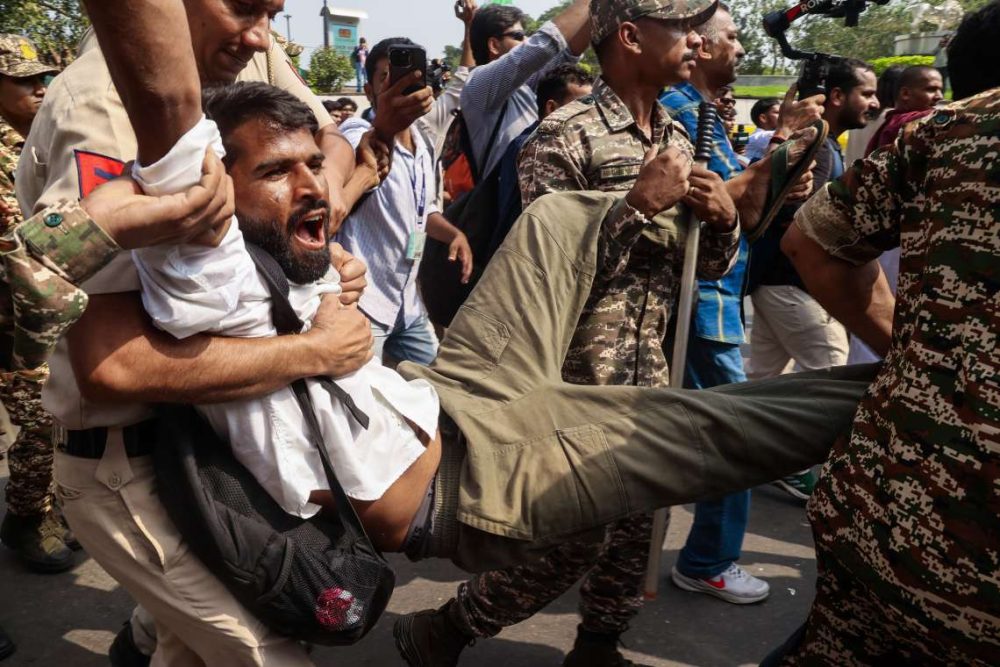
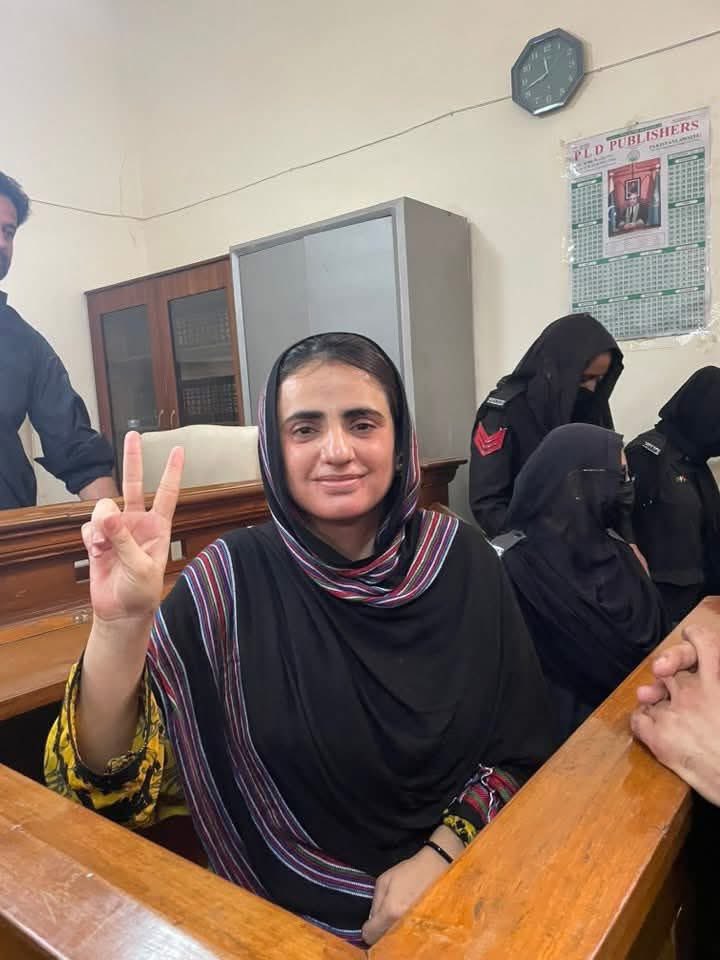
Human rights activists on Tuesday strongly condemned the detention of Baloch Yakjehti Committee (BYC) leader Mahrang Baloch and several others, after Pakistan’s Anti-Terrorism Court (ATC) granted a fresh 10-day remand based on what the BYC called “fabricated police complaints.”

According to the human rights body BYC, Mahrang Baloch, Shah Jee, Beebagr Baloch, Ghafar Baloch, Gulzadi, and Beebow Baloch were on Tuesday abruptly informed by the Jail Superintendent that their preventive detentions under the Maintenance of Public Order (3MPO) had been removed. They were told that police would arrive soon to arrest and present them before the Anti-Terrorism Court (ATC).

“This move came several hours before the scheduled 3MPO review board meeting, which was officially set between 12 noon to 1 PM that same day. Despite this, BYC leaders were taken to the ATC and presented in court between 10 to 11 AM,” the BYC stated.

“During the hearing, the ATC judge specifically inquired about the status of the MPO detentions. Intelligence and Counter Terrorism Department (CTD) officials falsely claimed the 3MPOs had already been lifted. Based on these false representations, the ATC ordered a 10-day police remand for all six BYC leaders under newly lodged and baseless FIRs,” it added.

The BYC asserted that deliberate circumvention of due process — falsely claiming the MPOs were lifted before the board convened — is a calculated attempt to deny lawful release and escalate the persecution of BYC leadership.
“From arbitrary more than three-month 3MPO detentions to illegal post-3MPO custody, and now the imposition of false terrorism charges with 10-day remand, the state has launched a coordinated legal and administrative assault against the Baloch Yakjehti Committee. This is not a case of isolated misconduct — it is a systematic campaign to criminalise peaceful political resistance through lawfare, deception, and repression,” the rights body emphasised.

The BYC strongly condemned “this continued misuse of the legal system” to suppress their movement. It demanded the immediate and unconditional release of all detained BYC leaders and called on national and international human rights bodies to take urgent notice of this abuse of law and due process.

Shalee Baloch, organiser of the Baloch Women Forum, expressed concern over the illegal detention of the BYC leaders, reiterating that Mahrang Baloch and her colleagues should be immediately released without any further delay.

“The abrupt elimination of 3MPO and direct Anti-Terrorism Court (ATC) trial, that too the same day when the judicial commission was to inquire about the three-month detention of the BYC leaders including Mahrang Baloch, raises our concerns for the free and fair legal procedure. I believe that such tactics are used as a delay method to harass peaceful political workers,” Shalee Baloch, said in a post on X.

“It has been over three months since the BYC leadership has been facing illegal detention merely based on acts they have not done. Instead of releasing them earlier, the state and its law agencies are using other means to further exploit the state laws. If they had to go for an ATC trial, they could have done it before, and not now when they had to present a review of the three-month detention,” the post added.

Baloch human rights activist and writer Mir Yar Baloch also took to social media, demanding the unconditional and immediate release of all Baloch hostages.

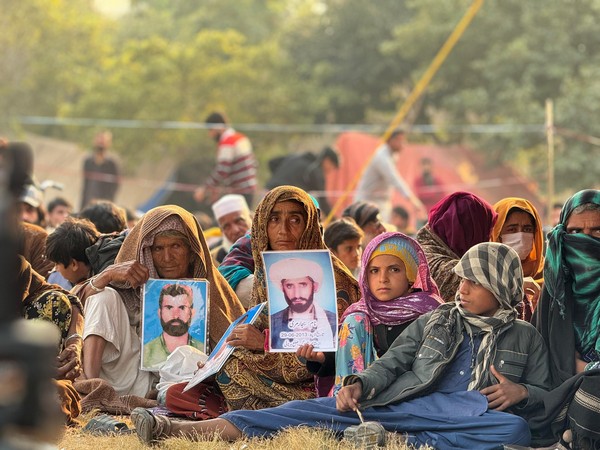
“Enemy can put our people, including Mahrang Baloch, behind the bars but can’t defeat our ideology, determination and resistance for the defence of Balochistan. The occupational forces of Pakistan are having 40,000 Baloch hostages in its secret detention centers across Balochistan and other areas of Pakistan,” said the Baloch human rights activist.
Previous Story

Succession Is Our Call, Not China’s: Dalai Lama

Next Story

Archer Returns for Lord’s Test

Previous Story

Succession Is Our Call, Not China’s: Dalai Lama

Next Story

Archer Returns for Lord’s Test

Latest from -Top News

Pakistan Risks Overstretching Itself in Yemen War

Pakistan’s expanding military role in Saudi Arabia amid the Yemen conflict could strain its defence resources and fragile finances…reports Asian Lite News Desk Pakistan’s military involvement in the war in Yemen may prove unsustainable because of mounting financial pressures and competing security demands, according to a new report. Islamabad’s growing military presence in Saudi Arabia risks stretching its defence resources while exposing the country to greater strategic and economic challenges. An article by Andrew Wilson in One World Outlook describes Pakistan’s involvement as a case of “fiscal and strategic overreach”, arguing that the country lacks the financial flexibility to sustain an expanded military commitment. Pakistan’s external finances depend heavily on an International Monetary Fund (IMF) programme, financial support from Gulf countries and remittances from Pakistani workers in the region. The report argues that deeper military involvement in the conflict could place additional pressure on these sources of financial stability. It also warns that deploying troops and military equipment abroad could weaken Pakistan’s capacity to address security challenges along its eastern border and deal with two domestic insurgencies. The move could also draw Islamabad into a conflict it has sought to approach cautiously. A Reuters report in May, citing Pakistani security and government sources, said Islamabad had deployed around 8,000 troops, a squadron of approximately 16 aircraft, mostly JF-17 fighter jets, two drone squadrons and a Chinese HQ-9 air-defence battery to Saudi Arabia. According to those sources, Riyadh was financing the deployment, with Pakistani personnel operating the equipment. The sources also said a confidential agreement contemplated the possibility of deploying up to 80,000 troops. Islamabad has not confirmed those figures, although it has acknowledged its military presence in Saudi Arabia, including the deployment of fighter jets at King Abdulaziz Air Base from April. The One World Outlook article argues that Saudi financial support can cover allowances and operating expenses but cannot easily replace military equipment needed elsewhere or resolve the political and strategic challenges of participating in the Yemen conflict. Pakistan’s defence budget is another concern. For the 2026-27 financial year, the federal government allocated PKR 3 trillion, or approximately $10.8 billion, to defence services. The allocation represents an 18 per cent increase from the original PKR 2.55 trillion provision and amounts to around 2.1 per cent of projected gross domestic product (GDP). Defence spending accounts for approximately 16 per cent of the federal government’s PKR 18.8 trillion expenditure. Military pensions are budgeted separately at PKR 822 billion, while debt servicing costs stand at approximately PKR 8 trillion, more than two-and-a-half times the defence allocation. The report argues that these competing financial obligations leave little room for additional military expenditure without placing further pressure on public finances. Pakistan’s reliance on IMF assistance also limits its fiscal flexibility. The country must meet the conditions attached to the programme, including a primary budget surplus target of 2 per cent of GDP and continued restraint on development spending. According to the article, these requirements make it difficult for Islamabad to finance an additional military commitment without compromising other budgetary priorities. Pakistan’s economic indicators offer limited reassurance. Economic growth for the 2025-26 financial year is estimated at between 3.6 and 3.7 per cent, while inflation reached approximately 10.3 per cent in September following an energy price shock. Foreign exchange reserves stood at around $21.5 billion at the end of September. Although this marks an improvement from the low levels recorded in 2023, the report notes that the reserves cover only a few months of imports. Financial assistance from Gulf partners remains central to Pakistan’s external stability. The article says Islamabad holds approximately $8 billion in Saudi deposits at its central bank. In July, the State Bank of Pakistan said Riyadh had extended the maturity of $5 billion in deposits to December 2028, easing the country’s immediate external financing requirements. A further $3 billion deposit was also extended in the spring. However, the article argues that these arrangements provide temporary relief rather than long-term financial independence, particularly as regional conflict threatens the stability of the Gulf economies on which Pakistan relies. The report concludes that Pakistan faces a difficult balance between supporting Saudi Arabia militarily and preserving the financial and military resources needed to address its domestic and regional challenges.
Go toTop

Don't Miss

Imran Khan attempts to engage with new military leadership

Bilawal Bhutto Zardari said that the Rawalpindi public meeting of

Karachi sees mass rally against enforced disappearances

The origins of this observance trace back to December 21,