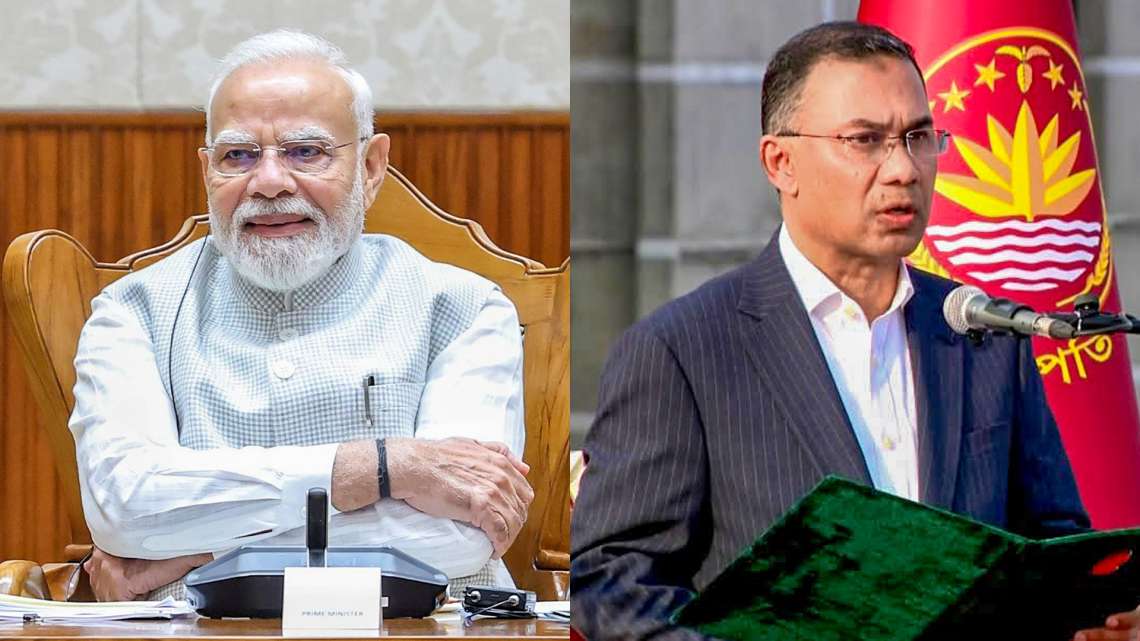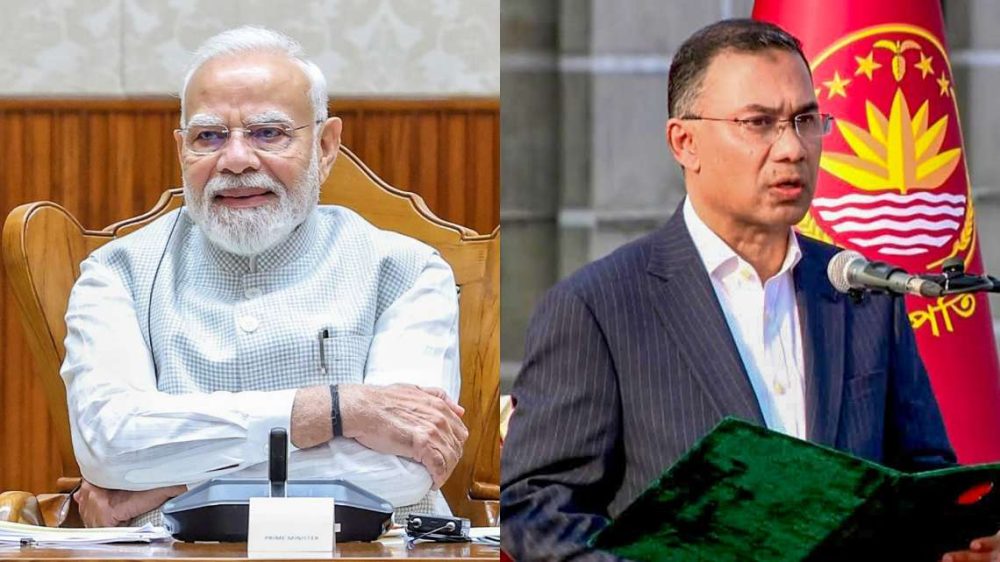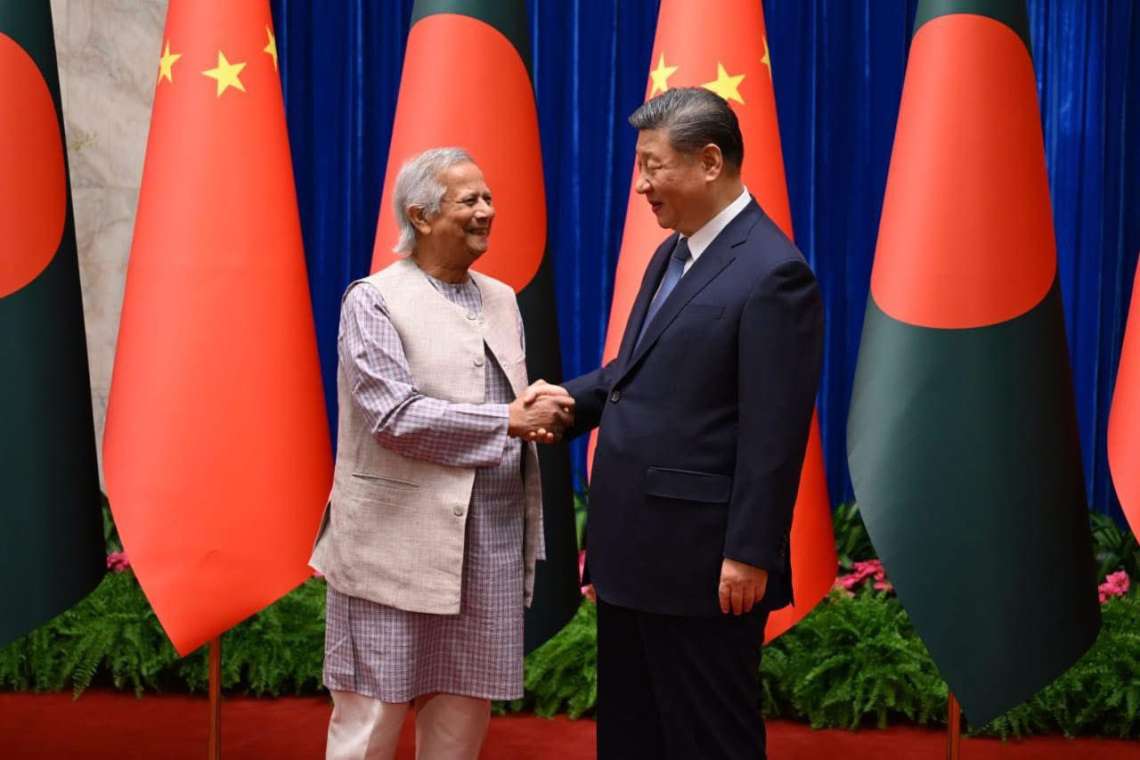
One major source of tension between New Delhi and Dhaka is Bangladesh’s evolving foreign policy alignments, which appear to be increasingly friendly towards China. This shift is reflected in Yunus’s visit to China and Dhaka’s subsequent “hesitant participation” in the Kunming meeting . This has led India to take up a stricter approach in the form of trade restrictions … writes Dr Sakariya Kareem
Since the political turmoil in Bangladesh began last year, the interim government has found itself facing both inward- and outward-looking challenges. The inward-looking role focuses on issues about domestic policy paralysis, pertaining to high inflation and unemployment, excessive export-dependence, and political instability, which further resulted in an estimated US$10-billion loss.
The outward-looking challenges being faced by Dhaka mostly revolve around defining its space in the current hyper-dynamic geopolitical realities. This is particularly associated with Dhaka’s ‘sweet-salty’ relation with India and changing relations with China.
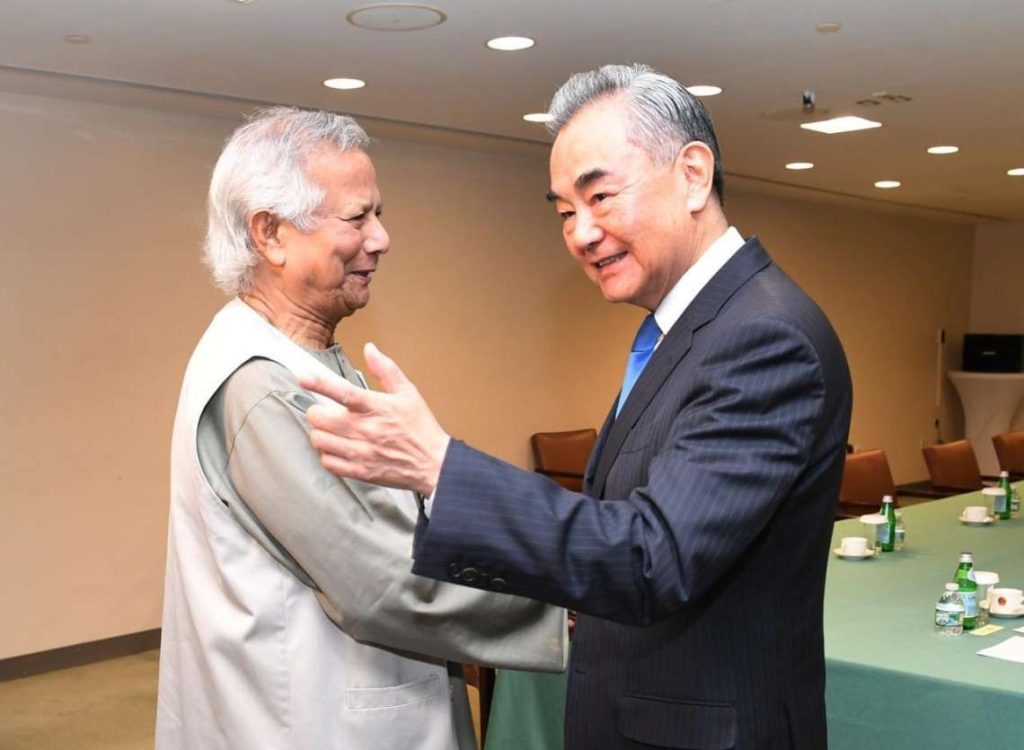
However, experts say that Bangladesh’s deep alignment with China is not feasible in practical terms. This is because Bangladesh would not want to risk prolonged tensions with neighbouring India, which shares the majority of its border, serves as its largest export market in Asia, and is a key energy supplier.
Under Sheikh Hasina, India and Bangladesh enjoyed “warm ties characterised by deep security cooperation, cross-border connectivity projects and shared regional objectives”. However, the post-Hasina Dhaka has shown a rather colder flair, with disputes over issues related to floods, exports, and anti-India sentiments in Bangladesh.
One major source of tension between New Delhi and Dhaka is Bangladesh’s evolving foreign policy alignments, which appear to be increasingly friendly towards China. This shift is reflected in Yunus’s visit to China and Dhaka’s subsequent “hesitant participation” in the Kunming meeting. This has led India to take up a stricter approach in the form of trade restrictions.
Since May 2025, India has imposed restrictions three times on the export of Bangladeshi goods through land ports, with the third phase of restrictions launched in August 2025. The Directorate General of Foreign Trade (DGFT) of India announced that, “imports from Bangladesh shall not be allowed from any land port on the India-Bangladesh Border. However, it is allowed only through the Nhava Sheva seaport”. This was in retaliation for the excessive export subsidies by Bangladesh’s government, which are hampering the Indian local industries.
The ban has also been imposed on imports of fruits, fruit-flavoured drinks, and processed food items; cotton and cotton yarn waste; plastic and PVC finished goods except pigments, dyes, plasticisers, and granules; and wooden furniture via the land ports of Assam, Meghalaya, Mizoram, and Tripura. New Delhi’s reaction is also in retaliation to Prof. Yunus’s statements made in China around the seven sisters of North-East India being landlocked, and urged China to take advantage of Bangladesh’s business potential, indicating desirable closeness to China.
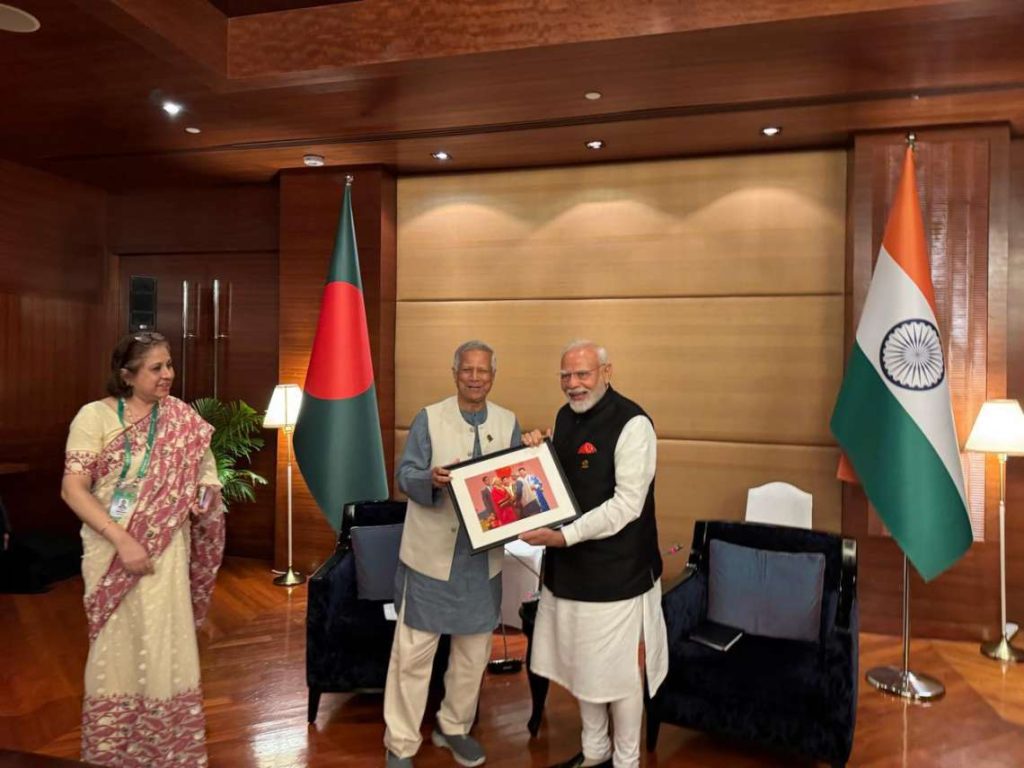
As a result of the restrictions, exports of jute, jute-based goods, and food products dropped significantly from Dhaka to New Delhi. These restrictions pose a threat to Bangladeshi factories that rely heavily on the Indian market, as workers in those factories may face job losses. Dhaka has responded by tightening inspections on Indian goods and selective import bans, like yarn, through land imports.
As per the National Board of Revenue (NBR), Bangladesh exported jute goods worth USD 12.9 million to India in July last year, which, after restrictions, has fallen to around USD 3.4 million (USD 34 lakh). Approximately 47 companies were not able to export even a single consignment after the restrictions. Moreover, a food exporting company from Bangladesh, whose main market is Assam and Tripura, was not able to send a single consignment as there was no scope to export through land ports. Besides, the company reported that the number of its factory workers dropped from 150 to just 60. Other food exporting companies have also registered a decline in their business with India, and are increasing the costs.
This data informs us about the need for realigning economic goals over other geopolitical strategic goals. The India-Bangladesh connection, as mentioned above, has been marked by shared culture, cooperation, and coordination. The current situation is nothing short of sub-optimal in the 54 years of partnership. Currently, Bangladesh’s businesses are stressing addressing the hiccups in trade relations as a top priority through bilateral discussions. At the same time, Bangladesh’s leadership should choose to avoid engaging in apparent empty threats to India, which instigate retaliation and cause losses to the masses. It must be remembered while taking any steps and expressing opinions on international dais that China has been reluctant to make concessions to debt-ridden Bangladesh. Moreover, closeness to Beijing is a roadblock towards diversifying its market and opening to the European Union and Washington, given that the U.S. is Bangladesh’s largest single-country export destination.
Besides, as Dhaka is on its way to re-establish the democratic process of elections and appointing an elected government, closeness to China is not highly palatable to the pro-democracy West. For many Western MNCs, Bangladesh is emerging as a way to diversify supply chains from China. However, Bangladesh’s political instability, increasing closeness with China, and deteriorating relations with India—the world’s largest democracy and long-time friend—present an image that runs counter to Dhaka’s aspiration to access Western markets. Given its status as a potential alternative and an emerging manufacturing hub for these companies, a swift and smooth return to economic stability, reinstating trust of the investors, and returning to democracy is crucial for its growth. If not done correctly, Bangladesh may get stuck in a proxy-trade dispute between China and the rest of the World. Thus, it is important to have diplomatic conversations and reach a conclusion to avoid petty trade disputes and reconcile old friends, and restore confidence among foreign investors and development partners.