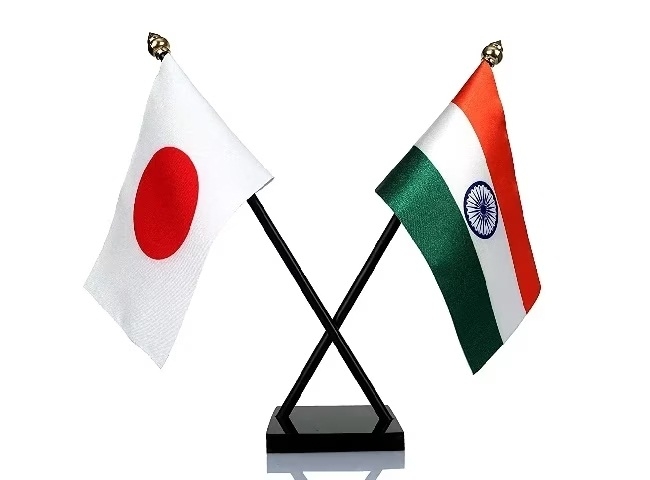
Japan’s investments across steel, autos, renewables, semiconductors, real estate, and aerospace underscore its faith in India’s long-term growth….reports Asian Lite News
Prime Minister Narendra Modi’s two-day visit to Japan comes as both countries deepen trade and economic ties, with over 170 MoUs inked in the past two years, committing investments worth more than $13 billion.
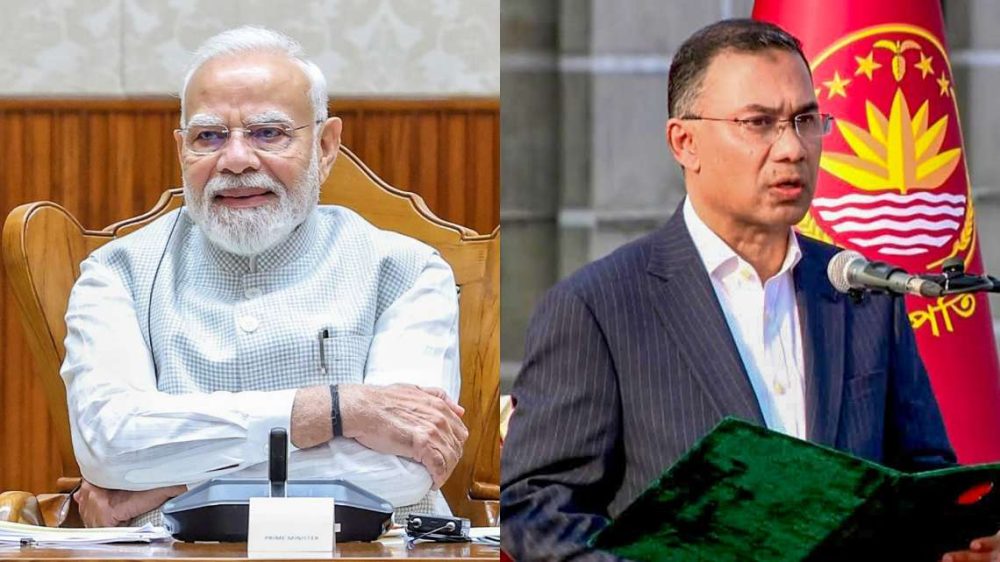
PM Modi will travel to Japan from August 29-30 to take part in the 15th India-Japan Annual Summit at the invitation of his Japanese counterpart, Shigeru Ishiba.
From steel plants in Gujarat to biogas projects in rural India, from Assam’s gateway role to Tokyo’s advanced Research and Development labs, from farmers in rural India to AI engineers in Bengaluru and Tokyo, from semiconductor fabs to academic exchanges, the India–Japan MoUs are building the bridge to a new era of cooperation.
With ‘Make in India, Make for the World’ as guiding vision, this partnership is set to reshape industrial, agricultural, and human capital landscapes, not only for the two nations but for the whole region and the world at large.
Nippon Steel (AM/NS India) is expanding in Gujarat with Rs 15 billion investments, along with Rs 56 billion integrated steel plant in Andhra Pradesh.
While Suzuki Motor has announced Rs 350 billion for a new plant in Gujarat and Rs 32 billion to expand production lines, Toyota Kirloskar has Rs 33 billion expansion plans in Karnataka and a Rs 200 billion new plant in Maharashtra.
Sumitomo Realty has invested $4.76 billion in real estate, while JFE Steel has Rs 445 billion worth of investment to strengthen electrical steel production. Astroscale is the first Japanese commercial satellite launch using ISRO’s PSLV.
This spread of investment across steel, automotive, renewables, semiconductors, real estate, and aerospace cements Japan’s confidence in India’s long-term economic potential.
Japanese industry partnerships are pulling Indian SMEs into global supply chains. Tokyo Electron and Fujifilm, and Tata Electronics are building a semiconductor ecosystem, with Indian SMEs becoming suppliers for high-value components.
Toyota and Suzuki’s value chains will integrate hundreds of tier 2 and 3 Indian SMEs. Fujitsu is recruiting 9,000 Indian engineers in its Global Capability Centre, boosting IT-linked SMEs.
With these initiatives, SMEs will gain global-standard practices, technology infusion, and market access, elevating India’s export competitiveness.
Japanese cooperation is also directly empowering India’s rural economy through green energy projects.
Sojitz Corporation, in partnership with Indian Oil, is investing $395 million to establish 30 biogas plants that will produce 1.6 million tonnes annually. Farmers will supply crop residues and agri-waste, earning additional income while supporting India’s clean energy transition.
Suzuki Motor Corporation, working with the National Dairy Development Board and local dairy cooperatives, is launching a biogas initiative adopted by UNIDO under its Industrial Cooperation Programme in the Global South (funded by Japan’s METI).
Starting operations in 2025, four biogas production plants in Banaskantha district in Gujarat were made with a total investment of Rs 2.3 billion. This project will convert cow dung into carbon-neutral biogas for CNG vehicles, which make up 20 per cent of India’s passenger car market.
This will cut emissions, strengthen energy self-sufficiency, create rural jobs, and raise farmer incomes, while embedding Japanese technology into scalable clean-energy infrastructure.
Moreover, Nippon Steel’s projects will boost speciality steel exports to auto and energy markets.
Toyota and Suzuki’s hybrid/EV ‘Made in India’ vehicles will be exported to Africa, the Middle East, and Southeast Asia.
When it comes to human resources and knowledge exchange, the area is rapidly expanding under the India–Japan Talent Bridge programme and METI initiatives.
As part of the ‘Talent Exchange Target’, 50,000 Indians and Japanese are part of the exchange programme in five years via study abroad, internships, and employment. Professors and students are being invited for company visits, university roundtables, and networking with Japanese firms.
A notable MoU was recently signed between the government of Assam and ASEAN Holdings, highlighting Japan’s commitment to India’s northeast. This also dovetails with Japan’s long-standing interest in the Act East Policy and the development of the northeast.
At the Japan-India-Africa Forum and the recently held 9th TICAD Summit in Tokyo, India emerged as an anchor country for connectivity and industrial corridors.
Priority areas are mineral security (rare earths, lithium, cobalt); supply chain resilience in semiconductors and EVs; and exploring export markets in Africa and the Middle East for Made-in-India goods with Japanese technology.