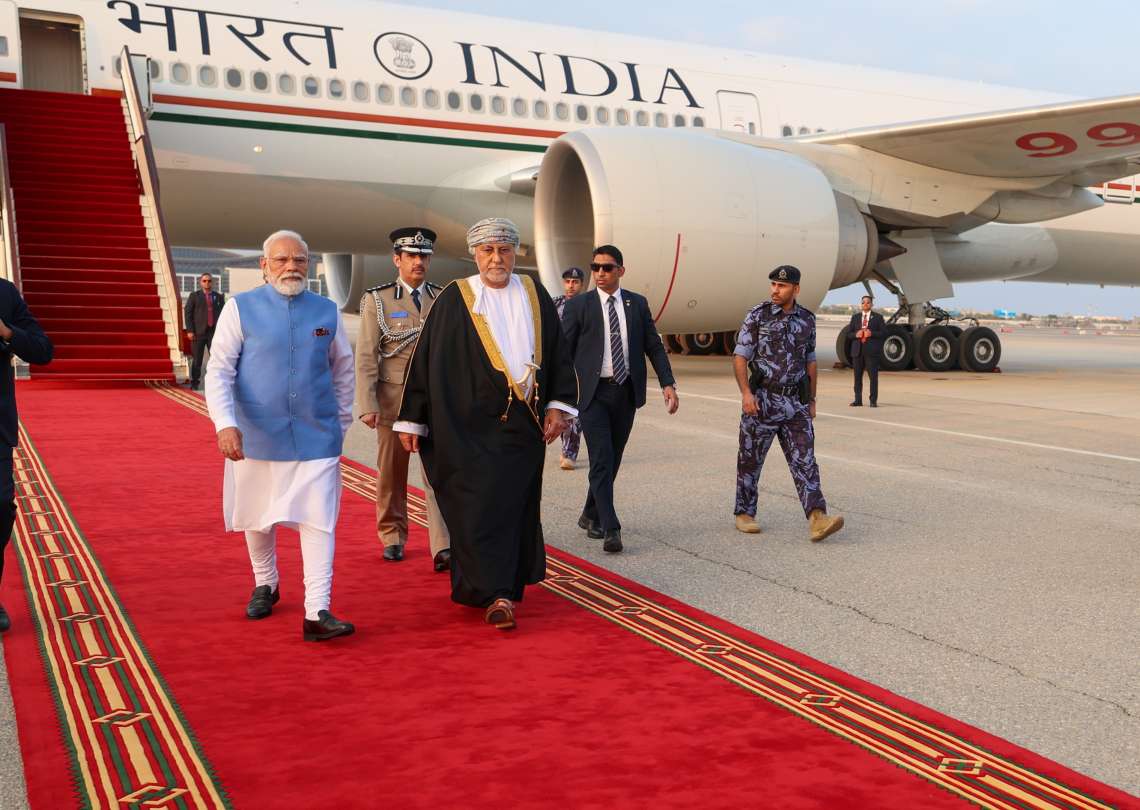
India’s growing economic footprint in Oman reflects rising confidence in the Sultanate as a long-term operating base. …reports Asian Lite News
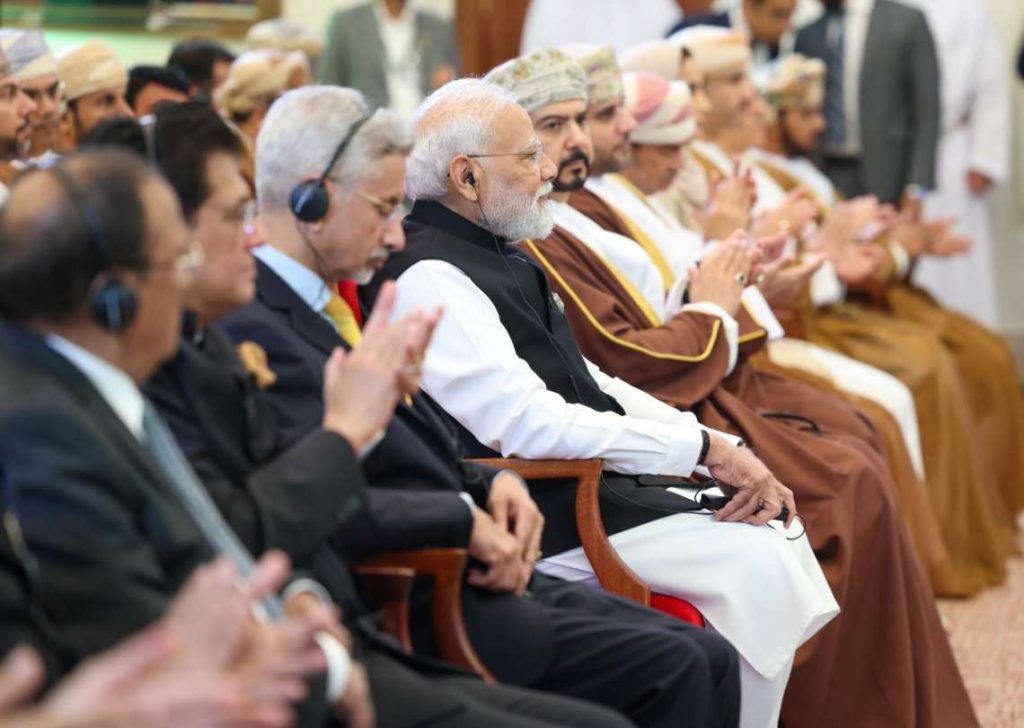
The proposed India–Oman Free Trade Agreement (FTA), formally structured as a Comprehensive Economic Partnership Agreement (CEPA), is set to mark a major milestone in India’s expanding economic engagement with the Gulf region, as Prime Minister Narendra Modi arrived in Muscat on Wednesday for the signing of the landmark pact later today.
The agreement is expected to enhance market access, promote investments and strengthen cooperation across a wide range of sectors at a time of global economic realignment. For Oman, the pact will be only its second FTA with an individual country and the first such agreement in nearly two decades, underscoring its strategic importance for both sides.
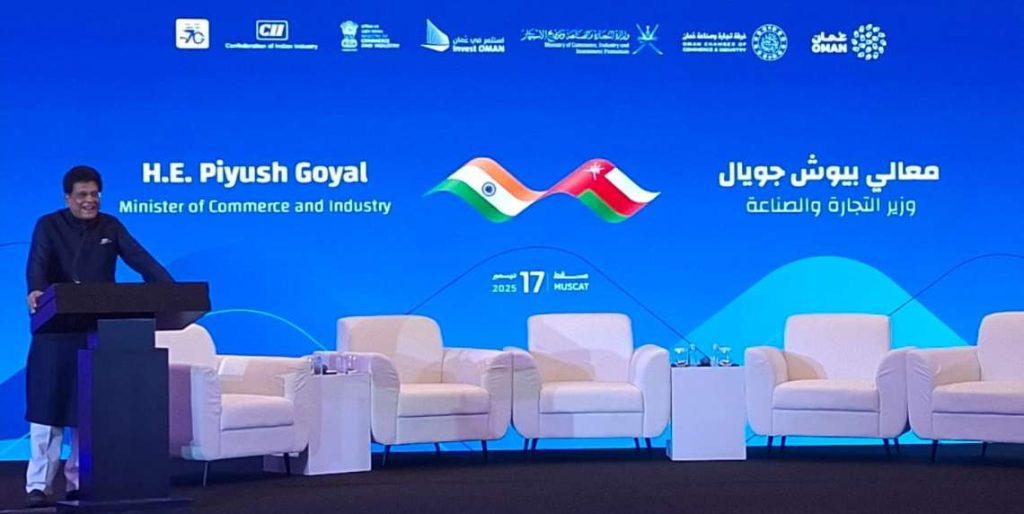
Commerce and Industry Minister Piyush Goyal said the India–Oman FTA would unlock significant opportunities across sectors including textiles, food processing, automobiles, gems and jewellery, agrochemicals, renewable energy and auto components. Addressing the India–Oman Business Forum in Muscat ahead of the signing, Goyal highlighted Oman’s strategic location as a gateway to the Gulf Cooperation Council (GCC), Eastern Europe, Central Asia and Africa, offering Indian businesses enhanced access to regional and trans-regional markets.
India’s growing economic footprint in Oman reflects rising confidence in the Sultanate as a long-term operating base. Indian investments in Oman have more than tripled since 2020 to around $5 billion, spanning green steel, green ammonia, aluminium manufacturing and logistics. More than 6,000 India–Oman joint ventures, with capital commitments running into several billion US dollars over time, underscore the depth of private-sector engagement between the two countries.
Bilateral trade has also gathered strong momentum. Trade between India and Oman reached approximately $10.61 billion in 2024–25, registering an 18.6 per cent year-on-year increase. India exported goods worth about $4.07 billion to Oman, while imports stood at $6.55 billion. India is among Oman’s top trading partners, ranking as the fourth-largest source of its imports and a principal destination for its exports.
The CEPA is expected to reinvigorate sectors such as engineering goods—India’s second-largest export category to Oman—which has faced pressure from global economic headwinds. Reduced tariffs and streamlined regulatory frameworks are likely to boost exports of pharmaceuticals, chemicals, textiles and value-added agricultural products, while enabling Indian firms to leverage Oman’s logistics strength and maritime connectivity to expand into Middle Eastern and African markets.
Beyond economics, the agreement builds on centuries-old historical, cultural and maritime ties between the two nations. As a mark of special friendship, Oman was invited as a guest country during India’s G20 Presidency in 2023 and participated extensively in working group and ministerial meetings, with several Omani ministers travelling to India for key engagements.
A strong demographic link further anchors the relationship. Indians form one of the largest expatriate communities in Oman and play a vital role in sectors ranging from healthcare and engineering to information technology, contributing significantly to Oman’s diversification drive and services economy.
The India–Oman CEPA also fits into India’s broader trade strategy. In recent years, New Delhi has concluded several high-impact agreements, including the CEPA with the UAE in 2022, the Economic Cooperation and Trade Agreement (ECTA) with Australia, a trade pact with Mauritius, and the Trade and Economic Partnership Agreement with EFTA nations. The Comprehensive Economic and Trade Agreement (CETA) with the UK, finalised this year, is expected to reduce tariffs on over 90 per cent of traded goods.
As Prime Minister Modi prepares to formally sign the FTA in Muscat later today, the agreement represents more than a tariff-cutting exercise. It signals a shared commitment to diversification, supply chain resilience and sustainable growth, positioning the India–Oman partnership as a key pillar of India’s evolving economic diplomacy in the Gulf.