Admiral Tripathi’s US visit reinforces India–US naval convergence, boosting interoperability, intelligence-sharing and industrial ties as both nations push for a stable, rules-based Indo-Pacific amid rising security challenges….reports Asian Lite News
Chief of Naval Staff Admiral Dinesh K Tripathi has concluded a series of high-level engagements in the United States aimed at reinforcing India–US maritime cooperation at a time of shifting strategic currents in the Indo-Pacific. The visit, which included interactions with senior US Navy and defence officials, focused on expanding operational coordination, boosting defence-industrial ties, enhancing intelligence and information-sharing and sharpening the two navies’ joint response to emerging maritime challenges.
According to the Indian Navy Spokesperson, Admiral Tripathi held substantive discussions with US Secretary of the Navy John C Phelan and Elbridge Colby, the US Under Secretary of War for Policy, underscoring the increasing strategic convergence between New Delhi and Washington. He also met Vice Admiral Yvette Devids, Deputy Chief of Naval Operations (Plans and Strategy), Steve Parode, Deputy Director of Naval Intelligence, and Rear Admiral Raymond P Owens, who heads the US Navy’s International Programmes Office.
The spokesperson said the conversations covered a wide range of areas: strengthening maritime cooperation, expanding defence-industry collaboration, deepening understanding of emerging security challenges and enhancing maritime domain awareness. Discussions also addressed technology-sharing, joint innovation, interoperability and training opportunities designed to improve the ability of the Indian Navy and US Navy to operate seamlessly together.

Both sides reviewed regional security dynamics and the changing strategic architecture of the Indo-Pacific, a region where maritime contestation has intensified. The engagements, the spokesperson added, reaffirmed a shared commitment to maintaining a “free, open and inclusive Indo-Pacific” that rests on a rules-based order—language that reflects the two countries’ growing alignment on concerns ranging from Chinese assertiveness to the resilience of critical sea lanes.
On-ground engagements with US Pacific Fleet
Admiral Tripathi’s visit included operational-level interactions as well. On Sunday, he toured the Arleigh Burke-class guided-missile destroyer USS Daniel Inouye, where US Navy officers briefed him on its advanced maritime surveillance systems, weapons platforms and recent upgrades. The Indian Navy described the visit as an important opportunity to observe US naval technological advances and discuss potential areas of collaboration in surveillance, sensor integration and maritime warfare systems.
He also visited Joint Base Pearl Harbour-Hickam, the headquarters of the US Pacific Fleet, where he was briefed on the fleet’s operational readiness, force posture and the range of capabilities deployed across the Indo-Pacific theatre. The briefings highlighted ongoing US initiatives to enhance deterrence, secure sea lines of communication and coordinate with partners to respond to humanitarian and disaster-relief scenarios.

Strategic dialogue with Indo-Pacific Command
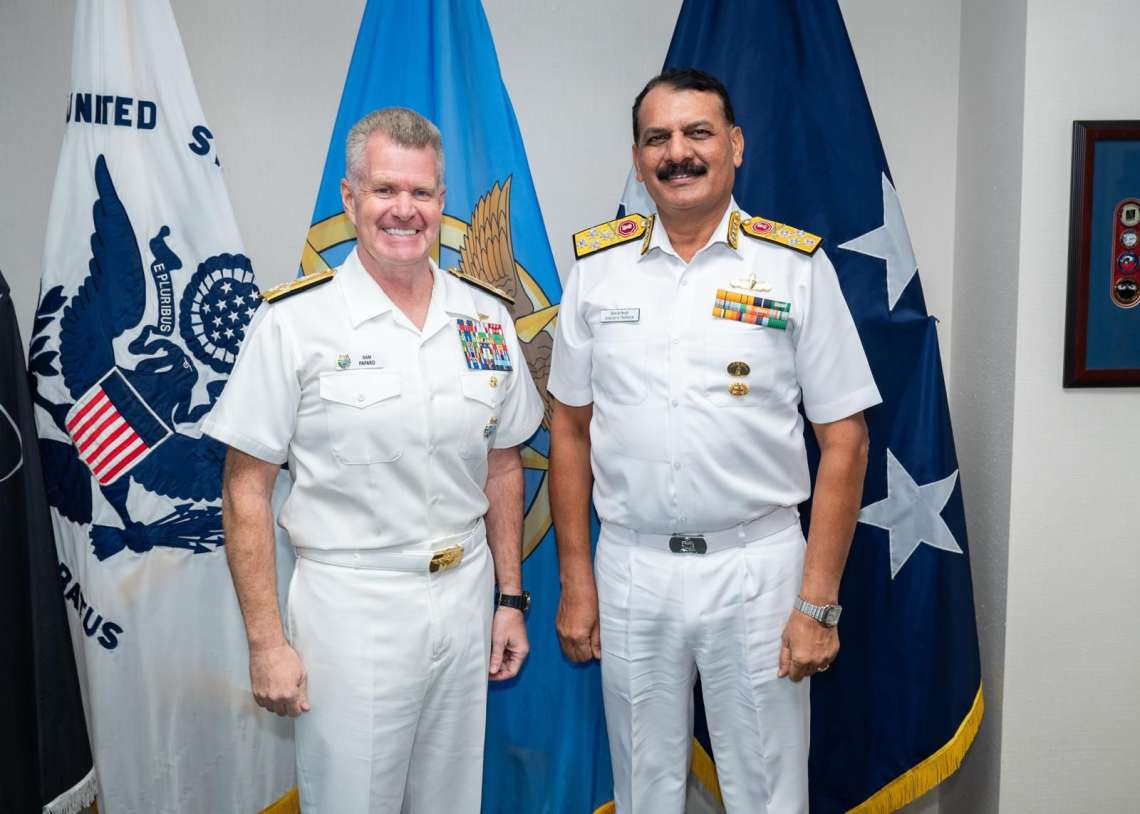
In another significant interaction, Admiral Tripathi met Admiral Samuel J Paparo, Commander of the US Indo-Pacific Command (INDOPACOM), and other senior US officials. The discussions revisited the key pillars of India-US defence cooperation, including joint exercises, coordinated patrols, maritime domain awareness exchanges and opportunities for expanded operational deployments.
The two sides evaluated progress made under existing mechanisms such as the Logistics Exchange Memorandum of Agreement (LEMOA) and the Communications Compatibility and Security Agreement (COMCASA), which have become central to India-US naval interoperability. They also discussed expanding the scope of joint training programmes and exploring new areas for operational synergy, particularly in the Indian Ocean Region.
India and the United States have steadily built a robust maritime partnership grounded in shared democratic values, mutual strategic interests and increasing concern about the security environment in the Indo-Pacific. Regular naval exercises such as Malabar, combined with information-sharing agreements and defence-industrial collaboration, have placed maritime cooperation at the heart of the bilateral relationship.
Admiral Tripathi’s visit reflects the Indian Navy’s intention to deepen this partnership both at the strategic and operational levels. As the spokesperson noted, the engagements “reaffirmed the shared commitment to deepen the India-US maritime partnership, bolstering mutual understanding and upholding a secure, stable and rules-based Indo-Pacific.”