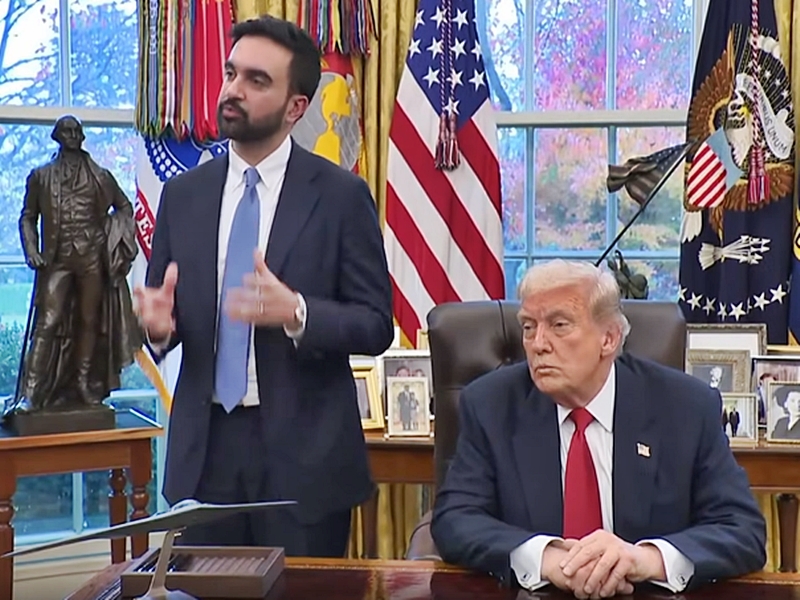
Trump and Mamdani strike unexpectedly warm tone in first White House talks..reports Asian Lite News
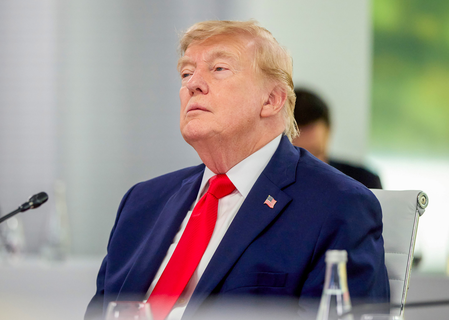
US President Donald Trump’s first meeting with New York City Mayor-elect Zohran Mamdani marked an unexpectedly cordial reset in a relationship previously defined by sharp public criticism, with both men signalling a willingness to work together on affordability, public safety and the future of the city they claim as home. Their conversation at the White House on Friday, requested by Mamdani shortly after his election victory, suggested that ideological contrasts may not preclude practical cooperation as the incoming mayor prepares to take office.
The encounter was being closely watched in Washington and New York, where expectations had been shaped by months of tense exchanges between the two men. Mamdani, a democratic socialist who ran a left-leaning grassroots campaign, unseated more established rivals in a win that drew national attention. Trump, for his part, had frequently criticised Mamdani’s political positions and accused him of being out of step with the city’s needs. Against that backdrop, a meeting between the pair was expected to be frosty, or at best transactional.
Instead, the tone that emerged was markedly different. Trump appeared notably receptive to the concerns Mamdani raised about affordability and crime, two issues that dominated the mayoral race and continue to shape public debate in the city. Following their private conversation, the President said he had been struck by the extent of agreement between them. He told reporters he was “surprised” by how closely their priorities aligned, adding: “We had a meeting today that actually surprised me. He wants to see no crime. He wants to see housing being built. He wants to see rents coming down. All things that I agree with.”
The President went further, emphasising that differences centred largely on methods rather than goals. He acknowledged that Mamdani approached the city’s affordability crisis from the perspective of boosting housing supply, a position Trump portrayed as compatible with his own instincts. “One of the things I really gleaned very, very much today — he’d like to see them come down ideally by building a lot of additional housing. That’s the ultimate way… He agrees with that and so do I,” he said.
These comments contrasted sharply with Trump’s earlier characterisations of Mamdani, whom he had described on the campaign trail as a threat to public order and fiscal stability. His remarks at the White House suggested a shift towards accommodation, as he publicly committed to supporting the mayor-elect where possible. “If I read the newspapers and the stories, I don’t hear that. But I heard him say it today and I think that’s a very positive step… I expect to be helping him, not hurting him,” he said. He added: “I want New York City to be great. I love New York City. It’s where I come from.”
The President also praised Mamdani’s electoral success, describing his victory as an “incredible race against some very tough people, very smart people.” He reiterated that the two shared at least one overarching objective: “We agreed on a lot more than I thought,” he said, adding that both held “one thing in common: we want this city of ours that we love to do very well.”
For Mamdani, the meeting offered an opportunity to demonstrate across-the-aisle pragmatism as he prepares to take on one of the most high-profile and politically challenging municipal roles in the country. The mayor-elect described the discussion as “productive” and said it had focused on shared affection for New York and the need to improve conditions for residents struggling with costs. He said the conversation was “focused on a place of shared admiration and love, which is New York City, and the need to deliver affordability to New Yorkers.”
Mamdani is expected to enter office facing significant challenges, including budget pressures, uneven economic recovery, rising homelessness and debates over policing. His alliance-building will be closely scrutinised, not least because his policy platform often diverges from that of the White House. The meeting with Trump may help ease relationships with federal partners on issues such as infrastructure investment, public housing and transit funding, where cooperation will be essential.
Political observers noted that both men may have had reasons to lower the temperature. For Trump, who retains strong political interests in New York despite relocating to Florida, a constructive relationship with the incoming mayor could help stabilise perceptions of his administration’s approach to his former home city. For Mamdani, who will require federal backing for several major policy priorities, the meeting allowed him to position himself as open to working with ideological opponents, potentially reassuring business groups and moderates sceptical of his more progressive positions.
The meeting also represents a broader shift in tone at a time when local and national leaders are under pressure to demonstrate results on affordability and public safety. While the substance of future cooperation remains uncertain, the symbolism of the two figures finding common ground was notable, particularly given the charged political climate in the city.
Trump concluded the meeting by signalling that he intended to support the new mayor where possible, saying: “The better he does the happier I am,” a remark that underscored the unexpectedly warm tone of a meeting few anticipated would end in consensus. The encounter may not end underlying disagreements, but it suggests that both sides see political value in presenting a working relationship at a moment when New Yorkers expect tangible progress on core issues.