August 29, 2025
5 mins read

Davey Snubs Trump Over Gaza

The move, which Davey said was intended to send a “strong message”, has drawn sharp criticism from political opponents …reports Asian Lite News

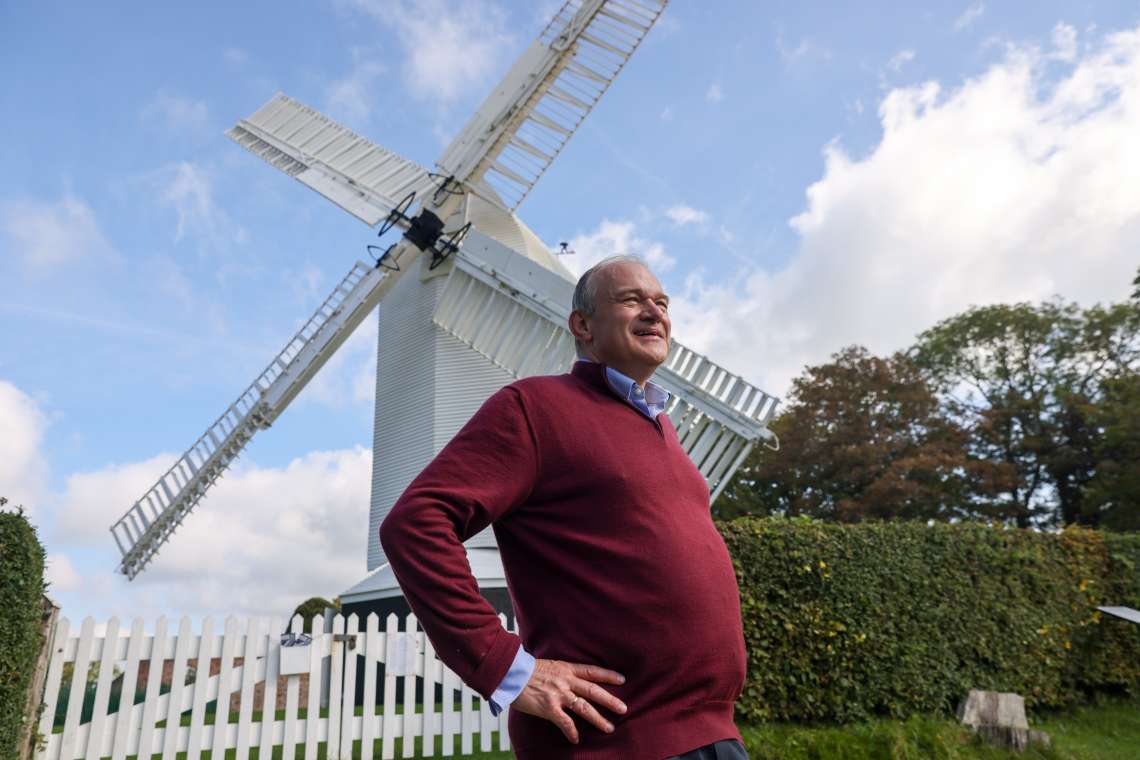
Liberal Democrat leader Ed Davey has announced he will boycott a state banquet hosted by King Charles during Donald Trump’s visit to Britain next month, citing the US president’s stance on the war in Gaza.

The move, which Davey said was intended to send a “strong message”, has drawn sharp criticism from political opponents but also reignited debate over Britain’s handling of the conflict and the pageantry surrounding Trump’s forthcoming trip.

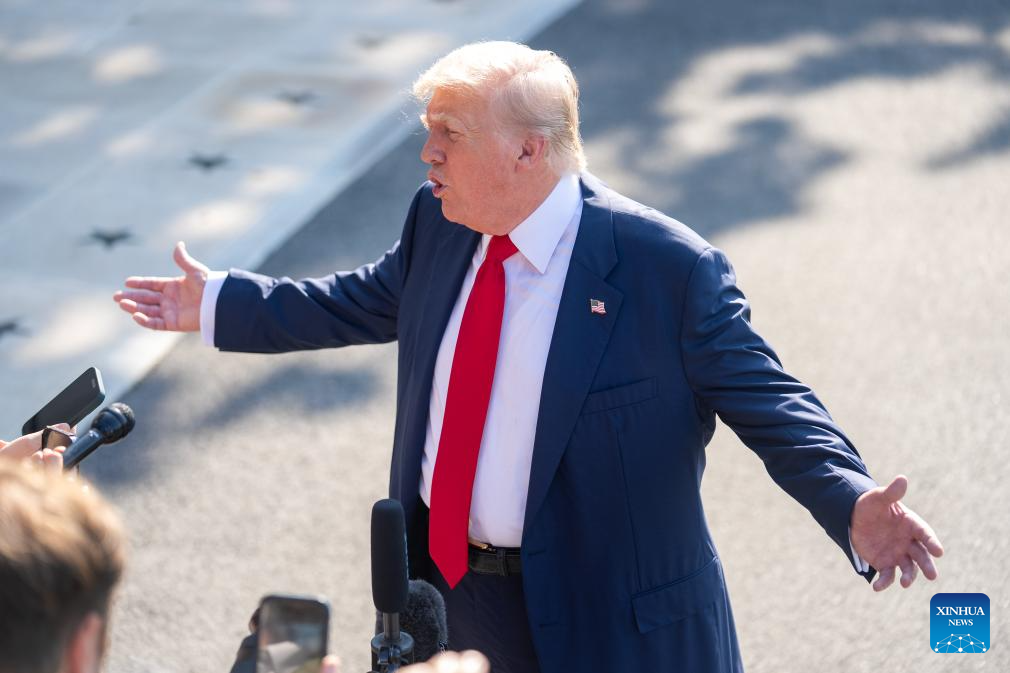
The White House confirmed earlier this year that Trump will make a state visit to the United Kingdom between 17 and 19 September – his second such occasion, and an unusual privilege granted to a serving US president. Central to the visit will be a lavish banquet in his honour, to be held at Buckingham Palace and hosted by King Charles III.

Writing in The Guardian, Davey explained his decision to refuse the invitation. “I feel a responsibility to do whatever I can to ensure the people in Gaza are not forgotten during the pomp and ceremony,” he said. “Boycotting the state banquet is not something I ever wanted to do, but I believe it is the only way I can send a message to both Trump and [Prime Minister Keir] Starmer that they cannot close their eyes and wish this away. I have come to the conclusion that on this occasion I must refuse.”

The Liberal Democrat leader, whose party is the third largest in the House of Commons, insisted his protest was not aimed at the monarch. In an interview with BBC Radio 4 on Thursday morning he stressed: “No disrespect is meant to the King.” Instead, he said, the refusal was aimed squarely at highlighting what he views as international indifference to the suffering in Gaza.
The decision has provoked a backlash from Conservatives, who labelled it “an act of deep disrespect”. Senior Tory MPs argued that the state banquet was a matter of diplomatic courtesy and that refusing to attend undermined Britain’s ability to project unity on the global stage.

Yet Davey is not the first politician to decline such an invitation. When Trump made his first state visit in 2019, several high-profile figures also stayed away from the banquet at Buckingham Palace, including then Labour leader Jeremy Corbyn, Commons Speaker John Bercow and Liberal Democrat leader at the time, Vince Cable. That trip was marked by large demonstrations across London, with tens of thousands of protesters marching against the president’s presence.

This year’s visit is already expected to draw significant public opposition. Campaign groups have begun planning protests in London and other major cities, citing Trump’s positions on Gaza, climate change, immigration and women’s rights. Organisers say they hope to stage demonstrations reminiscent of the huge balloon protest in 2019, when a giant “Trump baby” blimp floated above Westminster.

Keir Starmer was personally involved in extending the invitation. During a trip to Washington in February, he handed Trump a formal letter of invitation from King Charles. Reports at the time suggested the US president was “delighted” to receive it. The Prime Minister has so far not commented on Davey’s decision to boycott the dinner.

The war in Gaza has been a defining issue in British politics over recent months. The Government has faced mounting pressure from campaigners and MPs across parties to take a firmer line on Israel’s military campaign and to do more to press for a ceasefire. Davey has repeatedly spoken out on the issue in Parliament, urging ministers to act to prevent further civilian casualties. His decision to boycott the banquet is seen by allies as an extension of that stance.

Supporters within the Liberal Democrats praised the move as a matter of principle. One senior party source said: “Attending the banquet would have been the easy option, but it would have sent entirely the wrong signal. Standing up for human rights sometimes means saying no.”

But critics warned that the boycott risked overshadowing the broader purpose of a state visit – to reinforce ties between Britain and its closest ally. Former Conservative minister Desmond Swayne said: “This is gesture politics at its worst. Whatever one thinks of Trump, the state banquet is not about him personally but about the enduring relationship between our two countries.”

For King Charles, the occasion will present delicate balancing acts of his own. While the monarch traditionally hosts visiting heads of state, he is expected to tread carefully in public appearances given the controversies surrounding Trump’s presidency. Palace officials have declined to comment on Davey’s boycott, insisting only that arrangements for the banquet remain “in hand”.

With less than a month to go, security preparations are being stepped up across central London. The Metropolitan Police is braced for significant protests, with extensive road closures and barriers expected around Buckingham Palace and Whitehall. Officials have privately acknowledged that the scale of the demonstrations could rival those of 2019.

For Davey, the calculation appears clear: to draw attention to Gaza by withdrawing from one of the most high-profile events of the year. “There will be no shortage of people lining up to shake Donald Trump’s hand,” he wrote. “I do not need to be one of them.”

Whether the boycott will resonate with the wider public remains to be seen. But as Britain prepares to roll out the red carpet for a divisive American leader, it is evident that the political and moral dilemmas his visit provokes are already on full display.
Previous Story

Trump Camp Cites Delhi to Target US Cities

Next Story

76% of Brits support EU youth mobility plans

Previous Story

Trump Camp Cites Delhi to Target US Cities

Next Story

76% of Brits support EU youth mobility plans

Latest from -Top News

Pakistan Risks Overstretching Itself in Yemen War

Pakistan’s expanding military role in Saudi Arabia amid the Yemen conflict could strain its defence resources and fragile finances…reports Asian Lite News Desk Pakistan’s military involvement in the war in Yemen may prove unsustainable because of mounting financial pressures and competing security demands, according to a new report. Islamabad’s growing military presence in Saudi Arabia risks stretching its defence resources while exposing the country to greater strategic and economic challenges. An article by Andrew Wilson in One World Outlook describes Pakistan’s involvement as a case of “fiscal and strategic overreach”, arguing that the country lacks the financial flexibility to sustain an expanded military commitment. Pakistan’s external finances depend heavily on an International Monetary Fund (IMF) programme, financial support from Gulf countries and remittances from Pakistani workers in the region. The report argues that deeper military involvement in the conflict could place additional pressure on these sources of financial stability. It also warns that deploying troops and military equipment abroad could weaken Pakistan’s capacity to address security challenges along its eastern border and deal with two domestic insurgencies. The move could also draw Islamabad into a conflict it has sought to approach cautiously. A Reuters report in May, citing Pakistani security and government sources, said Islamabad had deployed around 8,000 troops, a squadron of approximately 16 aircraft, mostly JF-17 fighter jets, two drone squadrons and a Chinese HQ-9 air-defence battery to Saudi Arabia. According to those sources, Riyadh was financing the deployment, with Pakistani personnel operating the equipment. The sources also said a confidential agreement contemplated the possibility of deploying up to 80,000 troops. Islamabad has not confirmed those figures, although it has acknowledged its military presence in Saudi Arabia, including the deployment of fighter jets at King Abdulaziz Air Base from April. The One World Outlook article argues that Saudi financial support can cover allowances and operating expenses but cannot easily replace military equipment needed elsewhere or resolve the political and strategic challenges of participating in the Yemen conflict. Pakistan’s defence budget is another concern. For the 2026-27 financial year, the federal government allocated PKR 3 trillion, or approximately $10.8 billion, to defence services. The allocation represents an 18 per cent increase from the original PKR 2.55 trillion provision and amounts to around 2.1 per cent of projected gross domestic product (GDP). Defence spending accounts for approximately 16 per cent of the federal government’s PKR 18.8 trillion expenditure. Military pensions are budgeted separately at PKR 822 billion, while debt servicing costs stand at approximately PKR 8 trillion, more than two-and-a-half times the defence allocation. The report argues that these competing financial obligations leave little room for additional military expenditure without placing further pressure on public finances. Pakistan’s reliance on IMF assistance also limits its fiscal flexibility. The country must meet the conditions attached to the programme, including a primary budget surplus target of 2 per cent of GDP and continued restraint on development spending. According to the article, these requirements make it difficult for Islamabad to finance an additional military commitment without compromising other budgetary priorities. Pakistan’s economic indicators offer limited reassurance. Economic growth for the 2025-26 financial year is estimated at between 3.6 and 3.7 per cent, while inflation reached approximately 10.3 per cent in September following an energy price shock. Foreign exchange reserves stood at around $21.5 billion at the end of September. Although this marks an improvement from the low levels recorded in 2023, the report notes that the reserves cover only a few months of imports. Financial assistance from Gulf partners remains central to Pakistan’s external stability. The article says Islamabad holds approximately $8 billion in Saudi deposits at its central bank. In July, the State Bank of Pakistan said Riyadh had extended the maturity of $5 billion in deposits to December 2028, easing the country’s immediate external financing requirements. A further $3 billion deposit was also extended in the spring. However, the article argues that these arrangements provide temporary relief rather than long-term financial independence, particularly as regional conflict threatens the stability of the Gulf economies on which Pakistan relies. The report concludes that Pakistan faces a difficult balance between supporting Saudi Arabia militarily and preserving the financial and military resources needed to address its domestic and regional challenges.

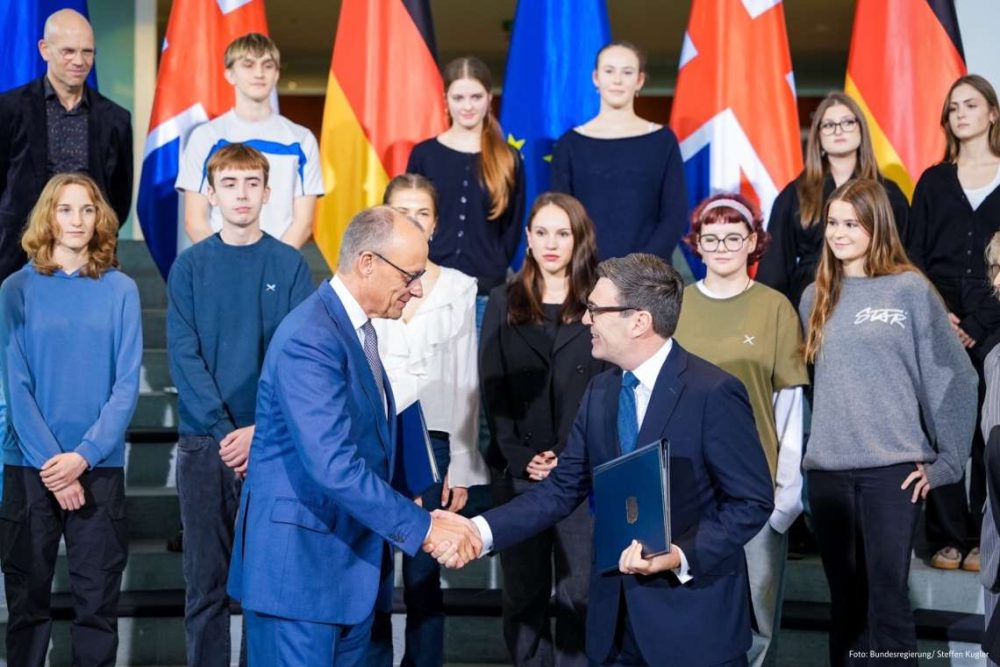
UK and Germany Ratify Kensington Treaty

Britain and Germany ratify the Kensington Treaty, agreeing new cooperation on AI, quantum research, defence and security while targeting investment, jobs and Russian hybrid threats…reports Asian Lite News Desk Britain and Germany

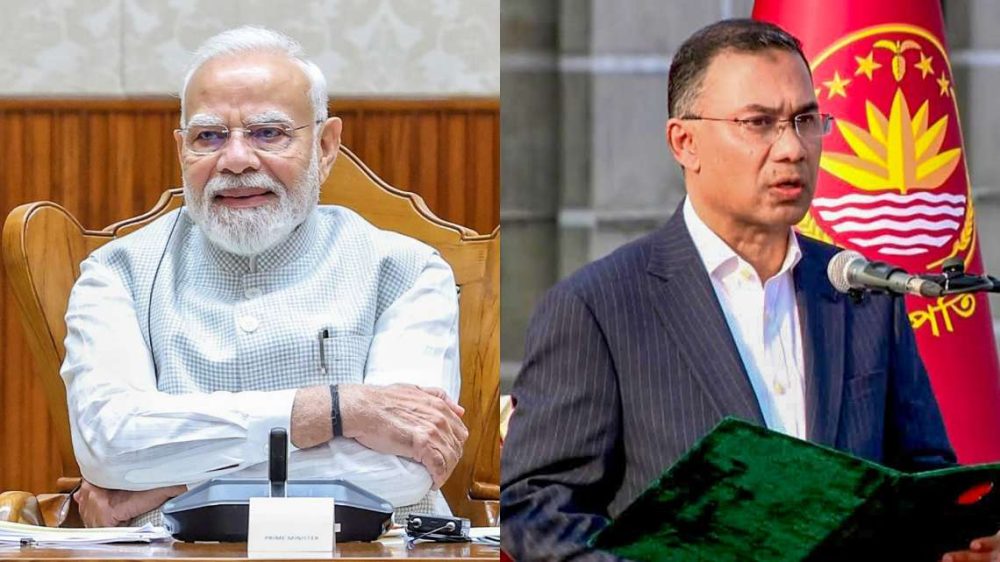
Economic tide is turning in Bangladesh

If there is one thing that can bring some comfort to the struggling Bangladeshi economy, it is good relations with India. Bangladesh should remember that Delhi’s backing, through easy supplies of essentials

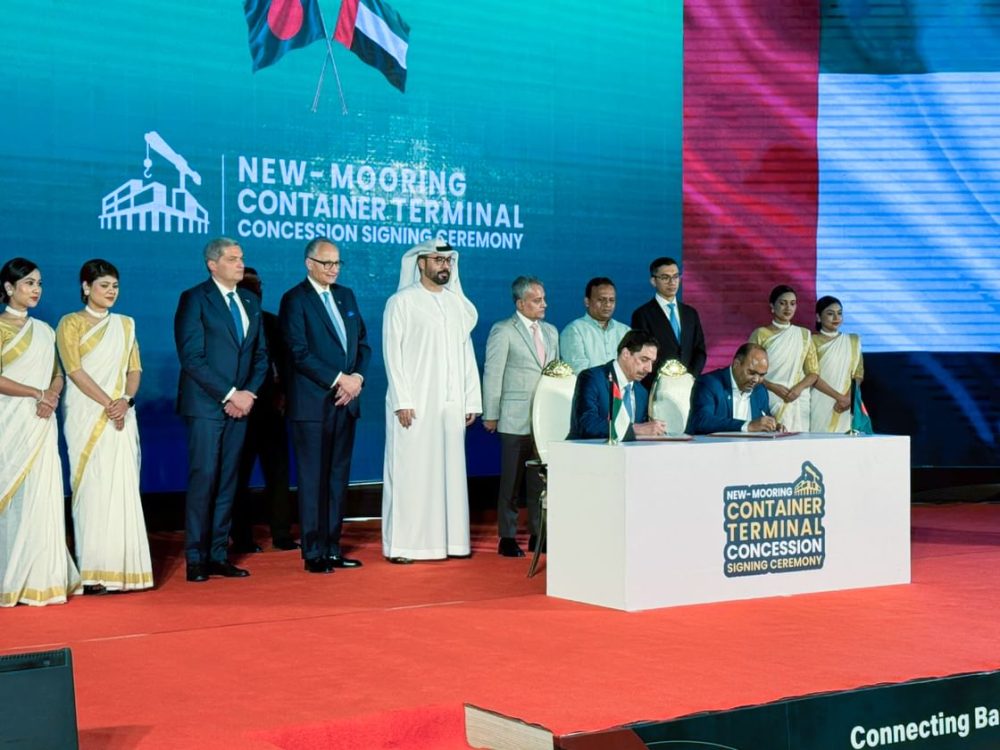
DP World Lands 15-Year Bangladesh Port Deal

The agreement between the Chittagong Port Authority (CPA) and DP World covers the New Mooring Container Terminal…reports Asian Lite News Desk Bangladesh has signed a 15-year concession agreement with global ports operator
Go toTop

Don't Miss

Bangladesh bends to beat Trump’s blow

Dhaka seeks compromise as Trump’s 35% tariff looms large over

Trump indicted over efforts to overturn 2020 polls

Trump will make his first court appearance in the case