August 29, 2025
3 mins read

Trump Camp Cites Delhi to Target US Cities

Earlier, the White House shared a chart of 2024 murder rates in 11 world capitals to justify President Trump’s deployment of the National Guard and federal agents in Washington….reports Asian Lite News

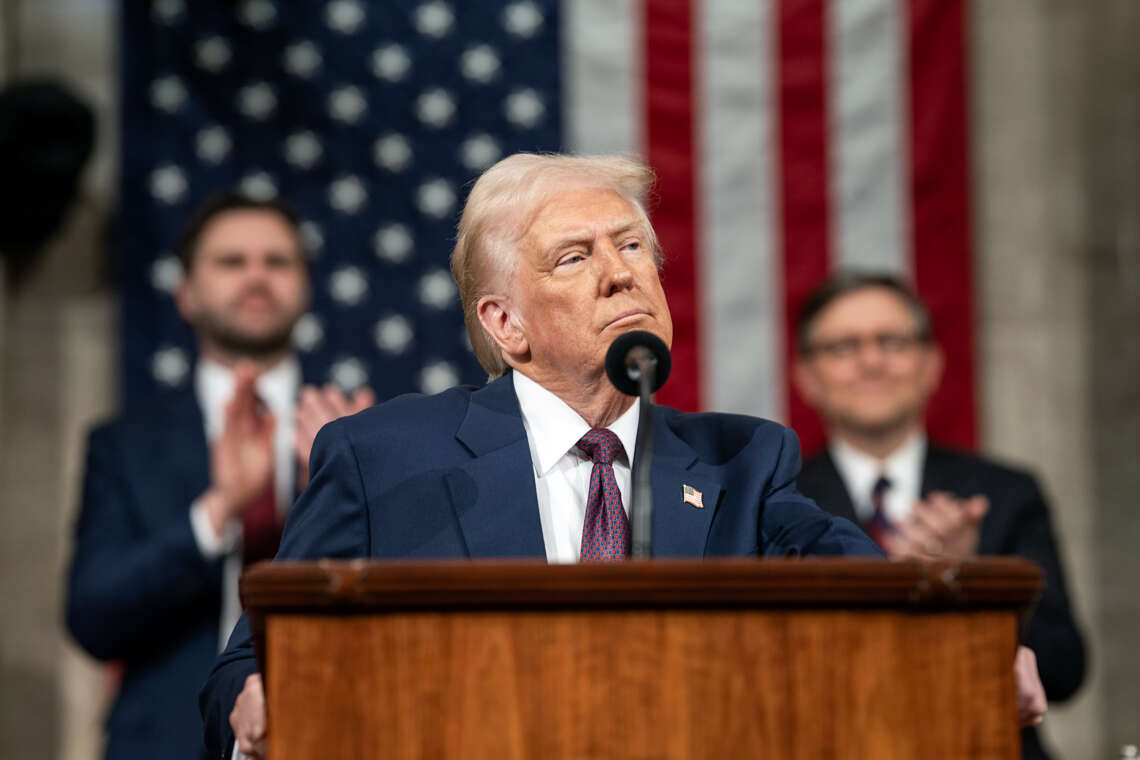
The White House has highlighted the stark contrast between New Delhi and Chicago’s murder rates to push for federal action in the US city. President Donald Trump’s spokesperson, Karoline Leavitt, noted that Chicago’s 2024 murder rate was 15 times higher than that of the Indian capital.

Chicago’s homicide rate was 25.5 per 100,000 residents according to city statistics, while Delhi’s was 1.48.

Earlier, to justify President Trump deploying the National Guard troops and federal law enforcement personnel in Washington the White House posted a chart showing the murder rates in 11 capitals around the world in 2024.

That ranked Delhi’s murder rate at the ninth spot, with only London and Madrid ahead of it, while Washington topped the chart with 27.64 homicides.

Islamabad ranked the fourth worst with a rate of 9.2 per 100,000 residents.

Having deployed the National Guard in Washington, Chicago is his next target.

“Chicago is a mess” and Chicagoans were “screaming” for help, President Trump said last week.

“So, I think Chicago will be our next federal deployment, and then we’ll help with New York”, he said.

The National Guard can be broadly compared to the Territorial Army, except it is organised on the basis of states and both the federal and state governments share control over them. They can be deployed in combat overseas as it happened in Iraq and Afghanistan.

The US Constitution or laws don’t have provisions for President’s Rule or federal intervention in states, and his plans have met stiff opposition from Illinois Governor J.B. Pritzker and Chicago Mayor Brandon Johnson, and federal troops’ deployment will likely face court challenges.

“Action will be met with a response”, Pritzker warned. “We will not stand idly by if he decides to send the National Guard to intimidate Chicagoans,” he added.

Since Washington is a federal territory, President Trump had the powers for deployment of the National Guard, despite the opposition of Mayor Muriel Bowser and the Democrat-dominated City Council.

Bowser has since grudgingly acknowledged that crime rate has come down since the surge ordered by President Trump.

“We know that when carjackings go down, when use of guns goes down, when homicide or robbery go down, neighbourhoods feel safer and are safer, so this surge has been important to us”, she said on Wednesday.

There has been no homicide since the National Guard was deployed on August 11 in the city that saw 100 till that date from January 1.

President Trump has said that he wants the death penalty, which is on the federal law books, to be invoked in Washington and juveniles to be prosecuted as adults.

He is also pushing all the states and cities that have introduced cashless bail to rescind them by threatening to withhold federal funds.

President Trump has cast his battle along party lines saying that of the 25 cities with highest crime rates, all but a couple are run by Democrats.

Voters’ worry over crime was one of the factors that helped President Trump win the election.

Even though Democrats say crimes are falling, they are still high, and President Trump is hoping to capitalise on this.

One of the dilemmas for the Democrats is that most crime victims in cities are African Americans and Latinos — nearly 95 per cent of murder victims in Chicago, for example, are from those communities — and President Trump hopes to appeal to them.

In hard numbers, Chicago with a population of 2.75 million recorded 573 homicides, and 2,189 sex crimes last year according to the city.

Washington, which has a population of only 702,250, saw 187 homicides and 143 sex abuse cases last year, according to the city’s federal prosecutor’s office.

In contrast, Delhi with a population of 34 million had 504 murders and 2,076 crimes against women last year, according to police.
Previous Story

Canada, India Swap New Envoys After Diplomatic Row

Next Story

Davey Snubs Trump Over Gaza

Previous Story

Canada, India Swap New Envoys After Diplomatic Row

Next Story

Davey Snubs Trump Over Gaza

Latest from -Top News

Pakistan Risks Overstretching Itself in Yemen War

Pakistan’s expanding military role in Saudi Arabia amid the Yemen conflict could strain its defence resources and fragile finances…reports Asian Lite News Desk Pakistan’s military involvement in the war in Yemen may prove unsustainable because of mounting financial pressures and competing security demands, according to a new report. Islamabad’s growing military presence in Saudi Arabia risks stretching its defence resources while exposing the country to greater strategic and economic challenges. An article by Andrew Wilson in One World Outlook describes Pakistan’s involvement as a case of “fiscal and strategic overreach”, arguing that the country lacks the financial flexibility to sustain an expanded military commitment. Pakistan’s external finances depend heavily on an International Monetary Fund (IMF) programme, financial support from Gulf countries and remittances from Pakistani workers in the region. The report argues that deeper military involvement in the conflict could place additional pressure on these sources of financial stability. It also warns that deploying troops and military equipment abroad could weaken Pakistan’s capacity to address security challenges along its eastern border and deal with two domestic insurgencies. The move could also draw Islamabad into a conflict it has sought to approach cautiously. A Reuters report in May, citing Pakistani security and government sources, said Islamabad had deployed around 8,000 troops, a squadron of approximately 16 aircraft, mostly JF-17 fighter jets, two drone squadrons and a Chinese HQ-9 air-defence battery to Saudi Arabia. According to those sources, Riyadh was financing the deployment, with Pakistani personnel operating the equipment. The sources also said a confidential agreement contemplated the possibility of deploying up to 80,000 troops. Islamabad has not confirmed those figures, although it has acknowledged its military presence in Saudi Arabia, including the deployment of fighter jets at King Abdulaziz Air Base from April. The One World Outlook article argues that Saudi financial support can cover allowances and operating expenses but cannot easily replace military equipment needed elsewhere or resolve the political and strategic challenges of participating in the Yemen conflict. Pakistan’s defence budget is another concern. For the 2026-27 financial year, the federal government allocated PKR 3 trillion, or approximately $10.8 billion, to defence services. The allocation represents an 18 per cent increase from the original PKR 2.55 trillion provision and amounts to around 2.1 per cent of projected gross domestic product (GDP). Defence spending accounts for approximately 16 per cent of the federal government’s PKR 18.8 trillion expenditure. Military pensions are budgeted separately at PKR 822 billion, while debt servicing costs stand at approximately PKR 8 trillion, more than two-and-a-half times the defence allocation. The report argues that these competing financial obligations leave little room for additional military expenditure without placing further pressure on public finances. Pakistan’s reliance on IMF assistance also limits its fiscal flexibility. The country must meet the conditions attached to the programme, including a primary budget surplus target of 2 per cent of GDP and continued restraint on development spending. According to the article, these requirements make it difficult for Islamabad to finance an additional military commitment without compromising other budgetary priorities. Pakistan’s economic indicators offer limited reassurance. Economic growth for the 2025-26 financial year is estimated at between 3.6 and 3.7 per cent, while inflation reached approximately 10.3 per cent in September following an energy price shock. Foreign exchange reserves stood at around $21.5 billion at the end of September. Although this marks an improvement from the low levels recorded in 2023, the report notes that the reserves cover only a few months of imports. Financial assistance from Gulf partners remains central to Pakistan’s external stability. The article says Islamabad holds approximately $8 billion in Saudi deposits at its central bank. In July, the State Bank of Pakistan said Riyadh had extended the maturity of $5 billion in deposits to December 2028, easing the country’s immediate external financing requirements. A further $3 billion deposit was also extended in the spring. However, the article argues that these arrangements provide temporary relief rather than long-term financial independence, particularly as regional conflict threatens the stability of the Gulf economies on which Pakistan relies. The report concludes that Pakistan faces a difficult balance between supporting Saudi Arabia militarily and preserving the financial and military resources needed to address its domestic and regional challenges.

UK and Germany Ratify Kensington Treaty

Britain and Germany ratify the Kensington Treaty, agreeing new cooperation on AI, quantum research, defence and security while targeting investment, jobs and Russian hybrid threats…reports Asian Lite News Desk Britain and Germany

Economic tide is turning in Bangladesh

If there is one thing that can bring some comfort to the struggling Bangladeshi economy, it is good relations with India. Bangladesh should remember that Delhi’s backing, through easy supplies of essentials

DP World Lands 15-Year Bangladesh Port Deal

The agreement between the Chittagong Port Authority (CPA) and DP World covers the New Mooring Container Terminal…reports Asian Lite News Desk Bangladesh has signed a 15-year concession agreement with global ports operator
Go toTop

Don't Miss

US envoy visits Gulf to push for Yemen truce extension

The US reiterated its commitment to finding a resolution to

US tells citizens to leave Russia immediately

The warning marks the highest level, Level 4, of alerts