October 31, 2025
4 mins read

‘Dependants of some Gazan students can join them in UK’

Government allows dependants of Gazan postgraduate students to join them after policy reversal…reports Asian Lite News

The UK government has confirmed that partners and children of some Gazan PhD and master’s students will now be allowed to join them in Britain, marking a significant reversal of its earlier decision which limited evacuation support to the students alone.

Each application for family reunification will be reviewed on a “case-by-case basis,” a government spokesperson said, adding that dependants must meet specific requirements, including proof of sufficient funds to cover living costs.

Under the new provisions, visas will only be available to dependants of students on government-funded programmes such as Chevening scholarships or those pursuing PhDs and other research-based higher degrees.

The initial decision to exclude dependants had prompted widespread concern, with several students expressing their inability to take up scholarships in the UK if it meant leaving their families behind in war-torn Gaza.

Dependants seeking to join their relatives in Britain will be required to apply for a student dependant visa and provide evidence of adequate financial resources — up to £6,120 for those studying outside London, or £7,605 for those studying in the capital.

“Students coming from Gaza to the UK have suffered an appalling ordeal after two years of conflict,” a government spokesperson said. “They have endured unimaginable hardship but can now begin to rebuild their lives through studying in our world-class universities. That is why we are supporting the evacuation of dependants of students on scholarships who are eligible to study here under the immigration rules on a case-by-case basis.”

The change brings relief to Gazan scholars who had been facing painful choices between their academic ambitions and family responsibilities. Among them is Manar al-Houbi, who had earlier told the BBC it was “impossible” for her to leave her three young children and husband behind to take up her PhD place at the University of Glasgow.

Al-Houbi said she was “deeply relieved” by the new policy and hoped to be evacuated with her family “very soon”. “Academic women should never be deprived of their professional [opportunities] just because they have family responsibilities. I am very grateful to the UK government for making this wise and fair decision,” she said.

Since the UK began supporting evacuations for fully-funded Gazan students last month, at least 75 have arrived, including a third group of 17 students who landed on Monday. The arrivals mark the latest phase of the scheme coordinated by the Foreign, Commonwealth and Development Office, in partnership with universities and scholarship bodies.

However, not all students have been able to benefit in time. The BBC reported that six Gazan students due to start master’s programmes at the University of Glasgow will not be evacuated, as they would arrive too late to begin their courses this academic year.

Dr Nora Parr, a researcher at the University of Birmingham who has been helping to coordinate support for the group, welcomed the government’s reversal but voiced disappointment over those left behind.

“The existing government policy leaves both these students and their university in a cruel limbo,” she said. “I’m devastated that these six students have lost their hard-earned places.” The University of Glasgow declined to comment, though it is understood that it intends to honour the students’ places should they arrive in time for future enrolment periods. The government’s current evacuation support scheme runs until the end of the year, and there has been no indication of what arrangements might follow.

The broader humanitarian context remains grave. The war in Gaza was triggered by the Hamas-led attacks on southern Israel on 7 October 2023, which killed about 1,200 people and saw 251 others taken hostage. Since then, Israeli military operations have left more than 65,000 people dead, according to Gaza’s Hamas-run health ministry.

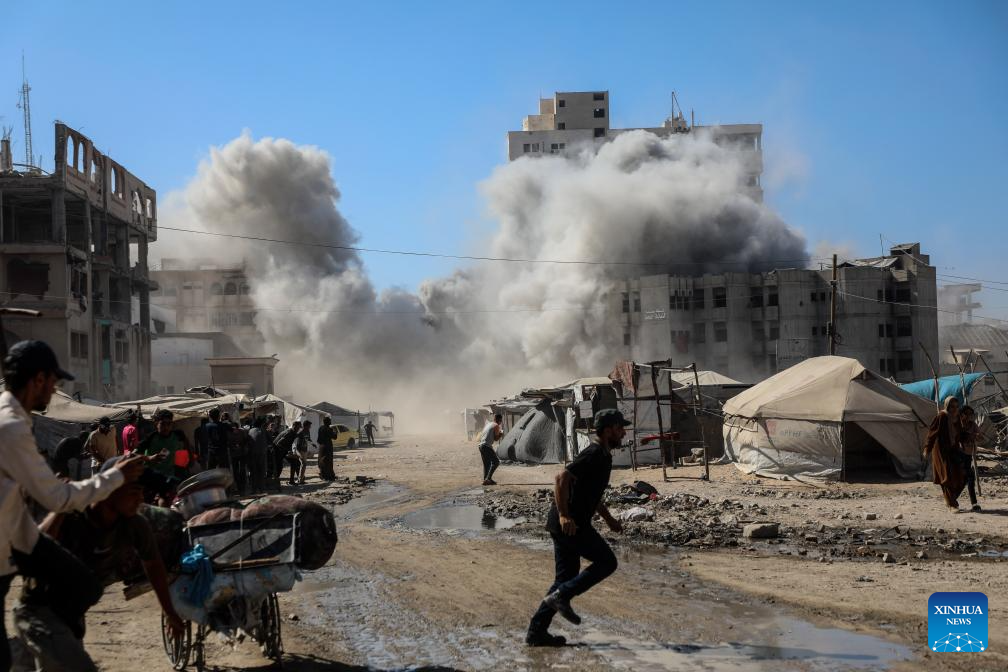
Earlier this month, a US-brokered ceasefire brought temporary relief, under which Hamas returned all 20 living hostages to Israel. However, the fragile truce has come under renewed strain following fresh violence this week. Israeli forces launched air strikes in Gaza after an Israeli soldier was killed in what authorities described as a Hamas attack. Hamas has denied involvement, saying it had “no connection” to the incident in Rafah. Gaza’s health ministry reported that at least 104 Palestinians were killed in the subsequent Israeli strikes.

While the political situation remains volatile, the UK’s decision to extend evacuation and visa rights to dependants of Gazan scholars is being seen as a compassionate gesture towards families who have endured years of conflict and uncertainty. For many, it represents not only the chance to pursue education but to reunite and rebuild lives disrupted by war.

As one government official described, the change aims to balance compassion with immigration controls, ensuring that those eligible under the rules can access support. For students like Manar al-Houbi and others waiting anxiously in Gaza, it could mean the difference between an abandoned academic future and a new beginning. 

Previous Story

UK charters flights for Britons in Jamaica 

Next Story

UK and Vietnam reach deal on curbing illegal migration

Previous Story

UK charters flights for Britons in Jamaica 

Next Story

UK and Vietnam reach deal on curbing illegal migration

Latest from -Top News

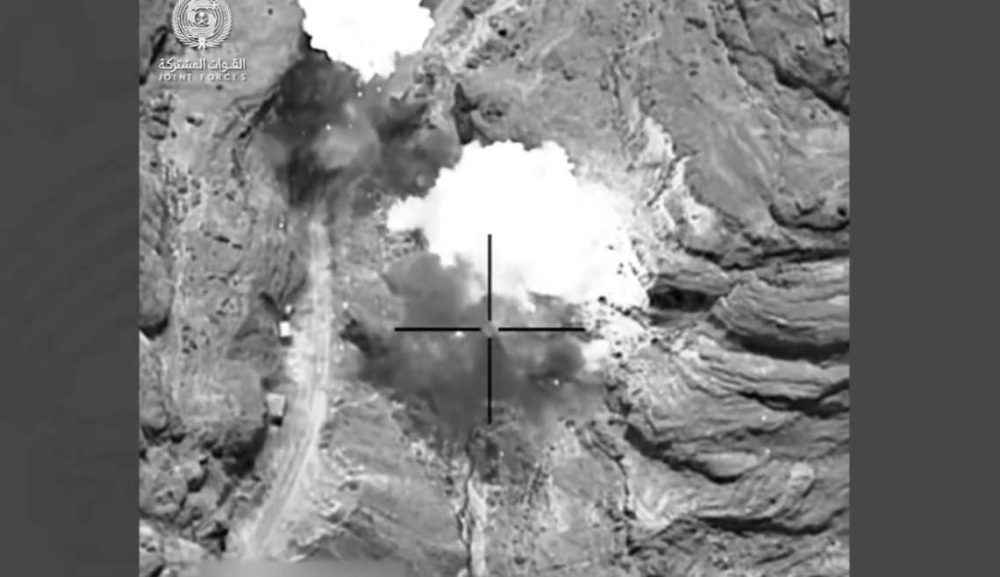
Pakistan Risks Overstretching Itself in Yemen War

Pakistan’s expanding military role in Saudi Arabia amid the Yemen conflict could strain its defence resources and fragile finances…reports Asian Lite News Desk Pakistan’s military involvement in the war in Yemen may prove unsustainable because of mounting financial pressures and competing security demands, according to a new report. Islamabad’s growing military presence in Saudi Arabia risks stretching its defence resources while exposing the country to greater strategic and economic challenges. An article by Andrew Wilson in One World Outlook describes Pakistan’s involvement as a case of “fiscal and strategic overreach”, arguing that the country lacks the financial flexibility to sustain an expanded military commitment. Pakistan’s external finances depend heavily on an International Monetary Fund (IMF) programme, financial support from Gulf countries and remittances from Pakistani workers in the region. The report argues that deeper military involvement in the conflict could place additional pressure on these sources of financial stability. It also warns that deploying troops and military equipment abroad could weaken Pakistan’s capacity to address security challenges along its eastern border and deal with two domestic insurgencies. The move could also draw Islamabad into a conflict it has sought to approach cautiously. A Reuters report in May, citing Pakistani security and government sources, said Islamabad had deployed around 8,000 troops, a squadron of approximately 16 aircraft, mostly JF-17 fighter jets, two drone squadrons and a Chinese HQ-9 air-defence battery to Saudi Arabia. According to those sources, Riyadh was financing the deployment, with Pakistani personnel operating the equipment. The sources also said a confidential agreement contemplated the possibility of deploying up to 80,000 troops. Islamabad has not confirmed those figures, although it has acknowledged its military presence in Saudi Arabia, including the deployment of fighter jets at King Abdulaziz Air Base from April. The One World Outlook article argues that Saudi financial support can cover allowances and operating expenses but cannot easily replace military equipment needed elsewhere or resolve the political and strategic challenges of participating in the Yemen conflict. Pakistan’s defence budget is another concern. For the 2026-27 financial year, the federal government allocated PKR 3 trillion, or approximately $10.8 billion, to defence services. The allocation represents an 18 per cent increase from the original PKR 2.55 trillion provision and amounts to around 2.1 per cent of projected gross domestic product (GDP). Defence spending accounts for approximately 16 per cent of the federal government’s PKR 18.8 trillion expenditure. Military pensions are budgeted separately at PKR 822 billion, while debt servicing costs stand at approximately PKR 8 trillion, more than two-and-a-half times the defence allocation. The report argues that these competing financial obligations leave little room for additional military expenditure without placing further pressure on public finances. Pakistan’s reliance on IMF assistance also limits its fiscal flexibility. The country must meet the conditions attached to the programme, including a primary budget surplus target of 2 per cent of GDP and continued restraint on development spending. According to the article, these requirements make it difficult for Islamabad to finance an additional military commitment without compromising other budgetary priorities. Pakistan’s economic indicators offer limited reassurance. Economic growth for the 2025-26 financial year is estimated at between 3.6 and 3.7 per cent, while inflation reached approximately 10.3 per cent in September following an energy price shock. Foreign exchange reserves stood at around $21.5 billion at the end of September. Although this marks an improvement from the low levels recorded in 2023, the report notes that the reserves cover only a few months of imports. Financial assistance from Gulf partners remains central to Pakistan’s external stability. The article says Islamabad holds approximately $8 billion in Saudi deposits at its central bank. In July, the State Bank of Pakistan said Riyadh had extended the maturity of $5 billion in deposits to December 2028, easing the country’s immediate external financing requirements. A further $3 billion deposit was also extended in the spring. However, the article argues that these arrangements provide temporary relief rather than long-term financial independence, particularly as regional conflict threatens the stability of the Gulf economies on which Pakistan relies. The report concludes that Pakistan faces a difficult balance between supporting Saudi Arabia militarily and preserving the financial and military resources needed to address its domestic and regional challenges.
Go toTop

Don't Miss

India slaps reciprocal curbs on all UK arrivals

The new regulations will come into effect likely from October

Britain’s business activity slides in September

A trading update from Tesco, Britain’s biggest retailer, added to