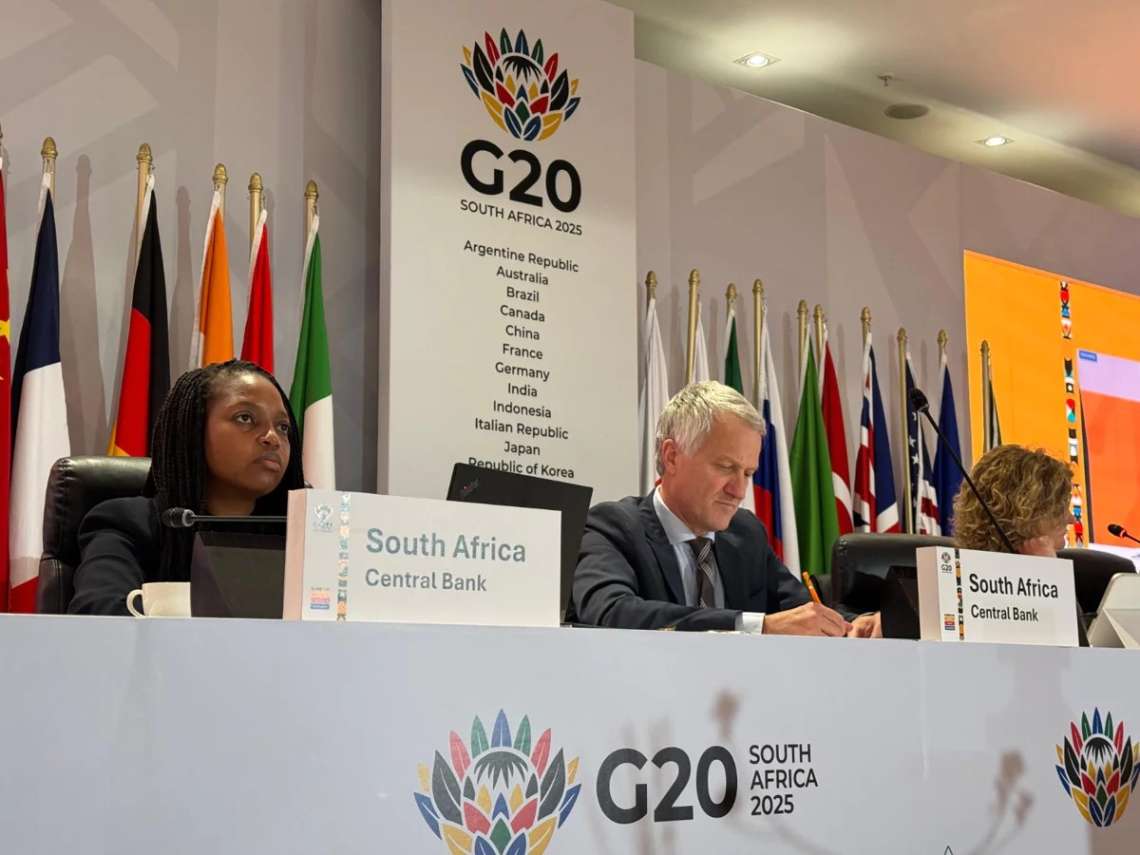
Britain partners with Canada, Google and African institutions to drive safe, inclusive and locally grounded artificial intelligence…reports Asian Lite News
The government has unveiled a series of new projects to support responsible and inclusive artificial intelligence (AI) innovation across Africa, responding to the G20’s flagship “AI for Africa Initiative” launched in Cape Town. The initiatives, announced this week, aim to ensure AI delivers tangible development outcomes, strengthens democratic resilience and is deployed safely and equitably, while amplifying African voices in global AI governance.
At the centre of the announcement is the launch of the AI Evidence Alliance for Social Impact (AEASI), a new £2.75 million initiative backed by the UK Foreign, Commonwealth & Development Office (FCDO), Canada’s International Development Research Centre (IDRC) and the philanthropic science funder Community Jameel. The programme is part of a wider $7.5 million collaboration with Google.org designed to fund rigorous evaluations of AI tools deployed in low- and middle-income countries.
The FCDO has pledged £1 million towards AEASI, which will be delivered by leading evaluation experts including the Abdul Latif Jameel Poverty Action Lab (J-PAL) and IDInsight. Together, the partners will support experimental evaluations to determine which AI interventions deliver genuine social and economic impact across Africa and Asia. The alliance will also build local research capacity, strengthen leadership within African institutions, and provide actionable evidence to policymakers, practitioners and funders.
Importantly, AEASI is designed to convene key stakeholders across governments, academia and civil society to exchange insights and shape the future research agenda. The UK Government has emphasised that these steps will help ensure AI investments are not only evidence-based, but also inclusive and closely aligned with African development priorities.
Complementing this initiative is the creation of a pioneering African Hub for AI Safety, Security and Peace at the University of Cape Town. Supported through the joint UK–Canada AI for Development (AI4D) programme, the hub will become the twelfth multidisciplinary global AI laboratory and the second based in South Africa. Its focus will be on mitigating safety and security risks associated with AI, embedding African perspectives within global debates on AI governance, and ensuring communities across the continent have the tools to manage AI responsibly.
The hub will train African researchers, policymakers and local communities to detect and respond to AI-related harms. It will also develop governance frameworks and technical tools tailored to African contexts, while promoting co-design processes to reflect local priorities. A particular emphasis will be placed on enabling African actors to play a direct role in global AI rule-making forums, marking a significant step in reshaping how AI governance is framed internationally.
The timing of the launch aligns with South Africa’s presidency of the G20 and its stated ambition to lead on the AI for Africa initiative. British officials say it demonstrates the UK’s commitment to supporting African leadership in technology policy and governance.
Speaking at the announcement, AI Minister Kanishka Narayan said: AI has the power to fuel growth, build trust and transform lives – and every country should share in that. That’s why we’re backing African-led innovation that puts people first, tackles real-world challenges, and builds global resilience. By working with countries like South Africa, we’re making AI safer, fairer and more inclusive – and helping communities shape the future on their terms.
Other partners also stressed the importance of grounding AI innovation in rigorous research and local priorities. Maggie Gorman Velez, Vice-President for Strategy, Regions and Policies at the IDRC, said: Artificial intelligence holds extraordinary potential, but only if the tools, knowledge and power to shape it are accessible to all. That includes contextually grounded research and evidence on what works and what does not. That is why IDRC is proud to be supporting this new evaluation work as part of our ongoing commitment to the responsible scaling of proven safe, inclusive, and locally relevant AI innovations.
George Richards, Director of Community Jameel, added: AI has the potential to help tackle some of the world’s most pressing challenges, but we need evidence of which AI solutions work effectively, safely and fairly in order to maximise its impact. We are excited to be launching this new alliance to help generate the rigorous evidence we need and scale effective AI solutions to benefit communities around the world.
Echoing the call for robust evaluation, Alex Diaz, Head of AI for Social Good at Google.org, warned: AI has great potential to benefit all people but we urgently need to study what works, what doesn’t, and why if we are to realise this potential.
The African Hub for AI Safety, Security and Peace will publish open-access research, develop AI risk detection tools in multiple African languages, and train both students and policymakers. Meanwhile, the AI4D Evaluation Partnership will generate vital evidence to reduce bias, exclusion and systemic harms, supporting the responsible growth of AI in Africa and beyond.
With these initiatives, the UK and its partners hope to ensure that AI becomes not a force for division or exploitation, but a driver of shared prosperity and resilience – with African leadership firmly at the heart of the global AI future.