Regulator’s approval clears path for Virgin to challenge Eurostar’s 30-year Channel Tunnel monopoly…reports Asian Lite News
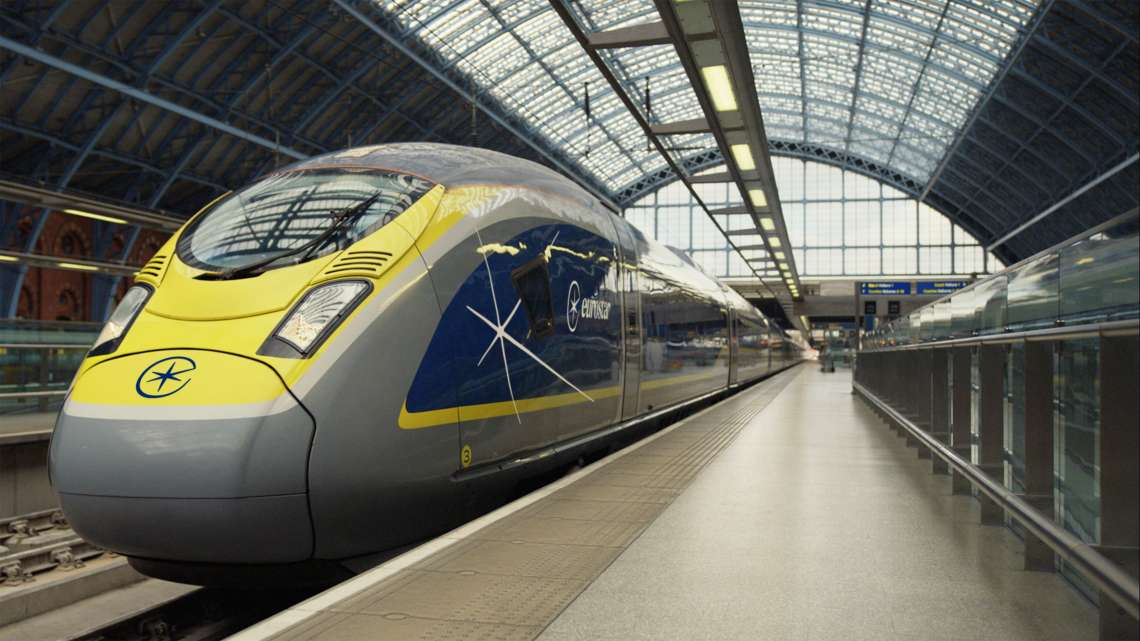
Virgin Trains has taken a major step towards launching cross-Channel rail services after the UK’s rail regulator approved its application to share a depot with Eurostar, paving the way for the end of Eurostar’s three-decade monopoly through the Channel Tunnel.
The Office of Rail and Road (ORR) announced its decision on Thursday, granting Virgin access to the Temple Mills depot in east London — the only facility in the UK capable of accommodating the larger European gauge trains used for cross-border travel. The move means that, for the first time since the tunnel’s opening in 1994, passengers could soon have a choice of operator on direct rail routes to mainland Europe.
Virgin Trains plans to start operating services by 2030, running from London St Pancras International to Paris, Brussels and Amsterdam, with ambitions to later expand to destinations in France, Germany and Switzerland.
Eurostar, which has held exclusive rights to passenger services through the tunnel for over 30 years, said it was reviewing the regulator’s decision and “considering our next steps to ensure we can continue to grow”.
“Our priority is to deliver for passengers the benefits of the investments in a new fleet, jobs, and depot facilities that we recently announced,” a Eurostar spokesperson said.
The decision follows years of debate over whether the Temple Mills facility could accommodate more than one operator. The ORR had previously concluded that the depot had sufficient capacity to either support an expanded Eurostar fleet or house a new entrant — but not both. Thursday’s ruling effectively ends that uncertainty and signals regulatory willingness to open up competition on international routes.
However, several significant steps remain before Virgin can launch services. The company must finalise a commercial agreement with Eurostar to share the depot, secure financing, obtain access rights to tracks and stations, and gain safety certifications from both UK and EU authorities.
Despite these hurdles, the ORR said the move “unlocks plans for around £700 million of investment” and has the potential to create 400 new jobs. The regulator hailed the development as “a win for passengers, customer choice, and economic growth”.
Richard Branson, founder of the Virgin Group, welcomed the decision, saying: “The ORR’s decision is the right one for consumers – it’s time to end this 30-year monopoly and bring some Virgin magic to the cross-Channel route.”
The government also backed the announcement. Rail Minister Lord Hendy called it “a significant step forward”, adding that “allowing Virgin Trains to share this vital facility will give passengers greater choice, better value and improve connectivity for millions, as well as drive innovation, lower fares and promote greener connections with Europe”.
Martin Jones, deputy director of Access and International at the ORR, acknowledged that there was “still some way to go before the first new services can run” but confirmed the regulator would continue to work with Virgin as its plans develop.
The decision follows a competitive process involving several would-be operators. The ORR confirmed that it had received applications from four groups: Virgin, Spanish start-up Evolyn, a partnership between Gemini Trains and Uber, and Italy’s Trenitalia. Only Virgin’s proposal met the regulatory and operational criteria for approval.
Virgin’s plans, if realised, would mark a dramatic return to Britain’s rail network. The company last operated passenger trains in 2019, when its 22-year tenure on the West Coast Main Line came to an end after it lost the franchise to Avanti West Coast. Its cross-Channel venture represents not only a comeback for the brand but also a test of whether competition can succeed in a market long dominated by a single operator.
Industry analysts say the ORR’s decision could signal a new era for rail travel between Britain and Europe. The Channel Tunnel has been a closed market for passenger services since its inception, largely due to the high costs of infrastructure, complex security requirements, and limited depot space. The Temple Mills ruling removes one of the biggest logistical barriers to entry.
Virgin’s planned investment of roughly £700 million includes the purchase of a new international train fleet and the development of operational support in London and on the Continent. The company expects the project to generate hundreds of skilled jobs in maintenance, engineering and customer service.
The approval also comes amid renewed efforts by both the UK and EU to promote sustainable transport options. With aviation facing growing scrutiny over emissions, the expansion of high-speed rail links is being positioned as a greener alternative for cross-border travel.
The prospect of a competitive cross-Channel market has already attracted interest from other rail operators. Evolyn, backed by Spanish investors, had announced its ambition to start services between London and Paris using high-speed trains built by Alstom, while Trenitalia had previously explored similar opportunities. However, the ORR said that only Virgin’s submission met the technical and operational readiness required for depot access.
While Eurostar continues to dominate the market, the introduction of Virgin could bring substantial change. Competition is expected to drive innovation in pricing, onboard experience and service frequency. For passengers, it could mean more affordable fares and increased capacity during peak travel periods.
For now, though, much depends on Virgin’s ability to meet the operational and financial challenges ahead. The ORR’s decision is only the first step in a complex process that will involve negotiations with multiple stakeholders, including Eurotunnel, Network Rail, and continental infrastructure managers.
Still, the significance of the moment was not lost on those in the industry. After three decades of exclusivity, Eurostar’s grip on the Channel Tunnel appears set to loosen. As Branson put it, “it’s time to end this 30-year monopoly” — and, if Virgin’s plans proceed as scheduled, European rail travel from Britain could be on the cusp of its most transformative change since 1994.