Weak governments, corruption, and powerful foreign companies have turned what should be a blessing (natural wealth) into a curse that keeps countries, particularly those in Africa, Latin America, and parts of Asia poor and unstable, write Ishan Jasuja and Nurein Akindele
Why do some countries stay poor despite having valuable minerals? What the rush for batteries and electric cars means for the developing world? We seek to answer these critical questions in this article while underscoring the role of governance in translating resource-endowment to wealth generation.
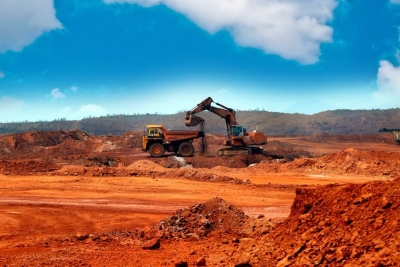
For years, many developing countries have been stuck in the same trap: dig up valuable minerals, sell them cheaply to richer countries, become dependent on that income, and never really translate into prosperity for citizens. Weak governments, corruption, and powerful foreign companies have turned what should be a blessing (natural wealth) into a curse that keeps countries, particularly those in Africa, Latin America, and parts of Asia poor and unstable.
Now it’s happening all over again, but with a twist.
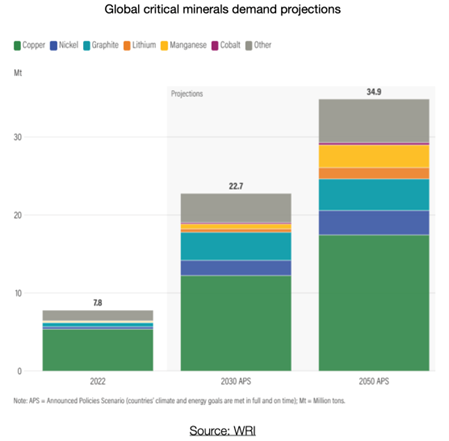
Since 2010, the world’s gradual shift to clean energy has created massive demand for minerals like lithium (for phone and car batteries), cobalt, and others needed for solar panels and electric vehicles. Hence, Lithium demand tripled in just five years between 2017 and 2022, and continues to grow rapidly today. For countries that have these minerals, this could be a huge opportunity or just another version of the same old problem.
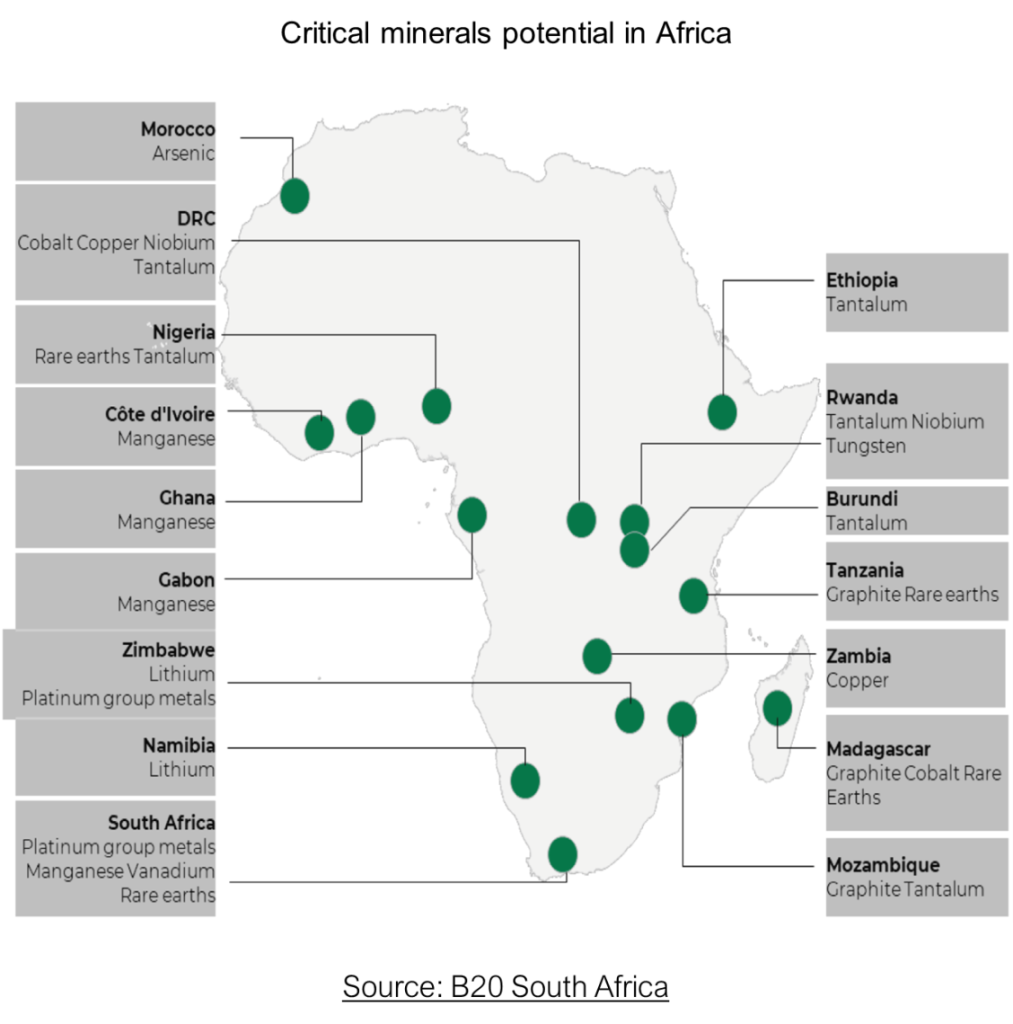
Here’s the risk: Without changes, this “green” mining boom could simply repeat the old pattern under a new label. Powerful countries and big companies are already racing to lock down supplies. China has traded infrastructure projects for control of copper and cobalt in the Democratic Republic of Congo (DRC). The United States and its allies have invested more than US$ 6 billion in transportation routes to access minerals in Zambia and DRC, termed the Lobito Corridor. Meanwhile, private companies are securing supplies through opaque deals that often ignore local communities and workers’ rights.
This brings in investment, but history shows that without intervention, it usually leads to corruption, unequal wealth distribution, growing inequality, and economic collapse when commodity prices eventually fall.
However, this outcome need not be inevitable. Research shows countries can break the curse, at least partially, when they have strong governments, accountability, and long-term plans. For instance, Botswana and Namibia have avoided some of the worst problems by protecting their financial institutions from political interference.
Some Latin American countries are trying new approaches too. Chile is taking more control over its lithium industry, mandating better tracking and more government oversight. Brazil is redesigning its policies to attract companies that process minerals and make batteries locally, rather than just shipping raw materials abroad. These policies make things harder for foreign investors, but they also create clarity and predictability.
Still, there’s a long way to go. Between 2020 and 2024, mineral refining became even more concentrated with about 86% controlled by just three countries for each key mineral, and nearly 90 percent of new refining capacity coming from one country (usually China).
What mineral-rich countries can do: Countries can change their future by first and foremost shifting their mindset from “grateful recipients of investment” to “gatekeepers of transition-critical resources”. Many mineral-rich countries give the impression that they need to be “allowed” the dignity to shape their own future when in fact, they need to take agency for it by changing their behavior towards how they show up to negotiations and with whom they show up. Thus, building institutional self-respect as a function of global perceptions and media narratives is important. It will take some time to materialize but no better time to start than now.
Secondly, governments can break from the familiar patterns of the past if they intervene mid-stream, mandating local content and co-owning processing facilities, thereby ensuring value addition before exports. In addition, the consideration of short contracting horizons for minerals and the sequencing of extraction (instead of the usual long-term contracting) does not reduce investment attractiveness; rather, they recalibrate it around continuous legitimacy. It gives mineral-rich countries the leeway to review mining contracts based on standards, national values, and alignment of development interest instead of the operator merely avoiding penalties.
Why this matters now: The race for critical minerals isn’t driven by ethics. It’s about energy security and economic survival. Powerful countries and corporations will do what serves their interests. For developing countries, the lesson is simple: do not reply in the vocabulary of dependency-era moral outrage; speaking in capitalism is a strategic necessity.
Effective strategies include pricing-in environmental damage, requiring local hiring and processing, demanding ownership stakes, and insisting on technology sharing. Strong environmental and social standards shouldn’t be seen as obstacles; they’re leverage that makes access to resources more expensive and valuable. However, there is no blueprint for executing responses to the resource curse. Mitigation strategies must be contextualized to individual markets, aligning with their development priorities and trajectories.
There’s also a new factor at play: everyday citizens are getting involved. Digital activism, investigative journalism, and youth movements are demanding accountability. By 2024, 41 out of 55 countries in a transparency initiative were publicly sharing mining contracts, up from 35 just three years earlier. Corporations mirror this sentiment, with 73% of EITI supporting companies publicly endorsing contract transparency. This emerging counter-public raises the political cost of repeating the old extractive model and weakens the secrecy that sustained the resource curse for decades.
The bottom line: None of this guarantees success. Breaking the resource curse takes more than having minerals; it requires strategic leadership, smart institutions, and the courage to do things differently. For the first time in decades, developing countries have both the bargaining power and the knowledge to demand better deals. Whether they do it will determine who benefits from the clean energy transition and whether resource-rich countries finally turn their natural wealth into lasting prosperity.