Cricket legend says India’s record Test win should mark the end of transition excuses and the start of higher expectations….reports Asian Lite News Desk
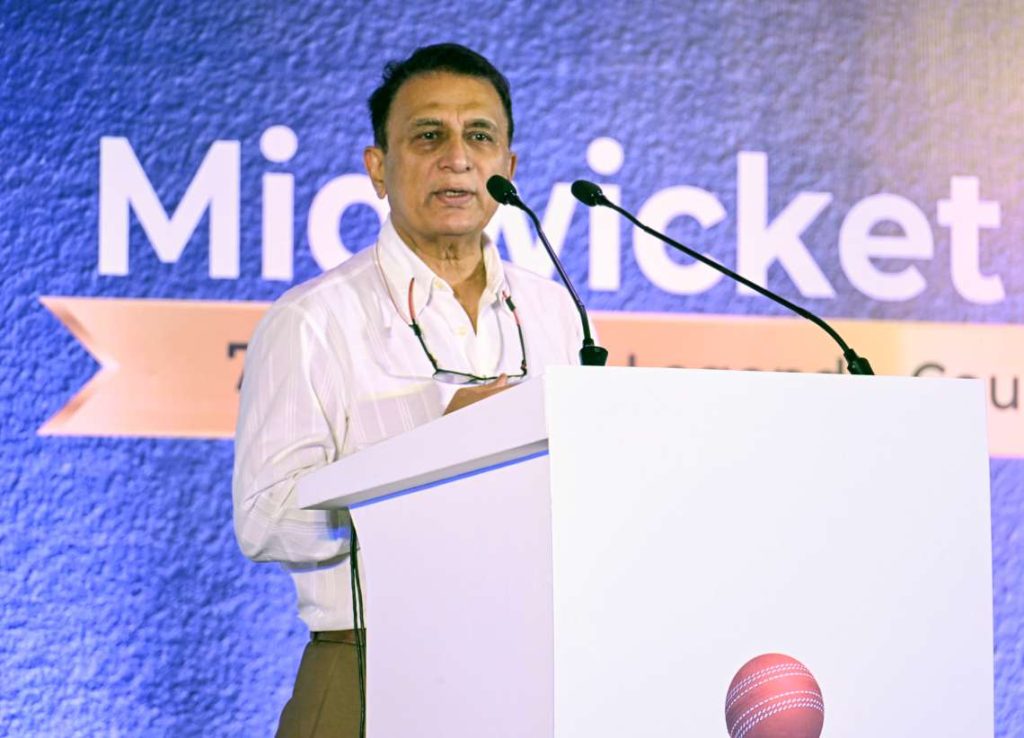
Cricket legend Sunil Gavaskar has called on Indian cricket to move beyond describing the national Test side as a team in transition, arguing that performances should now be judged against the high standards expected of one of the world’s leading cricket nations.
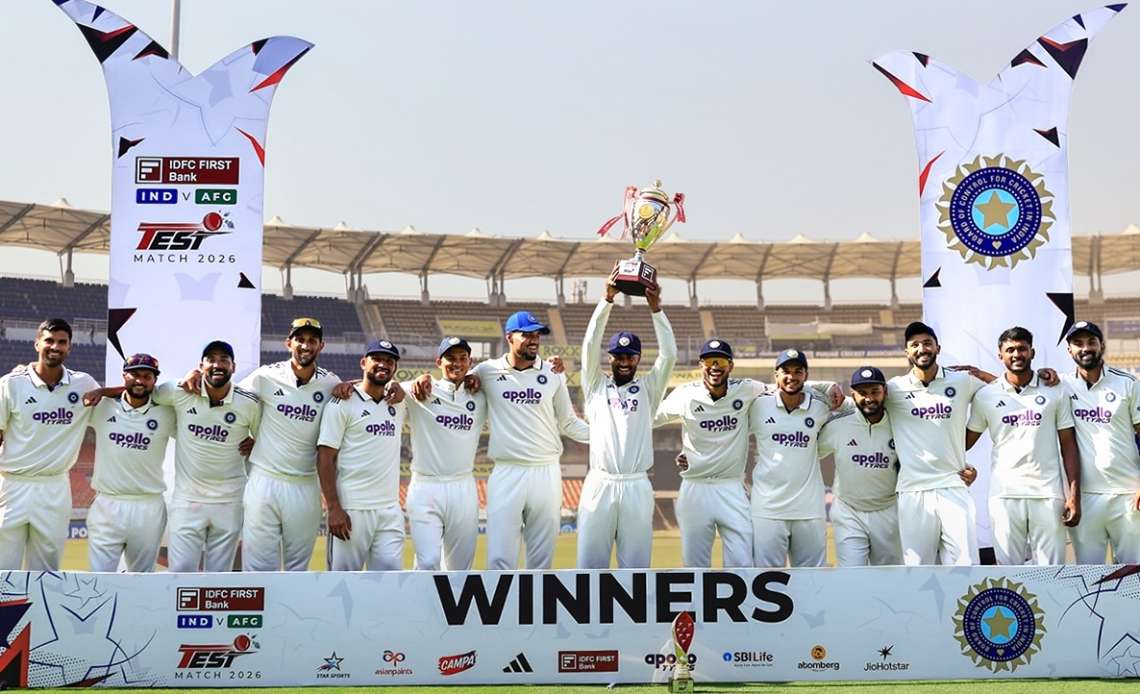
His remarks came after India registered a record breaking innings and 300 run victory over Afghanistan in the one off Test at New Chandigarh, a result that underlined the depth of talent available to captain Shubman Gill and his management team.
The comprehensive triumph was India’s biggest innings victory in Test cricket and featured standout performances from both established stars and emerging players. Debutant left arm spinner Manav Suthar announced himself on the international stage with a seven wicket match haul, while India’s bowling attack dominated Afghanistan across both innings.
Reflecting on the victory, Gavaskar said the conversation around the Indian Test side needs to evolve.
“I think we should stop describing this team as being in transition and instead pay attention to the standards expected in Test cricket. Every team faces retirements and changes in personnel, but the focus must stay on performance,” Gavaskar said.
India have undergone significant changes in recent years, particularly in their spin department following the retirements of veteran match winners Ravichandran Ashwin and Ravindra Jadeja. However, Gavaskar believes the team’s challenges lie elsewhere.
According to the former India captain, the bowling unit has largely delivered, while batting remains the area that requires the greatest improvement.
“Recent Test results reveal that our bigger concern has been batting rather than bowling. The bowlers have generally done their job, but the batters need to show more discipline and stronger technique, especially in tough situations,” he said.
Gavaskar also warned against allowing the influence of T20 cricket to affect performances in the longest format.
“Sometimes, there’s a tendency to adopt a T20 mindset, where patience fades after a few dot balls, leading to poor decisions. Test cricket requires a different approach. Moving forward, India must focus on tightening their batting processes, building longer innings, and staying present rather than viewing every result through the lens of transition,” he added.
India all rounder Washington Sundar echoed the emphasis on continuous improvement despite the dominant victory. With challenging overseas assignments approaching, including a tour of Sri Lanka, Sundar said the team remained focused on maintaining high standards across formats.
“We know the challenges ahead, especially with the demanding tour of Sri Lanka coming up, along with other important matches. As a team, we recognise what it will take to succeed in those conditions and perform consistently across formats,” Sundar said.
“Our focus is on keeping India a strong and competitive side, whether in Tests, ODIs, or T20Is. We put in a lot of preparation, planning, and individual improvement, and as a team, we are dedicated to the effort required to succeed.”
With Ashwin and Jadeja no longer part of the Test setup, Sundar is expected to shoulder greater responsibility alongside fellow spinner Kuldeep Yadav. The all rounder said their long standing partnership gives them a clear understanding of each other’s strengths.
“Kuldeep and I have played a lot of cricket together, so we understand each other’s strengths and roles within the team. We support one another and aim to complement each other, especially during crucial moments when managing partnerships and pressure is important,” he said.
While India celebrated a commanding win, former England spinner Graeme Swann urged observers not to be too critical of Afghanistan’s performance.
Swann argued that Afghanistan’s struggles reflected their limited experience in Test cricket rather than any lack of talent.
“Afghanistan’s performance highlighted challenges stemming from limited exposure to Test cricket, not a lack of talent,” Swann said.
He pointed to lessons the visitors must learn in areas such as decision making, use of the Decision Review System and adapting their batting approach to different match situations.
“In the first innings, they were too defensive against India’s spin attack, while in the second innings, they may have counterattacked too aggressively. The ideal balance is somewhere in between,” he explained.
Despite the heavy defeat, Swann said the experience of playing in India would prove invaluable for Afghanistan’s development as a Test nation.
One of the major positives for India was the emergence of Suthar, whose seven wickets played a decisive role in the victory. Gavaskar praised the youngster’s temperament and accuracy but urged caution before placing excessive expectations on the debutant.
“Manav Suthar has had an incredible start to his Test career, and his seven wicket haul is certainly impressive. What stood out was his accuracy and temperament during the match,” Gavaskar said.
However, he warned that success in Test cricket is measured over time.
“We should avoid jumping to conclusions after just one performance. The next challenge will be to perform well on surfaces that provide less assistance, where he’ll need to develop more variations to create opportunities.”
Gavaskar also highlighted Suthar’s positive batting approach, noting that the young spinner appeared focused on contributing to the team’s needs rather than personal milestones.
“It was an encouraging debut, but it should be seen as the start of a journey, not the final product,” he said.
With the Test concluded, attention now turns to the three match ODI series between India and Afghanistan, which begins on June 13, as both sides continue their preparations for a busy international season ahead.