Bangladesh has strongly criticised India for allowing former Prime Minister Sheikh Hasina to interact with the media in New Delhi, describing the event as an affront to its sovereignty….reports Asian Lite News Desk
Bangladesh on Wednesday strongly criticised India for allowing former Prime Minister Sheikh Hasina to interact with the media in New Delhi, describing the event as an affront to the country’s sovereignty and warning that it could adversely affect bilateral relations.
In a statement, Dhaka said it was “outraged” that Hasina, whom it described as an absconding convicted individual, had been allowed to address the media from Indian soil, where she criticised the Bangladeshi state and its people.
The Bangladesh government said it had conveyed its concerns to the Indian government in advance regarding the possible implications of the event for efforts to reset bilateral ties but regretted that the interaction was nevertheless permitted.
The statement noted that the media interaction took place on the second anniversary of Bangladesh’s July Revolution, calling it “an affront to the sovereignty of Bangladesh and a grievous insult to the martyrs of the July Revolution.”
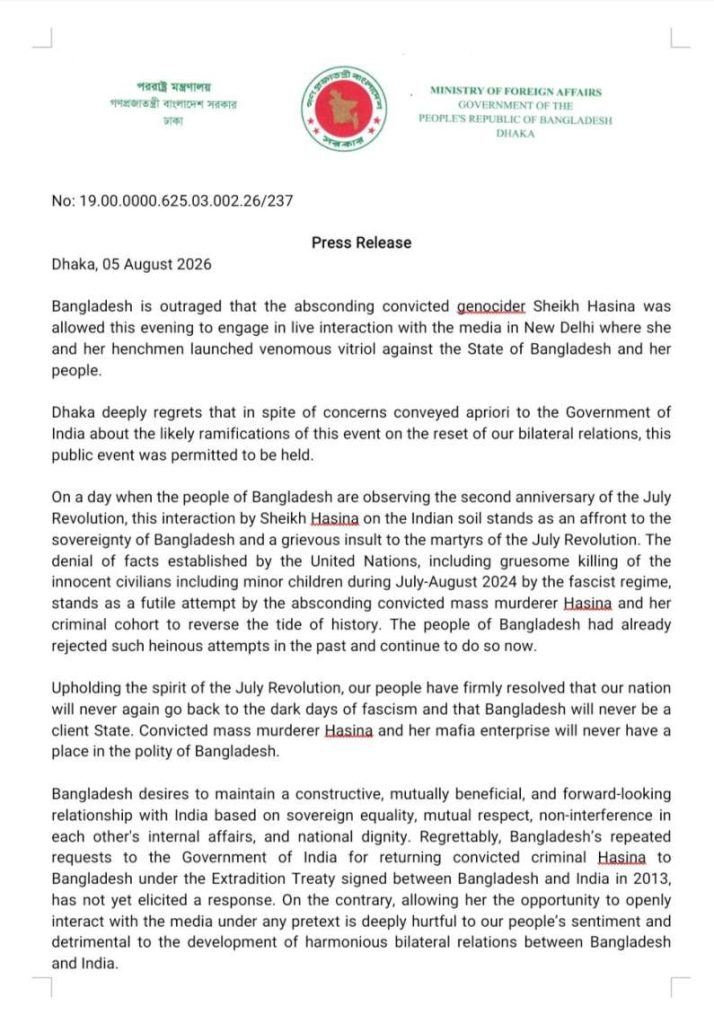
Dhaka also accused Hasina of denying findings established by the United Nations regarding the killings of civilians, including children, during the July-August 2024 unrest. It said such statements were an attempt to rewrite history and claimed the people of Bangladesh had rejected those narratives.
The Bangladesh government said the country remained committed to the ideals of the July Revolution and asserted that it would not return to what it described as the “dark days of fascism.”
It further stated that Bangladesh sought to maintain a constructive and forward-looking relationship with India based on sovereign equality, mutual respect, non-interference in each other’s internal affairs and national dignity.
However, Dhaka expressed disappointment that its repeated requests for Hasina’s extradition under the 2013 India-Bangladesh Extradition Treaty had not received a response.
According to the statement, permitting Hasina to publicly interact with the media was deeply hurtful to the sentiments of the Bangladeshi people and detrimental to the development of harmonious bilateral relations between the two neighbouring countries.