Supply falls to decade low as power shortages force factories to slash production…reports Asian Lite News Desk
Bangladesh is facing a deepening energy crisis as gas supply fell to its lowest August level in a decade, disrupting power generation and forcing industries across major manufacturing hubs to sharply cut production, local media reported.
Average daily gas supply dropped to 2,235 million cubic feet per day (mmcfd) in August, the lowest level recorded for the month in 10 years, according to an analysis of gas supply data from 2017 to 2026 published by leading daily The Daily Star.
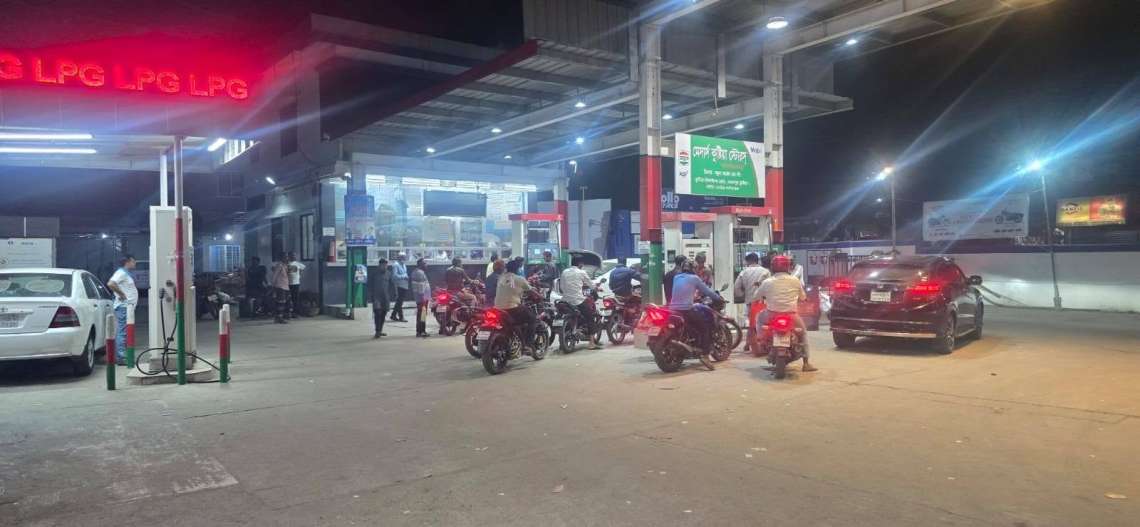
The worsening shortage has pushed Bangladesh’s energy and industrial sectors towards a near standstill, with frequent power outages and inadequate gas pressure affecting factories and electricity generation.
Reports indicate that the US-Israel war has disrupted Bangladesh’s liquefied natural gas supplies. Qatar, one of Dhaka’s key long-term LNG suppliers, is reportedly unable to provide contracted volumes, forcing Bangladesh to rely increasingly on the volatile and expensive spot market.

However, securing LNG through the spot market has become both difficult and costly, further widening the country’s gas deficit and placing additional pressure on the power sector.
At the peak of the crisis this month, Bangladesh’s average hourly power generation shortfall reached around 3,000 megawatts, while dozens of gas-fired power plants struggled to operate because of fuel shortages.
On Sunday afternoon, the Bangladesh Power Development Board generated only 12,688 MW of electricity against demand of 16,278 MW. Gas-based power generation stood at around 5,000 MW despite an installed capacity of at least 12,000 MW.
The impact has been particularly severe on the country’s export-oriented industries, where factories are being forced to reduce operations or halt production altogether.
Fazlee Shamim Ehsan, executive president of the Bangladesh Knitwear Manufacturers and Exporters Association, said production levels were fluctuating dramatically due to the unreliable gas supply.
“It is difficult to describe the situation simply in terms of factory closures because production is fluctuating sharply from day to day,” he said, warning that some factories were operating at only a fraction of their capacity.
He cautioned that without urgent government intervention, many industrial units could eventually face closure.
Md Shehab Udduza Chowdhury, vice-president of the Bangladesh Garment Manufacturers and Exporters Association, said production at gas-starved factories had fallen by as much as 50 per cent.
Such a steep decline could significantly increase production costs and push manufacturers towards losses, raising fresh concerns for Bangladesh’s vital garment sector as the country’s energy crisis continues to intensify.