Business leaders from India and Canada push for faster trade pact, deeper investments and technology cooperation, signalling a fresh start in bilateral economic ties.
A renewed sense of optimism marked economic discussions between India and Canada this week as industry leaders from both countries called for faster progress on a long-pending trade pact and deeper investment partnerships across emerging sectors. The message from business executives was clear: the relationship is entering a new phase, with trade, technology and strategic cooperation at its core.
The India–Canada CEO Forum, held in New Delhi, brought together senior industry figures and policymakers, including Narendra Modi and Mark Carney, signalling renewed political and economic engagement between the two nations. Participants said the meeting reflected a shared commitment to revitalise bilateral ties and push forward negotiations on a comprehensive economic partnership agreement.
Business leaders attending the forum described the moment as a turning point for India-Canada relations. The discussions focused heavily on strengthening trade links, accelerating bilateral investments and creating structured industry partnerships in sectors such as artificial intelligence, quantum technology, agriculture, clean energy and defence.
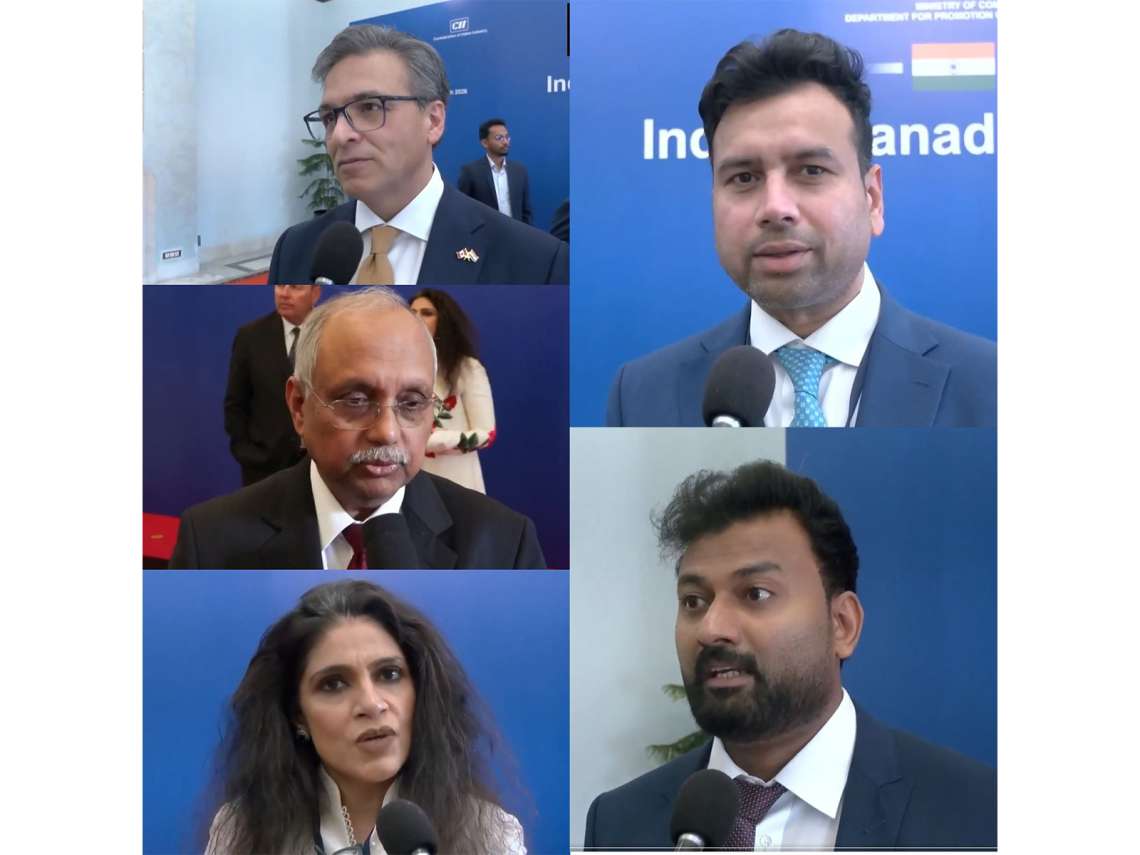
Dheeraj Jain, Founder and Chairman of Redcliffe Labs, said the conversations revealed strong alignment in outlook and priorities between the two countries. He noted that both sides shared similar values and ambitions for growth across emerging industries, adding that the atmosphere at the forum reflected a sense of optimism about the direction of the relationship.
Technology cooperation emerged as a key theme during the discussions. Joby John, Founder and CEO of Techversant Infotech, pointed to the improvement in relations over recent months and said the business community expected stronger collaboration ahead.
According to John, the positive momentum between the governments had already begun to translate into opportunities for companies. He said India and Canada had the potential to become strong partners in information technology, artificial intelligence and quantum technologies, sectors where both countries possess significant expertise.
Industry bodies also highlighted the need to expand investment flows and create stronger institutional links between the two economies. Chandrajit Banerjee, Director General of the Confederation of Indian Industry, said the forum discussions covered a wide range of strategic opportunities.
Banerjee said participants explored ways to increase bilateral investment, particularly as India continues to attract global capital across multiple sectors. He also emphasised the importance of building closer connections between Indian states and Canadian provinces to deepen economic cooperation at the regional level.
Another major point of discussion was the early conclusion of the long-awaited Comprehensive Economic Partnership Agreement (CEPA). Business leaders said the trade pact would create a clearer policy framework for companies on both sides and significantly expand commercial engagement.
Girish Tanti, Co-Founder and Vice Chairman of Suzlon Energy, described the forum as the beginning of a “new journey” for bilateral ties. He said the meeting had effectively reignited the economic relationship between the two countries and laid the groundwork for future collaboration.
Tanti added that a follow-up CEO forum is expected to take place in Canada in the coming months, reflecting a shared commitment to maintain momentum and advance trade negotiations.
Executives also emphasised the importance of translating high-level discussions into concrete outcomes. Veejay Ram Nakra, President of the Farm Equipment Business at Mahindra & Mahindra, said participants had an opportunity to brief both prime ministers on the discussions and proposed next steps.
Nakra said industry leaders plan to establish smaller working groups to develop specific collaboration initiatives, which could help accelerate the signing of a trade agreement and encourage joint investments across sectors.
Global economic uncertainty was another factor shaping the discussions. Richa Hukumchand, Founder and CEO of Pramatra Space, said stronger partnerships between countries such as India and Canada were becoming increasingly important in a volatile global trade environment.
She argued that building resilient partnerships would support innovation, strengthen economic stability and create long-term opportunities for both countries.
Sector-specific opportunities were also highlighted throughout the forum. Indra Kumar, Chairman and Managing Director of Avanti Feeds, said cooperation between Canadian technological expertise and India’s manufacturing capacity could be particularly valuable for food processing and food safety.
Goldy Hyder, CEO and President of the Business Council of Canada, underlined the crucial role of private enterprise in driving the relationship forward. He said governments can build the policy infrastructure needed to support trade, but it is businesses that ultimately convert those frameworks into real economic partnerships.
Hyder added that Canadian companies were enthusiastic about opportunities in India, while Canada remained open to increased Indian investment.
Clean energy collaboration also emerged as a priority area. Preeti Bajaj, CEO and Managing Director of Luminous Power Technologies, said discussions included battery energy storage systems, supply chains and technological innovation in the clean energy sector.
She said the overall theme of the forum could be summarised through three ideas — partnership, platform and performance — emphasising the need for measurable outcomes from economic cooperation.
Several participants also pointed to ambitious trade targets. Sourabh Agarwal, Chairman and Managing Director of Farm Native Group, said both sides were working toward expanding bilateral trade to around 50 billion US dollars by 2030. He noted that sectors such as agriculture, nuclear energy, clean energy and artificial intelligence offered particularly strong opportunities for collaboration.
Summing up the mood of the gathering, Rajat Verma, CEO of the India-Canada CEO Forum, said the engagement signalled the beginning of what he described as “India-Canada 2.0”.
Verma said the two prime ministers had set a constructive tone for the relationship, but emphasised that the responsibility for turning policy frameworks into real partnerships ultimately rests with industry. If businesses from both countries actively pursue collaboration, he said, the renewed political momentum could translate into one of the most significant economic partnerships of the coming decade.