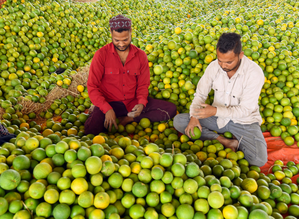
Erratic weather, shrinking snowfall and repeated hailstorms are expected to slash Himachal Pradesh’s apple harvest, putting thousands of orchardists and the state’s ₹5,000-crore economy under pressure, reports India Daily News Desk
Himachal Pradesh’s iconic apple industry is bracing for one of its weakest harvests in recent years, with officials and growers warning that increasingly erratic weather patterns could slash production by as much as 40 to 60 per cent this season, dealing a major blow to the state’s ₹5,000-crore horticulture economy.
The anticipated decline comes after months of adverse climatic conditions, including below-normal winter snowfall, untimely spring rainfall, hailstorms, sharp temperature fluctuations and extreme weather events that disrupted flowering, pollination and fruit development. Experts say these weather anomalies, increasingly linked to changing climate patterns in the Himalayan region, have severely affected orchards across several apple-growing districts, The News Indian Express reported.
According to estimates by the Himachal Pradesh Horticulture Department, apple production is expected to fall from 6.99 lakh metric tonnes in 2025 to around 4.36 lakh metric tonnes this year, representing a decline of approximately 2.63 lakh metric tonnes. In terms of marketable produce, the crop is projected to total around 2.15 crore apple boxes, significantly lower than last year’s output of 3.49 crore boxes.
Director of Horticulture Satish Kumar said apple cultivation currently spans nearly 1.16 lakh hectares, accounting for almost half of Himachal Pradesh’s total fruit-growing area of 2.37 lakh hectares. Apples remain the state’s most valuable horticultural crop and serve as the primary source of income for farming communities across eight districts, including Shimla, Kullu, Kinnaur, Chamba, Mandi and parts of Sirmaur. Around 2.5 lakh families depend directly or indirectly on apple cultivation, harvesting, transportation and marketing for their livelihoods.
Official figures also highlight how volatile apple production has become in recent years. Output stood at 3.49 crore boxes in 2025-26 after recovering from 2.51 crore boxes in 2024-25. Earlier harvests fluctuated between 2.11 crore and 3.36 crore boxes over the past five years, reflecting the increasing vulnerability of fruit production to changing weather conditions.
Growers, however, believe the official estimates may still be optimistic.
Harish Chauhan, President of the Fruit Vegetable Flower Growers Association, said orchardists expect production to decline by nearly 60 per cent rather than the government’s estimate of 40 per cent. According to the association, total output may reach only around 1.80 crore boxes this year compared with 3.49 crore boxes harvested last season. He said widespread weather-related damage has affected orchards across several apple belts, reducing fruit setting and overall yields.
Weather experts and horticulture researchers have long warned that apple cultivation in the western Himalayas depends on sufficient winter chilling hours, steady snowfall and moderate spring temperatures. A shortage of snow during winter reduces the chilling period needed for healthy flowering, while untimely rain, hailstorms and sudden temperature swings during the flowering season can affect pollination and fruit formation. Scientific studies have also found that warming temperatures are gradually shifting suitable apple-growing zones to higher elevations, forcing many farmers in lower-altitude areas to adopt new varieties or diversify into alternative fruit crops.
The impact is not limited to apples alone. Stone fruit crops, including apricots, peaches, plums and cherries, have also suffered weather-related losses. Although production of these fruits is expected to decline only marginally—from 24,622 metric tonnes last year to around 23,000 metric tonnes—the reduction further underscores the pressure being placed on Himachal Pradesh’s horticulture sector.
Despite the current setback, the state’s apple industry remains one of India’s largest and most important fruit-producing regions. The area under apple cultivation has expanded dramatically from just 400 hectares in the early 1950s to more than 1.16 lakh hectares today, transforming horticulture into the backbone of Himachal Pradesh’s rural economy. However, experts caution that unless growers receive stronger climate adaptation support—including improved irrigation, anti-hail protection, weather forecasting, high-density orchards and climate-resilient apple varieties—the sector could face increasing uncertainty in the years ahead.