India has launched plans for a seabed fibre-optic surveillance network to strengthen underwater monitoring across the Indian Ocean amid rising Chinese and Pakistani submarine activity, reports India daily News Desk
India has taken a significant step towards strengthening its maritime security by initiating plans for an advanced underwater surveillance network designed to detect and monitor submarine activity across strategically important waters in the Indian Ocean Region (IOR), media reported.
According to The New Indian Express report, the Defence Research and Development Organisation (DRDO) has begun the process of establishing an Underwater Fiber Optic Sensing System (UFOSS), a seabed-based surveillance grid that will provide continuous monitoring of underwater movements. The project is expected to become a key component of India’s anti-submarine warfare capabilities as the presence of Chinese and Pakistani submarines in the region continues to expand.
The initiative is being spearheaded by the Naval Physical and Oceanographic Laboratory (NPOL) in Kochi, DRDO’s specialised laboratory for underwater warfare technologies. NPOL has issued an Expression of Interest (EOI) inviting industry partners to serve as the lead system integrator responsible for designing, developing, transporting, deploying and commissioning the complete surveillance network, the TNIE reported.
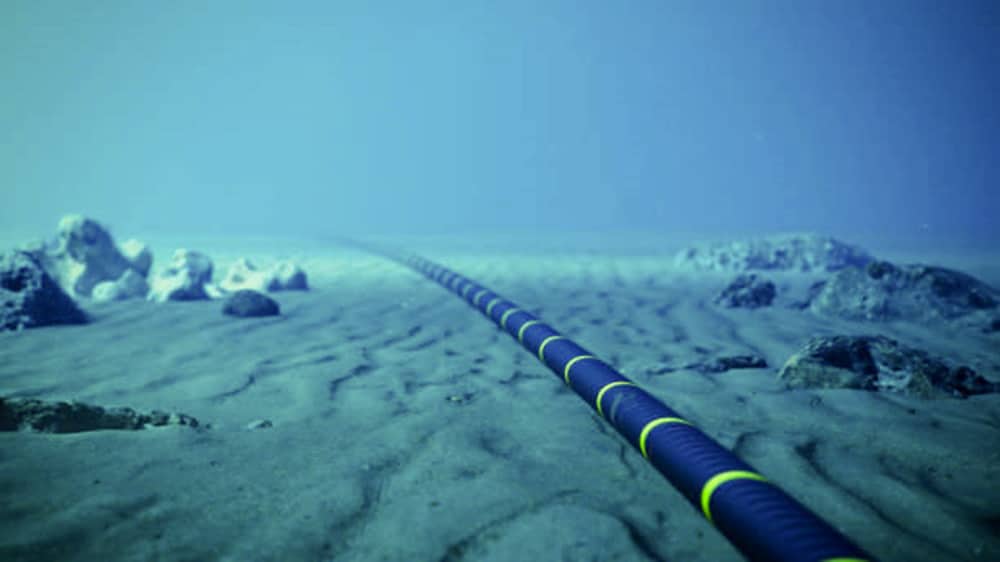
The proposed system will consist of underwater sensor nodes connected through subsea fibre-optic cables to shore-based monitoring stations. Data gathered from the sensors will be transmitted in real time, enabling authorities to continuously analyse underwater activity and identify potential submarine movements.
While the EOI marks only the preliminary stage of the procurement process and carries no financial commitment, it represents the government’s first public move towards creating a permanent underwater surveillance infrastructure. Following the assessment of industry capabilities, DRDO is expected to issue a formal Request for Proposal (RFP), after which a qualified bidder will be selected for the project.
The move comes against the backdrop of increasing strategic competition beneath the waters of the Indian Ocean. China has steadily expanded the deployment of both nuclear-powered and conventional submarines into the region while also sending survey and research vessels that collect underwater data considered valuable for future submarine operations. At the same time, Pakistan is modernising its underwater fleet with eight Chinese-built Hangor-class diesel-electric submarines equipped with Air Independent Propulsion (AIP), with the first vessel already launched.
India, meanwhile, continues to face delays in modernising its own submarine force. The Indian Navy is yet to operate an indigenous nuclear-powered attack submarine, while the lease of the Russian Akula-class Chakra III submarine has been delayed by several years. The country’s indigenous programme to build nuclear-powered attack submarines, approved in 2024, is expected to take more than a decade before the first platform becomes operational. Similarly, the long-awaited Project-75I programme for six next-generation conventional submarines is still awaiting final government approval.
Given these capability gaps, India has increasingly relied on a layered maritime surveillance framework involving P-8I long-range maritime patrol aircraft, MH-60R helicopters, naval warships and other intelligence assets. Defence planners believe the fixed underwater sensor network will significantly strengthen this architecture by offering uninterrupted surveillance that mobile platforms cannot provide.