India’s rapid rollout of E20 petrol has exposed a widening gap between the government’s ambitious biofuel agenda and the everyday concerns of millions of motorists. As officials prepare for even higher ethanol blends, the debate is no longer about cleaner fuel alone, but about whether consumers are being asked to shoulder the costs of a national policy, writes Manoj Menon
India’s ethanol blending programme was sold as a rare policy that could deliver everything at once. Lower crude oil imports. Cleaner emissions. Higher farm incomes. Greater energy security. On paper, it remains an attractive proposition. In practice, however, the government has stumbled over the one constituency it could least afford to ignore, the ordinary motorist.
The problem is not ethanol itself. More than 60 countries use ethanol-blended fuel, and Brazil has spent decades building an ecosystem around higher blends. Ethanol has clear technical advantages. It burns cleaner, has a higher octane rating than petrol and can reduce carbon emissions. Carmakers also acknowledge that future engines can be engineered to take advantage of these characteristics.
The problem is how India has chosen to implement the policy.
India reached 20 per cent ethanol blending five years ahead of schedule and has already signalled its intention to move towards E25 and beyond. The pace has impressed policymakers. It has also unsettled consumers, particularly owners of older cars and two-wheelers that were designed for lower ethanol blends.
Across social media, motorists have complained about lower mileage, reduced performance and worries over long-term engine durability. Manufacturers insist they have found no evidence linking E20 to widespread damage. Toyota has attributed one widely publicised Innova Hycross case to contaminated fuel rather than ethanol. Maruti Suzuki and Hero MotoCorp say their testing and service records have revealed no significant concerns. Those statements deserve consideration. So do the experiences of consumers who believe something has changed since E20 became mandatory.
The government’s response has largely focused on reassuring the public that the science is sound. That misses the central issue.
Motorists are not debating ethanol’s chemistry. They are asking whether they are receiving the same value for money.
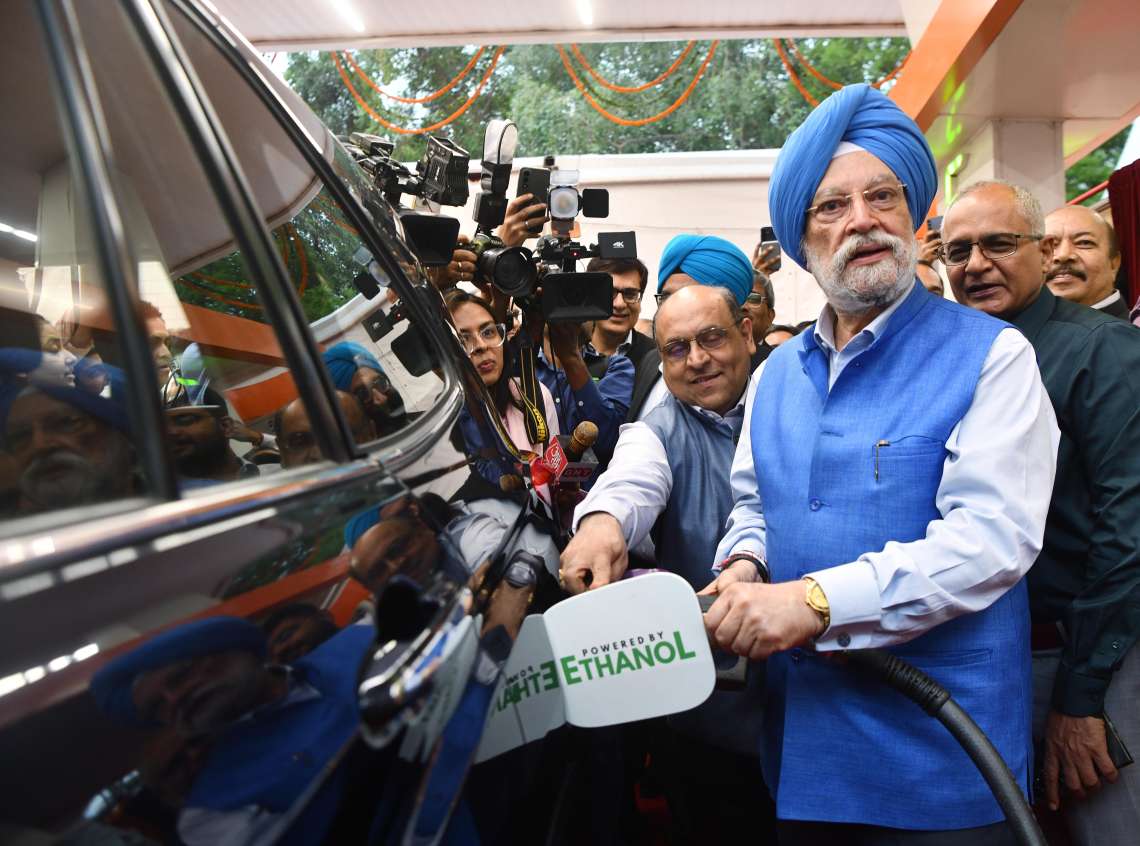
Even Petroleum Minister Hardeep Singh Puri has acknowledged that mileage “may drop a little.” That seemingly modest admission matters because fuel economy has always been the defining factor for Indian vehicle buyers. Generations of advertising, from “fill it, shut it, forget it” to “kitna deti hai”, captured a truth that still dominates purchase decisions today. A policy that knowingly reduces mileage without reducing pump prices was always likely to face resistance.

That resistance has only grown because consumers have been given no meaningful choice.
Brazil offers different ethanol blends with price incentives that allow motorists to decide what works best for them. India offers a mandatory blend at essentially the same price, even though ethanol contains less energy than petrol. Consumers absorb the reduction in fuel economy while the benefits of lower imports and higher agricultural demand accrue elsewhere.
The controversy surrounding Attorney General R. Venkataramani’s reference to ethanol as an “experiment”, despite later clarifications, only deepened public scepticism. Once confidence is shaken, government briefings and industry assurances are unlikely to settle the debate on their own. Trust requires transparency, not repeated declarations that there is nothing to worry about.
There is another reason for caution. The government is already considering higher blends such as E25, E27 and E30, while ARAI studies on future transitions are still under way. Even manufacturers privately acknowledge that moving beyond E20 will require additional engineering, fresh certification and further validation, especially for older vehicles. If E20 has generated this much anxiety, policymakers should treat the next phase far more carefully.
None of this argues for abandoning ethanol blending. India needs alternatives to imported crude, cleaner transport fuels and stronger markets for agricultural produce. Those goals remain strategically important.
But successful public policy depends as much on public consent as technical merit. Consumers need credible long-term studies, transparent data, meaningful compensation for lower fuel economy and genuine choice at the fuel pump. Without those safeguards, every move beyond E20 risks looking less like an energy transition and more like another bill quietly handed to the country’s motorists.