Thirty six countries and the EU support new legal mechanism targeting Russia’s invasion…reports Asian Lite news
Foreign ministers from the Council of Europe have agreed to establish a Special Tribunal for the Crime of Aggression against Ukraine, marking a significant step in international efforts to hold senior Russian figures accountable for the war.
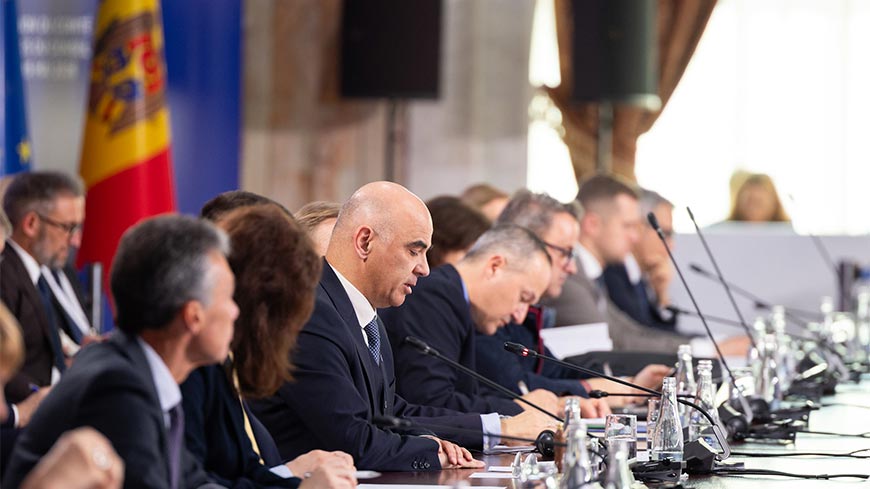
The decision was announced during a meeting of the Council of Europe’s Committee of Ministers in Chișinău, where ministers from the organisation’s 46 member states also adopted new measures on migration, foreign information interference and anti money laundering rules.
The ministers approved a resolution establishing an Enlarged Partial Agreement on the Special Tribunal, which will be tasked with investigating, prosecuting and trying individuals considered most responsible for the crime of aggression against Ukraine.

Thirty six countries, alongside the European Union, have declared their intention to join the agreement and help determine how the tribunal will operate and be funded. The participating countries include the United Kingdom, France, Germany, Italy, Poland and Ukraine, as well as non European countries such as Australia and Costa Rica.
The tribunal is intended to support wider international efforts to ensure accountability for Russia’s invasion of Ukraine. Ministers also expressed support for the Convention establishing an International Claims Commission for Ukraine, which aims to create a compensation mechanism for victims of the conflict.
The Council of Europe ministers reaffirmed their commitment to securing the return of Ukrainian children who were unlawfully deported or forcibly transferred by Russia during the war. The issue forms part of the implementation of a July 2025 judgment by the European Court of Human Rights in the case of Ukraine and the Netherlands versus the Russian Federation.
Foreign ministers also pledged continued support for Ukraine’s programme of reforms under the “Resilience, Recovery and Reconstruction 2023 to 2026” action plan, which is designed to assist the country’s path towards membership of the European Union. The programme covers justice reforms, anti corruption measures, social protection and inclusion policies.
Migration policy was another major focus of the meeting. Ministers adopted a new declaration reaffirming support for the European Convention on Human Rights while stressing the need to balance individual rights with the wider interests of society.
The declaration stated that migration challenges require a collective European response based on human rights, democracy and the rule of law, while also recognising the sovereign right of states to control the entry and residence of foreign nationals. Ministers agreed to continue discussions through the Council of Europe’s Network of Focal Points on Migration.
The Committee of Ministers also backed plans for a new legal instrument to tackle foreign information manipulation and interference, often referred to as FIMI. The issue was highlighted in the Council of Europe Secretary General’s annual report, “The New Democratic Pact for Europe in Times of Rupture”.
Ministers said foreign information manipulation poses a serious threat to democracy, human rights and the rule of law, and instructed the Secretary General to prepare proposals for a possible international legal framework or convention addressing the issue.
In a further move aimed at strengthening Europe’s legal response to organised crime, ministers adopted an Additional Protocol to the Warsaw Convention on money laundering and the financing of terrorism.
The updated treaty is designed to modernise the legal framework for recovering criminal assets in response to increasingly sophisticated transnational crime networks and the growing use of digital technologies. It gives authorities stronger powers to monitor suspicious financial transactions and confiscate assets, including crypto assets linked to criminal activity.
The Additional Protocol is expected to open for signature during a cybercrime conference in Strasbourg in October 2026.
The ministers also adopted a new strategy for the Council of Europe’s external action, aimed at strengthening the organisation’s global role and expanding cooperation with non member states and international organisations.
At the end of the ministerial session, Monaco formally assumed the rotating presidency of the Committee of Ministers from the Moldova for the period running from May to November 2026.